.png)
Overview
Every Tuesday, Nintendo rolls out a fresh batch of titles to the North American eShop, a practice that has evolved from a simple promotional calendar into a crucial barometer of the company’s digital‑first ambitions. In an era where subscription services and cloud gaming dominate headlines, Nintendo’s curated weekly drops serve both as a retention tool for its loyal Switch base and as a testing ground for pricing elasticity across a diverse catalogue that ranges from nostalgic mascots to cutting‑edge indie experiments.
Beyond the surface‑level excitement of new releases, the current wave of discounts and the high‑profile launch of Minecraft Dungeons II underscore a broader industry trend: the convergence of value‑driven pricing with premium content to sustain a fragmented console market. As Sony and Microsoft double‑down on subscription bundles, Nintendo is leveraging its eShop’s flexibility to keep the Switch relevant, especially as the hardware generation approaches its twilight and the forthcoming Switch 2 looms on the horizon.
What Happened?
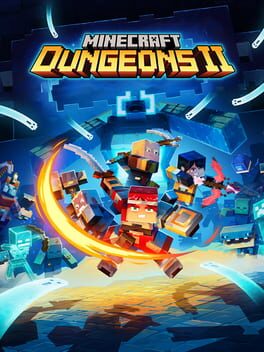
On 29 September, Mojang announced the arrival of Minecraft Dungeons II, pricing the sequel at $29.99—a deliberate decision that positions the game squarely between the budget‑friendly indie tier and full‑priced AAA launches. The sequel expands the original’s dungeon‑crawling formula with procedurally generated biomes, a deeper loot system, and cooperative play that scales up to four players, promising to capitalize on the franchise’s massive, cross‑generational fanbase while delivering fresh content that feels both familiar and ambitious.
Alongside the headline title, Nintendo’s weekly download spotlight highlighted three additional discounted titles, each chosen to appeal to distinct segments of the Switch audience: a whimsical platformer starring Mickey, a tongue‑in‑cheek action‑adventure set in a Mordor‑inspired realm, and a quirky culinary romp titled Muchi Muchi Pork!. The promotional push is reinforced by a community poll, encouraging players to vote on their favourite picks—a clever engagement tactic that not only drives sales spikes but also gathers real‑time market sentiment for future curation.
Analysis
The inclusion of a high‑visibility IP like Minecraft on the Switch eShop is a strategic masterstroke for Nintendo, as it injects a proven revenue generator into a platform that has historically leaned on first‑party exclusives. By offering the sequel at a mid‑range price point, Nintendo can capture a broader swath of its install base, from casual families to dedicated core gamers, while also enticing players who may have hesitated to invest in the original due to its initial premium pricing. This move could translate into a measurable uplift in monthly active users, a metric that is increasingly scrutinized by analysts as a proxy for long‑term ecosystem health.
From a technical standpoint, the upcoming Switch 2 hardware—rumoured to feature a more powerful GPU and faster SSD storage—will likely alleviate many of the performance constraints that have limited the depth of action‑RPG experiences on the original console. Minecraft Dungeons II serves as a de‑facto benchmark for how legacy titles can be retrofitted to exploit next‑gen capabilities, setting expectations for future ports and original releases that aim to push the Switch’s visual fidelity without sacrificing its hallmark portability.
XPLog Opinion
At XPLog UK, we view Nintendo’s current eShop strategy as a calculated gamble that could redefine the console’s value proposition: by marrying marquee franchises with aggressive discounting, Nintendo is not merely clearing inventory but actively reshaping consumer perception of the Switch as a platform where premium experiences are accessible without the premium price tag—a narrative that resonates deeply with the core gaming community that craves both quality and affordability.
Final Thoughts
As the eShop continues to serve as Nintendo’s primary conduit for digital distribution, the rollout of Minecraft Dungeons II and the accompanying discounted trio signal a decisive pivot toward a more inclusive, price‑sensitive marketplace. Players should keep an eye on the upcoming Switch 2 reveal later this year, as its hardware advancements will likely amplify the impact of such titles, while the eShop’s evolving curation model promises to keep the Switch at the forefront of the console wars for the foreseeable future.