.png)
Overview
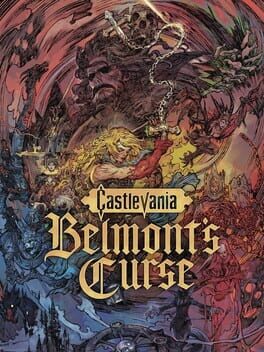
Konami’s decision to roll out a free, downloadable demo of Castlevania: Belmont's Curse on the newly announced Switch 2 arrives at a moment when legacy franchises are being resurrected with unprecedented vigor. The original Castlevania series, born in 1986, has traversed multiple hardware generations, from the NES to modern streaming services, and its recent renaissance—spurred by the critically acclaimed Metroidvania wave—has turned nostalgia into a viable commercial engine. By positioning Belmont's Curse as a showcase for the Switch 2’s upgraded GPU and smoother frame‑rate capabilities, Konami is not merely advertising a single title; it is signaling confidence in the hardware’s ability to deliver a premium 2D experience that rivals even high‑end consoles.
Industry analysts have noted that the current console landscape is increasingly bifurcated between high‑budget, photorealistic blockbusters and tightly scoped, art‑driven indie or retro‑style titles. The demo’s release therefore serves a dual purpose: it gives early adopters a tangible taste of the Switch 2’s performance envelope while also reaffirming Konami’s commitment to the core gamer demographic that still values precise platforming, gothic aesthetics, and deep lore. In a market where subscription services dominate, offering a free entry point that seamlessly transfers save data to the full launch underscores a strategic push to capture long‑term engagement rather than a fleeting burst of hype.
What Happened?
On September 20th, Konami confirmed that the free demo for Castlevania: Belmont's Curse is now live on the Nintendo eShop for Switch 2 owners, granting access to the opening chapters of the game’s narrative‑driven campaign. The demo, described by the publisher as covering the “early stages,” allows players to experience a polished combat system, dynamic lighting, and a revamped soundtrack that blends classic motifs with contemporary orchestration. Crucially, the demo incorporates a cloud‑save bridge: any progress made will be automatically imported into the full version upon its scheduled release on October 15th, eliminating the dreaded “restart” penalty that has plagued many demo‑to‑full transitions in the past.
Konami’s public statements emphasize that the demo is not a stripped‑down teaser but a fully functional segment that mirrors the final product’s technical fidelity. Development lead Hiroshi Yamauchi noted that the team leveraged the Switch 2’s enhanced CPU cache to reduce loading times dramatically, a point that resonates with the franchise’s historically demanding level designs. Moreover, the demo’s launch coincides with a broader promotional wave that includes a limited‑edition physical collector’s set, pre‑order bonuses, and a cross‑platform marketing push that taps into both Nintendo’s and Konami’s extensive fanbases.
Analysis
The timing of this demo release is particularly astute when viewed against the backdrop of Nintendo’s recent hardware rollout. Early adopters of the Switch 2 are eager for exclusive content that validates their purchase, and a high‑profile IP like Castlevania delivers exactly that. From a market share perspective, Konami stands to benefit from the halo effect: a smooth demo experience can translate into higher conversion rates, especially when the full game promises a seamless continuation of progress. Additionally, the decision to make the demo free eliminates price barriers, positioning the title as a low‑risk entry point for both veteran fans and newcomers drawn in by the retro resurgence.
On a competitive front, Sony’s PlayStation 5 continues to dominate the AAA space, while Xbox leans heavily on Game Pass subscriptions. Nintendo’s niche lies in family‑friendly and portable experiences, yet the Switch 2’s hardware upgrades open a corridor for more ambitious 2D titles that can compete on technical merit. Konami’s gamble, therefore, is two‑fold: it tests the Switch 2’s capability to host a premium retro‑style game and it challenges the perception that Nintendo’s ecosystem is limited to lighter fare. If the demo’s performance metrics—such as download numbers, average playtime, and retention rates—meet or exceed expectations, it could embolden other mid‑tier publishers to prioritize the platform for their own legacy revivals.
XPLog Opinion
From XPLog’s standpoint, Castlevania: Belmont's Curse represents a watershed moment where a venerable franchise aligns its heritage with next‑gen hardware in a way that feels less like a cash‑grab and more like a genuine love letter to the series’ core audience; the seamless save‑transfer and the decision to showcase the Switch 2’s capabilities without a price tag demonstrate a nuanced understanding of player psychology, and if the full game lives up to the demo’s promise, Konami could set a new benchmark for how legacy IPs are relaunched in the modern console era.
Final Thoughts
In sum, the Belmont's Curse demo not only offers a preview of what could become one of the year’s standout retro revivals but also serves as a litmus test for the Switch 2’s ability to attract high‑profile, technically demanding titles; gamers should keep an eye on the official launch on October 15th, the forthcoming post‑launch patches, and the broader ripple effect this move may have on future collaborations between Nintendo and heritage publishers seeking to bridge nostalgia with next‑gen performance.