.png)
Overview
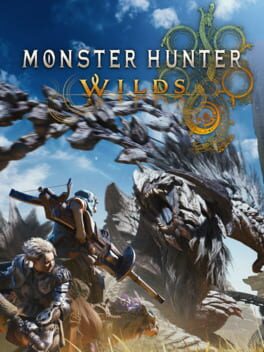
When Capcom first hinted at bringing Monster Hunter Wilds to Nintendo’s next‑generation handheld, the gaming press collectively held its breath, aware that the franchise’s reputation for massive ecosystems and high‑resolution monster models has historically strained the limits of portable hardware. The original Switch, despite its impressive library, forced developers to make hard compromises on frame‑rate and visual fidelity, a reality that left long‑time series veterans yearning for a smoother, more faithful experience. The arrival of the Switch 2—promising a 30 percent uplift in GPU throughput, a faster SSD‑like storage subsystem, and a more efficient ARM‑based CPU—re‑ignited hopes that Capcom could finally deliver a Monster Hunter title that feels at home on a handheld without sacrificing the series’ signature spectacle.
Beyond the raw hardware, the announcement arrives at a pivotal moment for both Capcom and Nintendo. Capcom’s portfolio has been increasingly anchored by live‑service titles and cross‑platform releases, yet Monster Hunter remains its most reliable flagship for console and handheld sales. Nintendo, meanwhile, is courting a broader demographic with the Switch 2, positioning it as a “play‑anywhere” device that must prove it can host heavyweight franchises without compromising the social, local‑multiplayer DNA that made the original Switch a cultural phenomenon. The inclusion of every free DLC monster, alongside a return to local co‑op reminiscent of the PSP Gathering Hall era, signals a strategic alignment: Capcom seeks to leverage the Switch 2’s upgraded specs to re‑engage legacy fans while Nintendo hopes to showcase the console’s renewed power through a marquee title.
What Happened?
In a detailed developer briefing streamed last week, Capcom’s technical director revealed that achieving a rock‑steady 30 frames‑per‑second on the Switch 2 was not a mere “tick‑box” exercise but a “painstaking, seemingly endless process” involving multiple rounds of engine refactoring, texture streaming optimization, and bespoke shader rewrites. The team reportedly dissected the game’s rendering pipeline to the level of individual draw calls, pruning redundant geometry and introducing a dynamic resolution scaling system that only kicks in during the most particle‑intensive hunts. This labor‑intensive approach, spread across a twelve‑month sprint, underscores how even a modest frame‑rate increase on a handheld can demand a near‑full rebuild of a title originally engineered for the first‑generation Switch’s constraints.
The fruits of that effort are slated to launch on 5 December, with the Switch 2 version bundling every free‑downloadable monster that Capcom has released since Wilds’ initial debut. Crucially, the port re‑introduces local co‑op for up to four players, allowing friends to gather around a single console—a nostalgic nod to the Gathering Hall sessions that defined the series on the PSP and 3DS. By coupling the technical polish of a stable 30 FPS experience with a content‑rich, socially driven multiplayer suite, Capcom is positioning Wilds as both a showcase of the Switch 2’s capabilities and a community‑centric rallying point for the series’ dedicated fanbase.
Analysis
The decision to invest heavily in a handheld optimization pipeline signals Capcom’s recognition that the Monster Hunter franchise thrives on accessibility and shared experiences. While the series has seen massive success on home consoles and PC, its portable incarnations have historically driven the highest engagement rates, especially in regions like Japan where handheld gaming remains culturally entrenched. By delivering a performance‑stable Wilds on the Switch 2, Capcom not only safeguards its existing revenue stream but also positions itself to capture a larger slice of the upcoming console’s launch window, potentially eclipsing competing ports that may still be grappling with sub‑30 FPS performance on the same hardware.
From a broader industry perspective, the painstaking optimization underscores a growing trend: first‑party and third‑party studios alike are forced to treat next‑gen handhelds as first‑class platforms rather than secondary ports. The Switch 2’s hybrid nature blurs the line between mobile and console, compelling developers to reconcile the divergent expectations of handheld performance and home‑theater fidelity. Capcom’s success—or lack thereof—could set a precedent for how other heavyweight franchises, such as Elden Ring or Horizon, approach future handheld releases, influencing everything from engine modularity to cross‑generation asset pipelines.
XPLog Opinion
At XPLog, we view Capcom’s relentless pursuit of a smooth 30 FPS experience as a bold affirmation that the handheld market is no longer a compromise zone but a strategic battleground for flagship titles. The willingness to allocate a year‑long, resource‑intensive optimization effort demonstrates a confidence that the Switch 2 will command a sizable install base eager for premium, locally shared experiences—a confidence that, if rewarded, could reshape the economics of portable AAA releases and cement Monster Hunter as the de‑facto standard‑bearer for next‑gen handheld excellence.
Final Thoughts
When the clock strikes midnight on 5 December, players will finally be able to hunt the full roster of Wilds monsters at a buttery‑smooth 30 FPS, side‑by‑side on a single console—a convergence of nostalgia, technical triumph, and market foresight that could very well define the Switch 2’s early identity. Keep an eye on Capcom’s post‑launch patch cadence and Nintendo’s upcoming hardware rollout events; the performance of Monster Hunter Wilds may well become the litmus test for how seriously the industry will treat the next wave of portable powerhouses.