.png)
Overview
The indie phenomenon Vampire Survivors proved that a minimalist design philosophy—tight core loops, relentless wave‑based combat, and a relentless sense of progression—could translate into a blockbuster on both PC and console. Its unexpected migration to the PlayStation 5 earlier this year sparked a wave of interest across the platform, demonstrating that Sony’s audience is not solely anchored to high‑budget, narrative‑driven experiences but is also hungry for the kinetic, high‑score‑chasing gratification that the bullet‑heaven sub‑genre delivers. This shift has encouraged a new cohort of developers to experiment with the formula, leading to a burgeoning ecosystem of titles that blend rogue‑lite mechanics with auto‑attack systems, each trying to capture that addictive sweet spot.
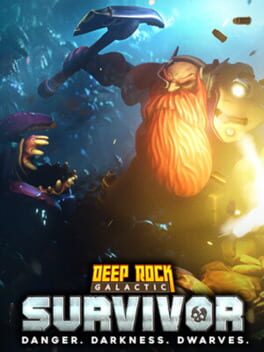
Amid this fertile ground, Deep Rock Galactic: Survivor emerges as a strategic spin‑off from Ghost Ship Games’ flagship co‑op mining adventure. While the original Deep Rock Galactic built its reputation on teamwork, procedural cavern generation, and a rugged sci‑fi aesthetic, the Survivor iteration pivots to a solo‑focused, survival‑shootout experience that directly taps into the bullet‑heaven zeitgeist. Announced with a high‑octane trailer that showcases dwarven protagonists fending off endless swarms of alien fauna, the game promises to marry the beloved visual language of the franchise with the frantic, ever‑escalating difficulty curves that have defined the genre’s most successful entries.
What Happened?
During a concise digital showcase streamed on Sony’s official channels, Ghost Ship Games revealed that Deep Rock Galactic: Survivor will launch on the PlayStation 5 next month, with a targeted release window in early November. The trailer highlighted a polished engine upgrade that leverages the PS5’s SSD and ray‑tracing capabilities, delivering fluid enemy animations and a luminous, mineral‑rich environment that feels both familiar and freshly intense. The developers emphasized that the core gameplay loop—automatic attacks, upgrade paths, and procedurally generated hazard zones—remains faithful to the bullet‑heaven formula, while the inclusion of Deep Rock’s signature class abilities adds a layer of strategic depth rarely seen in the genre.
In accompanying developer commentary, Ghost Ship’s creative director noted that the project began as an internal experiment during the pandemic, when the team observed a surge in player interest for “survival‑as‑a‑service” titles. By repurposing existing assets and systems from the mainline Deep Rock Galactic, the studio managed to keep development costs modest while delivering a product that feels both brand‑consistent and genre‑forward. The announcement also confirmed cross‑play support with PC, a decision that aligns with the broader industry push toward platform‑agnostic ecosystems, and hinted at post‑launch content such as seasonal events and community‑driven challenge modifiers.
Analysis
From a market perspective, Deep Rock Galactic: Survivor arrives at a moment when the bullet‑heaven niche is transitioning from novelty to a sustainable sub‑genre with its own ecosystem of dedicated players and streaming personalities. Sony’s recent success with Vampire Survivors illustrated that the platform’s install base is receptive to high‑replayability titles that require minimal narrative overhead yet deliver substantial depth through meta‑progression. By securing a recognizable IP for its entry, Ghost Ship not only capitalizes on brand loyalty but also differentiates itself from generic clones that lack a strong thematic hook. This strategic positioning could translate into higher engagement metrics, especially as the PlayStation Store’s “Indie Spotlight” sections continue to prioritize titles that drive repeat play sessions.
Technically, the decision to harness the PS5’s hardware strengths—particularly its ultra‑fast storage and GPU capabilities—addresses a lingering criticism of earlier bullet‑heaven ports that suffered from frame‑rate stutters and visual pop‑in. A smooth 60 fps experience, coupled with adaptive triggers that convey the tactile feedback of dwarf‑crafted weaponry, may set a new benchmark for the genre on console. Moreover, the cross‑play implementation signals a broader industry trend toward breaking down silos, which could encourage a more unified player community and extend the game’s longevity beyond the typical few‑month hype cycle.
XPLog Opinion
At XPLog, we view Deep Rock Galactic: Survivor as a litmus test for how effectively indie studios can leverage established franchises to elevate a rapidly maturing genre. The marriage of a beloved IP with the bullet‑heaven design ethos is a bold gamble that, if executed with the polish promised in the trailer, could redefine Sony’s indie acquisition strategy—shifting focus from purely original concepts to hybrid experiences that blend brand equity with emergent gameplay loops. Should the title resonate with the core audience, we anticipate a cascade of similar collaborations, prompting publishers to rethink the value of cross‑genre spin‑offs as a viable revenue stream.
Final Thoughts
Deep Rock Galactic: Survivor is poised to be more than a seasonal curiosity; it represents a convergence of market demand, technical capability, and brand synergy that could cement bullet‑heaven as a staple of the next‑gen console library. With its launch slated for early November, the title will serve as a bellwether for how Sony’s ecosystem embraces high‑replay indie titles and how developers can sustainably iterate on proven formulas without sacrificing innovation. Keep an eye on community feedback during the first two weeks post‑launch, and watch for the promised seasonal updates that may well shape the genre’s evolution for years to come.