.png)
Overview
When the indie phenomenon Vampire Survivors exploded onto the scene in early 2022, it did more than just spawn a wave of copycats—it redefined how developers could distill high‑octane, bullet‑hell action into a deceptively simple loop that rewarded perseverance and incremental upgrades. That design philosophy has since become a lingua franca for small studios seeking to capture the addictive sweet spot between accessibility and depth, and it arrived at a moment when the Nintendo Switch was cementing its reputation as the premier platform for indie experimentation. The convergence of these two forces set the stage for a new breed of hybrid titles that blend the relentless progression of roguelites with the thematic gravitas of established franchises.
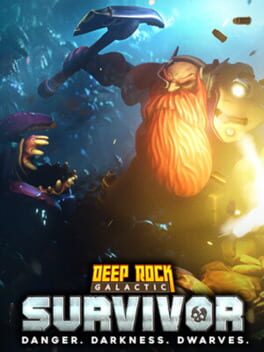
Enter Deep Rock Galactic: Survivor, the latest offering from Funday Games, a studio that earned its stripes on the original Deep Rock Galactic’s cooperative mining shooter. Leveraging the beloved universe of dwarf‑piloted space mining, the team re‑imagined the core loop through a Vampire Survivors‑inspired lens, delivering a wave‑based survival experience that demands both strategic positioning and relentless firepower. The announcement of a Switch launch on 9 October 2026 arrives after a meticulously paced rollout: early‑access debut on 14 February 2024, a full Windows and Xbox Series X|S release on 17 September 2025, and now the long‑awaited portable debut that positions the title squarely within the console’s thriving indie ecosystem.
What Happened?
Funday Games officially confirmed that Deep Rock Galactic: Survivor will ship on the Switch next month, completing a multi‑platform strategy that began with a staggered early‑access phase. The early‑access period, which lasted over a year, allowed the developers to fine‑tune the procedural enemy spawns, upgrade trees, and the delicate balance between risk and reward that defines the genre. By the time the full launch on Windows and Xbox arrived in September 2025, the title had already amassed an 8/10 from IGN and a 90% approval rating from PC Gamer, both praising its seamless integration of Deep Rock Galactic’s lore with the fast‑paced, auto‑attack mechanics that made Vampire Survivors a cultural touchstone.
The Switch version promises native 30 fps performance at 720p, a resolution choice that mirrors the hardware constraints of the handheld while preserving the visual fidelity of the original art direction. Funday Games also disclosed that the portable build will feature exclusive quality‑of‑life tweaks, such as adaptive difficulty scaling for shorter play sessions and a cloud‑save system that syncs progress across all three platforms. The announcement was accompanied by a developer statement emphasizing the studio’s commitment to “bringing the relentless, cooperative chaos of Deep Rock Galactic to players wherever they go,” a sentiment that resonates strongly with the Switch’s on‑the‑go audience.
Analysis
From a market perspective, Deep Rock Galactic: Survivor’s arrival on the Switch is a textbook case of platform‑specific audience cultivation. The Switch has consistently outperformed its rivals in the indie segment, with titles like Hades, Hollow Knight, and the original Vampire Survivors all achieving outsized sales relative to their development budgets. By tapping into this proven pipeline, Funday Games not only expands its addressable market but also reinforces the Switch’s reputation as a haven for titles that blend quick, repeatable sessions with deep progression systems. Moreover, the timing aligns with Nintendo’s broader push to refresh its library ahead of the anticipated hardware refresh cycle slated for 2027, ensuring that the platform remains vibrant with fresh content through the end of the current generation.
Strategically, the launch also bolsters the Deep Rock Galactic brand beyond its core cooperative shooter identity. The franchise, originally cultivated by Ghost Ship Games and published by Coffee Stain Studios, has cultivated a passionate community that thrives on modding, community events, and a strong sense of camaraderie. By extending the IP into the roguelite arena, the publishers diversify revenue streams and hedge against potential fatigue in the core shooter market. This cross‑genre expansion mirrors successful moves by other studios—such as the transition of the Dark Souls aesthetic into the mobile arena with Elden Ring: Survival—demonstrating that brand elasticity can be a decisive factor in long‑term franchise health.
XPLog Opinion
At XPLog UK, we view Deep Rock Galactic: Survivor as a decisive indicator that the indie‑to‑mainstream pipeline is no longer a linear ascent but a multidirectional lattice, where beloved IPs can safely experiment with genre hybrids without alienating their core fanbase. The Switch launch is not merely a platform addition; it is a strategic masterstroke that leverages Nintendo’s unrivaled indie distribution network while delivering a product that feels both fresh and familiar. If the title maintains its current critical momentum, it could set a benchmark for future franchise spin‑offs, encouraging other mid‑tier studios to explore roguelite adaptations of their flagship universes.
Final Thoughts
Deep Rock Galactic: Survivor’s October debut on the Switch caps a carefully orchestrated multi‑year rollout that underscores the potency of cross‑genre experimentation and platform‑specific optimization. As the title lands in the hands of handheld gamers, its performance will serve as a litmus test for how effectively established franchises can translate into the bite‑size, high‑replay loops that dominate today’s indie charts. Keep an eye on sales figures post‑launch, community feedback on the exclusive Switch tweaks, and the potential for future DLC that could further intertwine the Deep Rock Galactic universe with the ever‑expanding roguelite landscape.