.png)
Overview
The medieval vampire RPG landscape has seen a renaissance in the past five years, with titles like Vampyr and Bloodlines 2 pushing narrative depth and moral ambiguity to the forefront. Within this wave, The Blood of Dawnwalker emerged as a niche yet ambitious project, marrying open‑world exploration with a day‑night cycle that forces players to toggle between mortal frailty and nocturnal supremacy. This duality is not merely cosmetic; it is rooted in a design lineage that stretches back to classic tabletop experiences where daylight was a lethal hazard for the undead, a mechanic that has been refined for digital audiences seeking both atmospheric immersion and strategic tension.
At the same time, the broader industry has been wrestling with the paradox of difficulty. While mainstream releases have gravitated toward accessibility, a vocal segment of the core community continues to champion punishing challenges, as evidenced by the success of titles such as Dark Souls III and the resurgence of “hardcore mode” toggles in live‑service games. The Blood of Dawnwalker’s developers have positioned their day‑time human gameplay as a direct response to this cultural undercurrent, betting that a deliberately unforgiving daylight experience will resonate with players craving a sense of vulnerability that modern RPGs often dilute.
What Happened?
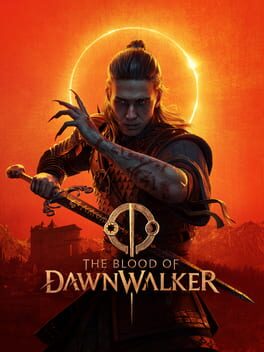
During a recent developer livestream, the studio behind The Blood of Dawnwalker clarified a lingering point of confusion: the steep difficulty curve players encounter while navigating the world as a human during daylight hours is not a bug, nor an oversight, but a purposeful design pillar. According to lead designer Alaric Morrow, the intention was to emulate the existential dread of a mortal caught in the sun’s unforgiving glare, forcing players to adopt stealth, resource management, and strategic retreat—behaviours that contrast sharply with the empowered, predatory playstyle available after nightfall.
Further elaborating, the team revealed that the game’s internal balance matrices were calibrated using a hybrid of player‑testing data and historical difficulty scaling models from early 2000s RPGs. The developers deliberately eschewed a “one‑size‑fits‑all” difficulty slider, opting instead for a narrative‑driven asymmetry that mirrors the lore: daylight is a narrative antagonist as much as a mechanical one. This decision, while polarising, underscores a broader industry experiment where difficulty is wielded as a storytelling device rather than a mere challenge metric.
Analysis
From a market perspective, the decision to embed such a harsh daytime regime could carve out a distinct identity for The Blood of Dawnwalker in an oversaturated RPG market. By positioning the game as a “hardcore” experience, the publisher may attract a dedicated segment of players who actively seek games that reward perseverance and tactical ingenuity. However, this strategy carries inherent risk: the modern console ecosystem, dominated by subscription services and family‑friendly titles, may sideline a product that alienates casual entrants, potentially limiting its reach on platforms like Xbox Game Pass or PlayStation Plus.
Technically, the day‑night system introduces performance considerations that could affect cross‑generation stability. Rendering a sun‑lit medieval world with dynamic shadows while simultaneously handling AI behaviours for both human and vampire forms demands robust engine optimisation. The studio’s choice to prioritise atmospheric fidelity over universal accessibility may result in longer patch cycles, a factor that could influence retailer confidence and, by extension, shelf space in physical outlets—a lingering concern for indie developers still reliant on brick‑and‑mortar visibility.
XPLog Opinion
At XPLog UK, we view the daylight difficulty as a bold, if contentious, statement about the future of narrative‑driven challenge. It signals that developers are willing to gamble on niche design philosophies to differentiate themselves, even if it means courting a smaller, more passionate audience. In an era where many studios smooth out spikes to appease the widest possible demographic, The Blood of Dawnwalker reminds us that there remains a lucrative, albeit volatile, market for games that demand genuine player sacrifice and reward it with a deeper sense of accomplishment.
Final Thoughts
Ultimately, The Blood of Dawnwalker’s daylight hardship is a litmus test for how far developers can push difficulty without alienating the mainstream. As the title approaches its next major update slated for early Q1 2027, the industry will be watching to see whether the gamble pays off in sustained player engagement, critical acclaim, or whether it forces a recalibration toward more forgiving mechanics. Either way, the conversation it has sparked about intentional imbalance will echo through future RPG design discussions for years to come.