.png)
Overview
When CD Projekt Red first launched The Witcher 3: Wild Hunt in 2015, it set a new benchmark for open‑world storytelling, technical ambition, and post‑launch support. Over the ensuing years the title has been ported across every major console generation, from the Xbox 360 to the PlayStation 5, and has amassed a legion of fans who still cite its sprawling narrative as a touchstone for modern RPG design. The decision to bring a fully remastered edition to Nintendo’s handheld flagship, the Switch, arrives at a moment when the platform is undergoing a generational shift with the recently announced Switch 2, and it underscores a broader industry trend of revitalising legacy blockbusters to extend their commercial lifespan on emerging hardware.
Beyond pure nostalgia, the remaster serves a dual commercial purpose: it re‑engages the existing Switch install base while offering a low‑friction entry point for newcomers who may have missed the original launch. By making the upgrade free for owners of the original Switch version, CD Projekt Red signals a consumer‑friendly approach that could foster goodwill in a market increasingly skeptical of aggressive DLC monetisation. This move also dovetails with Nintendo’s own strategy of bolstering its library with high‑profile third‑party titles, a necessity as the company seeks to diversify beyond its first‑party franchises in a competitive console ecosystem.
What Happened?
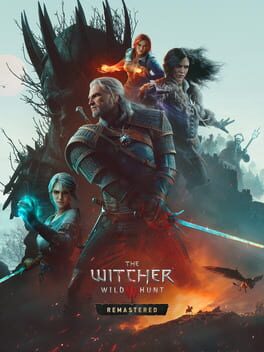
The Witcher 3: Wild Hunt Remastered debuted on the Switch this week, featuring a suite of visual and performance upgrades that bring the title closer to its console‑genesis specifications. The remaster boasts 4K‑scaled textures, refined lighting, and a more stable 30 fps frame‑rate on the original Switch hardware, while the forthcoming Switch 2 is expected to push the experience toward 60 fps with ray‑traced effects. CD Projekt Red also bundled all previously released DLC—including the acclaimed Hearts of Stone and Blood and Wine expansions—into the base price, effectively delivering the complete saga in a single package.
Critical reception, though still in its infancy for the Switch 2, has been largely positive on the original hardware. Reviewers from Push Square highlighted the seamless integration of the expansions and praised the developers’ commitment to preserving the game’s artistic vision despite the handheld’s technical constraints. The free upgrade policy for existing owners has been lauded as a consumer‑centric gesture, potentially setting a precedent for future remaster strategies across the industry.
Analysis
From a market perspective, the remaster reinforces CD Projekt Red’s pivot away from the tumultuous launch of Cyberpunk 2077 toward a more measured, content‑driven revenue model. By capitalising on an established IP, the studio mitigates risk while capitalising on the long tail of sales that legacy titles can generate. The Switch’s unique hybrid nature offers a differentiated audience—players who value portability and on‑the‑go gaming—expanding the Witcher’s reach into demographics that traditionally gravitate toward Nintendo’s family‑friendly catalogue. This cross‑pollination could spur a modest but meaningful uplift in hardware sales for the upcoming Switch 2, as RPG enthusiasts seek a platform capable of handling demanding titles without sacrificing the console’s signature flexibility.
Competitively, the move puts pressure on Sony and Microsoft, whose own remaster pipelines are already saturated with PlayStation‑centric titles. Nintendo, historically cautious about third‑party heavyweight imports, now finds itself in a position to leverage the Witcher’s brand equity to attract a broader, more mature audience. The technical concessions required to run a game of this scale on a handheld also provide valuable data for developers eyeing the Switch 2’s enhanced GPU, potentially accelerating the pipeline of next‑gen ports and influencing hardware optimisation strategies across the industry.
XPLog Opinion
At XPLog UK we view the Witcher 3 Remastered on Switch as a masterstroke of timing and audience‑centric design; it not only revitalises a beloved classic but also demonstrates how strategic pricing and comprehensive content bundles can rejuvenate a franchise’s relevance, especially as the console market braces for the next generational shift.
Final Thoughts
In sum, the Witcher 3: Wild Hunt Remastered on Switch is more than a nostalgic cash‑in—it is a calculated lever that could shape the trajectory of both CD Projekt Red’s post‑Cyberpunk strategy and Nintendo’s hardware narrative. Players should keep an eye on the forthcoming Switch 2 launch window later this year, when the full technical potential of the remaster will be realised, and on CD Projekt’s upcoming roadmap, which promises further expansions of its acclaimed universe across an increasingly diverse hardware landscape.