.png)
Overview
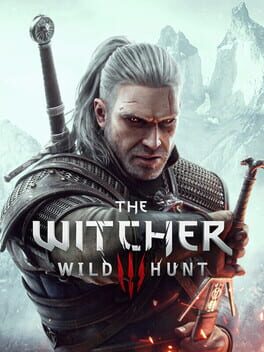
When CD Projekt Red first unveiled The Witcher 3: Wild Hunt back in 2015, it set a new benchmark for open‑world design, narrative depth, and post‑launch support. Six years later the title still dominates discussion circles, not merely as a nostalgic relic but as a living platform that continues to generate revenue through expansions, DLC, and now a free‑to‑play remaster for the latest Xbox hardware. The decision to ship a graphical overhaul for Xbox Series X|S arrives at a moment when the console generation is solidifying its market share, and Microsoft is aggressively courting legacy owners to cement its ecosystem dominance. This move also dovetails with the broader industry trend of leveraging proven IPs to fill the early‑stage content pipeline of next‑gen consoles, a strategy seen in titles like Horizon Forbidden West’s PC port and Resident Evil Village’s performance patches.
From a business perspective, the remaster is more than a cosmetic facelift; it is a strategic lever to re‑engage a massive install base that, according to Microsoft’s recent earnings call, still accounts for a sizable fraction of active Xbox users. By offering the upgrade free of charge to anyone who purchased the digital or physical edition, CD Projekt sidesteps the friction of a paid DLC model while still capitalising on ancillary sales such as the forthcoming Gwent: Rogue Edition and potential cross‑sell of the upcoming cyber‑punk sequel. Moreover, the timing—just days before the launch of the highly anticipated Starfield—positions The Witcher 3 Remastered as a flagship showcase for the console’s ray‑tracing and variable‑rate shading capabilities, reinforcing Microsoft’s narrative of a superior next‑gen experience.
What Happened?
The first wave of reviews for The Witcher 3 Remastered began filtering through the press early Tuesday, and the consensus is overwhelmingly positive. Critics highlight the 4K resolution support, enhanced textures, and a dramatically improved draw distance that bring the war‑torn Northern Kingdoms into a clarity previously reserved for bespoke next‑gen titles. In addition, the update introduces a suite of performance modes, allowing players to toggle between a fidelity‑focused 30 fps experience and a smoother 60 fps option that leverages the Series X|S’s SSD for faster loading times. CD Projekt’s lead technical director, Marcin Krawczyk, emphasized that the team rebuilt the rendering pipeline from the ground up, integrating DirectX 12 Ultimate features while preserving the original gameplay feel that fans fell in love with.
Eligibility for the free upgrade is straightforward: any Xbox Series X|S owner who can prove ownership of either the digital or physical copy of The Witcher 3 will receive an automatic patch via the Xbox Store. The rollout is being handled in phases to avoid server overload, but early adopters report download speeds exceeding 30 MB/s, a testament to Microsoft’s robust CDN infrastructure. Notably, the update also includes a minor quality‑of‑life patch that refines the inventory UI and resolves a handful of long‑standing bugs, signaling CD Projekt’s continued commitment to polishing the experience even after the title’s initial release window.
Analysis
The remaster’s market impact can be read on two fronts. First, it serves as a defensive maneuver against Sony’s PlayStation 5 exclusives, which have been leveraging next‑gen hardware to showcase titles like God of War Ragnarök and Horizon Forbidden West. By delivering a high‑profile, free upgrade, Microsoft not only enriches its own library but also creates a low‑cost entry point for new Xbox adopters, potentially nudging undecided gamers toward the console. Second, the move reinforces CD Projekt’s brand equity after a tumultuous period marked by the Cyberpunk 2077 launch debacle. Providing a free, high‑quality upgrade demonstrates a renewed focus on player goodwill, which could translate into stronger pre‑order numbers for upcoming projects and a more forgiving community sentiment.
From a technical perspective, the remaster showcases how legacy engines can be revitalised without a full rebuild, a lesson that many mid‑tier studios are likely to emulate. The use of a modular shader pipeline and asset streaming optimisations allows CD Projekt to squeeze modern visual fidelity out of a 2015 codebase, reducing development costs while extending the commercial lifespan of the property. This efficiency could spur a wave of similar remaster initiatives across the industry, especially as console manufacturers push for a richer launch catalog to sustain early‑gen sales momentum.
XPLog Opinion
At XPLog UK we view The Witcher 3 Remastered as a masterstroke of strategic timing and community stewardship. In an era where players are increasingly wary of micro‑transaction‑heavy releases, offering a free, next‑gen polish to a beloved classic signals a rare alignment of developer goodwill and platform ambition. It not only re‑energises the franchise’s fanbase but also sets a benchmark for how legacy titles can be leveraged to bolster a console’s ecosystem without alienating its core audience. This approach should be applauded and, more importantly, emulated by other publishers seeking to navigate the delicate balance between profit and player trust.
Final Thoughts
Ultimately, The Witcher 3 Remastered arrives as a litmus test for both CD Projekt’s post‑Cyberpunk rehabilitation and Microsoft’s ability to convert nostalgic capital into tangible next‑gen momentum. With the patch rolling out this week and the next major Xbox showcase slated for early November, the industry will be watching closely to see whether this free upgrade translates into sustained engagement, higher subscription rates for Xbox Game Pass, and a stronger foothold for CD Projekt’s future releases. Keep an eye on the upcoming performance metrics and community sentiment reports – they will likely shape the blueprint for how legacy RPGs are treated in the coming console cycles.