.png)
Overview
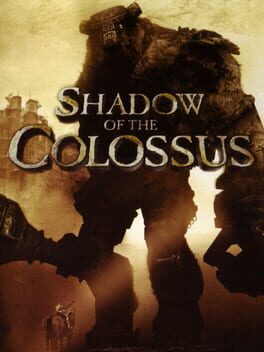
In an era where high‑octane shooters and sprawling live‑service ecosystems dominate the headlines, a quieter revolution is unfolding in the indie sphere. The last decade has seen a resurgence of games that prioritize mood, spatial storytelling, and restraint over sheer spectacle—a lineage that can be traced directly back to Fumito Ueda’s seminal titles, Ico, Shadow of the Colossus, and The Last Guardian. Those three works not only redefined what a “minimalist” experience could feel like, they also forged a template for a generation of developers who view emptiness, fog, and subtle environmental cues as narrative devices rather than mere backdrops. As console manufacturers scramble to fill the gap left by the waning of blockbuster exclusives, publishers are now more willing to gamble on titles that promise an artistic, contemplative journey, and Talon Towers lands squarely within that strategic pivot.
The platforming genre, once synonymous with relentless precision and bright, cartoonish worlds, has gradually embraced a darker, more introspective aesthetic. Titles such as Journey, Inside, and Hyper Light Drifter have demonstrated that players will willingly trade high‑speed action for an experience that rewards observation and emotional resonance. Against this backdrop, the announcement of a new parkour‑centric adventure set atop crumbling monoliths shrouded in an endless veil of fog feels less like a nostalgic echo and more like a logical evolution. The fog itself, a recurring motif in Ueda’s oeuvre, becomes a metaphor for the unknown challenges that lie ahead for both the player and the industry—a visual shorthand for the risk inherent in betting on atmospheric design in a market still heavily weighted toward measurable metrics like concurrent users and micro‑transaction revenue.
What Happened?
Earlier this week, the development studio behind the upcoming title Talon Towers revealed that Fumito Ueda has taken an advisory role, providing core design guidance and aesthetic direction for the project. While Ueda is not listed as the lead programmer or director, his involvement is described as “coding the spirit” of the game, ensuring that the delicate balance between challenge and wonder that defined his previous works is faithfully reproduced. Talon Towers places players in the shoes of a nameless wanderer tasked with navigating a series of colossal, dilapidated towers that jut skyward from a sea of perpetual mist. The gameplay revolves around fluid parkour mechanics—leaps, wall‑runs, and precision drops—combined with environmental puzzles that require players to interpret subtle visual cues, echoing the silent storytelling that made Ueda’s titles so memorable.
The studio also disclosed that the title will launch initially on PlayStation 5 and PC via Steam, with a later rollout planned for Xbox Series X|S. A closed beta is slated for Q1 2027, during which developers intend to collect telemetry on player movement patterns, death rates, and emotional responses measured through optional post‑session surveys. In a recent press release, the lead designer emphasized that the fog is not merely a visual effect but a gameplay element designed to obscure pathways, heighten tension, and force players to trust their intuition—a design philosophy that aligns closely with Ueda’s belief that “what is left unsaid often speaks louder than any dialogue.”
Analysis
From a market perspective, Talon Towers arrives at a crossroads where the appetite for premium‑priced, narrative‑driven experiences is resurging, particularly among core gamers who have grown weary of monetisation‑heavy titles. The decision to partner with Ueda, even in a consultative capacity, serves as a potent branding lever; his name alone commands a premium in the niche of artistic games, potentially allowing the publisher to command a higher launch price point without alienating its target demographic. Moreover, the multi‑platform launch strategy mitigates the risk of platform exclusivity—a lesson learned from the under‑performance of several high‑profile exclusives that suffered from limited install bases despite critical acclaim.
Technical hurdles also loom large. Rendering an infinite fog that both looks convincing and interacts dynamically with lighting and player movement demands a sophisticated use of volumetric rendering pipelines, something that has historically strained even next‑gen hardware. The studio’s choice to leverage the PS5’s Tempest Engine and DirectX 12 Ultimate on PC suggests an ambition to push the visual fidelity of atmospheric effects, but it also raises concerns about performance parity across hardware tiers. Should the developers succeed, they could set a new benchmark for environmental immersion, prompting competitors to invest in similar technologies—a ripple effect that could elevate the overall aesthetic standards of the platformer genre.
XPLog Opinion
At XPLog UK we view Talon Towers as a litmus test for the viability of art‑first design in a profit‑driven market. If the title can deliver a seamless marriage of Ueda‑inspired emotional weight with modern, fluid parkour mechanics, it will prove that there is still a lucrative niche for games that prioritize atmosphere over aggressive monetisation. The involvement of a figure like Ueda signals a broader industry shift: studios are increasingly willing to gamble on pedigree and aesthetic ambition, betting that the resulting word‑of‑mouth buzz will translate into sustainable sales. In short, Talon Towers could become the flagship that convinces investors that the “quiet game” is not a relic of the past, but a viable future pathway.
Final Thoughts
As the beta window approaches, the industry will be watching Talon Towers not just for its gameplay, but for the message it sends about the commercial relevance of atmospheric design. Should the game meet its lofty aspirations, it may usher in a new wave of titles that treat fog, silence, and verticality as core gameplay pillars rather than decorative flourishes. Keep an eye on the Q1 2027 beta dates, the forthcoming PlayStation showcase in early 2027, and the post‑launch sales data—those metrics will determine whether Ueda’s legacy continues to shape the next generation of core gaming experiences.