.png)
Overview
The sandbox phenomenon that began as a modest indie project in 2009 has, over the past decade and a half, become a cultural cornerstone, shaping everything from educational curricula to global esports spectacles. Central to its enduring appeal has been the elegant triad of realms – the Overworld, the Nether, and the End – each offering a distinct aesthetic, gameplay loop, and set of challenges that have been iterated upon through countless updates, community mods, and seasonal events. Yet despite the relentless stream of content, the core spatial architecture of Minecraft has remained unchanged since the introduction of the End in 2011, a fact that has quietly nagged at veteran builders and explorers who crave fresh horizons beyond the familiar biomes.
Against this backdrop, the September 2026 Minecraft Live – dubbed "The Sift" – delivered a surprise that reverberated through the player base and industry alike: the announcement of a brand‑new dimension, the first addition to the game's world‑building toolkit in more than fourteen years. The timing of the reveal is no accident; it arrives as Microsoft’s broader strategy to reinvigorate its flagship titles amid a competitive console market where next‑gen hardware and subscription services are reshaping revenue models. By positioning a new realm as a marquee feature, Mojang signals both a commitment to the core experience and an awareness that fresh, differentiated content is essential to retain the attention of an audience that now spans casual mobile players to hardcore PC modders.
What Happened?
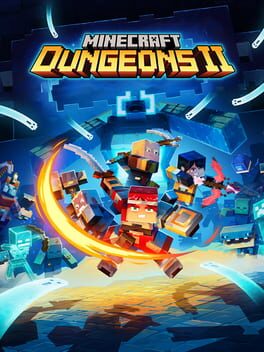
During the live broadcast, Mojang’s creative director unveiled "The Sift," a dimension that will sit alongside the Overworld, Nether, and End, promising a distinct visual palette and novel mechanics that have been hinted at in the upcoming Minecraft Dungeons II trailer. While the exact environmental characteristics remain under wraps, the developers emphasized that The Sift will introduce new block types, ambient hazards, and resource nodes that are exclusive to its realm, effectively expanding the game's crafting meta and exploration incentives. The announcement also clarified that The Sift will launch on both the Bedrock and Java editions, marking a rare moment of cross‑edition parity that has been a long‑standing demand from the community.
From a rollout perspective, Mojang indicated that the new dimension will be integrated into the game in a major update slated for release sometime in the following calendar year. Early developer statements highlighted a focus on ensuring seamless world‑generation compatibility, meaning that existing worlds will be able to access The Sift without requiring a fresh map, a move that respects the massive amount of player‑generated content already present in the ecosystem. Additionally, the team promised a suite of in‑game achievements and a limited‑time event that will encourage players to venture into the new realm shortly after its debut, thereby catalysing immediate engagement and content creation across streaming platforms.
Analysis
The introduction of a fourth dimension arrives at a pivotal juncture for Minecraft’s market performance. After years of incremental updates, the franchise’s revenue growth has increasingly relied on ancillary products such as skin packs, cross‑media collaborations, and the burgeoning Minecraft Dungeons sub‑brand. By delivering a substantive, game‑changing feature, Mojang can rejuvenate the core product’s value proposition, potentially driving a surge in active player counts and re‑activating lapsed users who have migrated to competing sandbox titles like "Terraria" or "Valheim". Moreover, the cross‑edition release strategy mitigates platform fragmentation, reinforcing Microsoft’s vision of a unified gaming ecosystem that leverages the strengths of both console and PC markets.
Technical integration of a new dimension, however, is not without challenges. The procedural generation algorithms that underpin Minecraft’s world‑building have been refined over a decade, and extending them to accommodate a novel biome hierarchy demands careful balancing to avoid performance regressions, especially on lower‑end devices that dominate the Bedrock market. Mojang’s commitment to maintaining parity also raises questions about mod support; historically, the Java community has pioneered dimension‑adding mods, and ensuring that third‑party creators can adapt their tools to The Sift will be crucial for preserving the modding culture that fuels much of the game’s longevity. If executed well, this expansion could set a new technical benchmark for future content drops, encouraging other live‑service games to adopt similar large‑scale world‑addition pipelines.
XPLog Opinion
From XPLog’s perspective, The Sift represents a bold reaffirmation that Minecraft is still a platform for genuine innovation, not merely a cash‑cow relying on cosmetic microtransactions. The decision to embed a whole new dimension into the base game – and to do so across both major editions – signals that Mojang is listening to the community’s yearning for deeper, systemic changes rather than surface‑level polish. This move could very well re‑ignite the competitive spirit among map creators, speedrunners, and content producers, ushering in a renaissance of community‑driven experiences that have historically been the lifeblood of the title’s cultural relevance.
Final Thoughts
In sum, the arrival of The Sift is poised to reshape Minecraft’s developmental trajectory, offering both a fresh playground for players and a strategic lever for Mojang to bolster its position in an increasingly crowded sandbox arena. As the promised 2027 update approaches, the industry will be watching closely to see how smoothly the new realm integrates with existing worlds, how the community embraces the added depth, and whether this bold expansion can translate into sustained growth for the franchise. Keep an eye on official patch notes and community showcases in the coming months – they will likely foreshadow the next wave of evolution for the world’s most beloved block‑building universe.