.png)
Overview
In March 2026 Konami and Nintendo fans were reminded that the vampire‑hunting saga is about to turn forty, a milestone that few video‑game franchises achieve without a period of dormancy or brand dilution. The original Castlevania debuted on the Famicom Disk System in 1986, exploiting the medium’s rewritable capabilities to deliver a sprawling, atmospheric platformer that set a template for action‑adventure design. A year later the title crossed the Pacific to the Nintendo Entertainment System, where its unforgiving difficulty and gothic aesthetic resonated with a generation of gamers hungry for a darker alternative to the pastel‑colored platformers of the era. Over the ensuing three decades, the series migrated across every Nintendo home console—from the Super NES and Nintendo 64 to the GameCube, Wii U, and now the Switch—each incarnation reflecting both technological advances and shifting design philosophies within the broader industry.
That historical trajectory coincides with a broader market resurgence of retro‑compatible experiences, fuelled by the Switch’s hybrid nature and Nintendo’s aggressive curation of legacy titles. The platform’s eShop now hosts dozens of classic ports, and Nintendo’s “Nintendo Switch Online” subscription service has turned nostalgia into a recurring revenue stream. For Konami, whose portfolio has been fragmented by strategic pivots toward mobile and pachinko, leveraging the Switch’s audience offers a low‑risk avenue to monetize a beloved IP while testing the waters for potential new entries. The guide’s republishing, timed to the 40th anniversary, is therefore not merely a celebratory checklist but a strategic signal that the vampire‑laden franchise remains a viable asset in a market that values both heritage and the promise of fresh, franchise‑driven content.
What Happened?
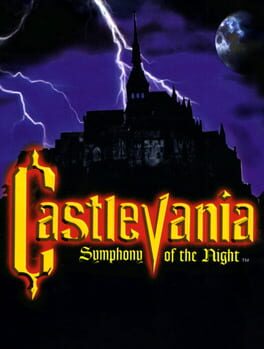
The latest feature on NintendoLife revisits a comprehensive ranking of every Castlevania title ever released on Nintendo hardware, updating the list to reflect the full catalogue now available on the Switch. The article meticulously orders each game—from the pixel‑perfect corridors of the original NES entry to the polished, modern reinterpretations like Castlevania: Grimoire of Souls—based on criteria that blend historical significance, gameplay refinement, and fan reception. Notably, the guide acknowledges a conspicuous omission: the seminal Castlevania: Symphony of the Night, which, despite its critical acclaim and status as a genre‑defining “Metroidvania,” has yet to appear on any Nintendo platform in an official capacity, a gap that continues to fuel speculation among collectors and developers alike.
Beyond the rankings, the piece contextualizes the list within Konami’s broader anniversary campaign, highlighting a series of limited‑edition releases, digital re‑releases, and potential cross‑media tie‑ins. By republishing the guide, the outlet underscores the enduring relevance of the series while also providing a roadmap for new players who may be unfamiliar with the franchise’s sprawling history. The article’s tone balances reverence for the series’ legacy with a pragmatic eye toward future opportunities, suggesting that the comprehensive nature of the list could serve as a benchmark for any forthcoming remasters or original entries that Konami might unveil on Nintendo hardware.
Analysis
From a market perspective, the sustained presence of Castlevania on Nintendo devices illustrates the symbiotic relationship between legacy IPs and modern hardware ecosystems. Nintendo’s strategy of curating a robust retro library not only extends the commercial life of older titles but also reinforces the Switch’s positioning as a “games for everyone” platform, capable of satisfying both nostalgic veterans and newcomers seeking high‑quality single‑player experiences. Meanwhile, Konami’s selective porting approach—prioritizing titles that align with the Switch’s performance envelope and audience expectations—mitigates the risk of diluting the brand with sub‑par emulations. The lingering absence of Symphony of the Night, however, signals a potential technical or licensing hurdle; its complex audio and sprite systems, originally designed for the PlayStation, may require substantial re‑engineering to meet the Switch’s standards, a challenge that could influence Konami’s timeline for a definitive “Switch‑first” release.
Competitively, the resurgence of classic action‑adventure franchises across PlayStation and Xbox ecosystems—exemplified by the recent remaster of Metroid Prime and the launch of a new Resident Evil title—places pressure on Konami to deliver a compelling value proposition. By consolidating the series’ Nintendo catalog and spotlighting its evolution, the guide indirectly raises consumer expectations for a possible “ultimate edition” that could bundle multiple entries, perhaps even incorporating cloud‑save functionality or cross‑save between Switch and PC. Such a move would not only capitalize on the growing trend of “complete‑collection” purchases but also position Castlevania as a benchmark for how legacy franchises can be revitalized without sacrificing the core design ethos that originally captivated audiences.
XPLog Opinion
At XPLog UK we view the renewed focus on Castlevania’s Nintendo lineage as a litmus test for how effectively Konami can leverage nostalgia while laying groundwork for a new generation of titles; the company must balance faithful preservation with innovative iteration, lest it become a museum piece rather than a living franchise capable of competing in today’s crowded action‑adventure market.
Final Thoughts
As the 40th anniversary approaches, the comprehensive ranking serves both as a celebration of Castlevania’s storied past and a strategic roadmap for its future on Nintendo hardware; keep an eye on official announcements from both Konami and Nintendo in the coming months, as any hint of a remaster, compilation, or brand‑new entry could reshape the franchise’s trajectory for the next decade.