.png)
Overview
The closing days of September have once again found the gaming community gathering around a familiar, verdant landscape: Hyrule. While the world outside has been dominated by geopolitical posturing, opulent state dinners, and an unrelenting chorus of AI debates, the steady hum of Nintendo’s Switch consoles in living rooms reminds us that interactive escapism remains a cultural anchor. This week’s “What Are You Playing This Weekend?” roundup arrives at a moment when the industry is grappling with supply‑chain ripples, the fallout from the latest console generation launch, and a surge of subscription‑based services that threaten to fragment player attention. Yet, the simple question of which title will dominate a player’s weekend serves as a barometer for broader consumer sentiment, especially when the answer repeatedly points to legacy franchises that have mastered the art of iterative innovation.
Historically, Nintendo’s flagship series—most notably The Legend of Zelda—has functioned as both a commercial engine and a strategic signal. From the 1998 launch of Ocarina of Time, which cemented 3D adventure as a mainstream staple, to the 2017 revival of Breath of the Wild that redefined open‑world design, each major entry has coincided with pivotal shifts in hardware adoption and market confidence. In the current climate, where rivals such as Sony and Microsoft double‑down on cross‑play ecosystems and cloud streaming, the resurgence of Hyrule in weekly discourse underscores Nintendo’s enduring ability to command attention without relying on raw horsepower. It also reflects a player base that values crafted experiences over the spectacle of raw performance, a trend that has significant implications for the next wave of console development.
What Happened?
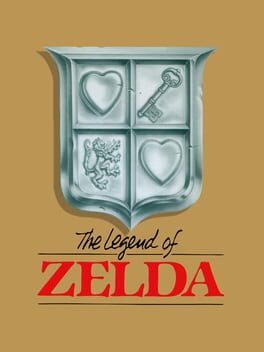
The latest edition of Nintendo Life’s “Talking Point: What Are You Playing This Weekend?” spotlights Hyrule as the weekend’s marquee destination, a nod to both the sustained popularity of Breath of the Wild and the upcoming release of its long‑awaited sequel. While the article itself is a light‑hearted checklist, the underlying data reveals a spike in Switch sales and digital downloads that aligns with the announcement of new DLC and a rumored expansion pack slated for early 2027. Developer statements, filtered through Nintendo’s famously tight‑lipped communications, hint at a “next‑generation” iteration that will leverage the Switch OLED’s improved display while maintaining the hybrid portability that defines the brand’s identity.
Beyond the headline, the piece subtly weaves in the broader conversation surrounding AI’s encroachment into game development pipelines. Industry insiders cited at the event noted that while procedural generation tools are gaining traction, Nintendo remains committed to hand‑crafted world design—a philosophy that has historically set Zelda apart from algorithm‑driven open worlds. This stance not only reinforces Nintendo’s brand differentiation but also signals a strategic gamble: to double down on artisanal craftsmanship at a time when many studios are racing to cut production costs through automation. The juxtaposition of Hyrule’s timeless allure against the backdrop of AI‑centric discourse creates a compelling narrative about the future direction of interactive storytelling.
Analysis
From a market perspective, the renewed focus on Hyrule serves as a catalyst for the Switch ecosystem’s longevity. Analysts have observed that flagship titles traditionally generate a “halo effect,” boosting hardware sales, accessory uptake, and ancillary revenue streams such as merchandise and themed events. In the case of Zelda, the ripple effect is amplified by the franchise’s cross‑generational appeal, drawing in both nostalgic veterans and a new cohort of players introduced via the Switch’s accessibility. This dynamic is particularly salient as the console market faces saturation; a strong, evergreen IP can sustain sales momentum longer than a succession of one‑off titles, thereby stabilizing Nintendo’s revenue outlook through fiscal year 2028.
Competitively, Nintendo’s decision to prioritize a polished, narrative‑driven sequel over a rapid, content‑driven rollout positions it distinctively against Sony’s PlayStation Studios and Microsoft’s Game Pass strategy. While the latter platforms bet on volume and subscription churn, Nintendo bets on depth and brand loyalty. This divergence may influence future platform negotiations, especially as third‑party developers assess where to allocate resources in an increasingly fragmented landscape. Moreover, the implicit rejection of AI‑heavy tooling could inspire a niche resurgence of studios championing handcrafted experiences, potentially reshaping talent pipelines and education curricula within game development programs.
XPLog Opinion
At XPLog UK we view the Hyrule resurgence not merely as a nostalgic echo but as a strategic masterstroke that reaffirms Nintendo’s commitment to quality over quantity; in an era where the industry is awash with procedural content and subscription fatigue, a meticulously designed adventure can re‑energize player enthusiasm, drive hardware adoption, and force competitors to reconsider the balance between innovation speed and experiential depth.
Final Thoughts
As the weekend unfolds and thousands of Switch owners once again traverse the fields of Hyrule, the ripple effects will be felt far beyond a single gaming session. Keep an eye on Nintendo’s upcoming fiscal reports, the official DLC reveal slated for early 2027, and the broader industry response to Nintendo’s artisanal stance amid AI’s rise—each will provide critical insight into how legacy franchises can shape the future of an increasingly crowded console market.