.png)
Overview
When Skyrim first launched in November 2011, it did more than simply add another entry to the Elder Scrolls canon; it redefined what an open‑world RPG could achieve on both PC and consoles. Its sprawling provinces, mod‑friendly architecture, and relentless post‑launch support created a cultural phenomenon that has endured for nearly fifteen years, outliving most of its contemporaries and continually feeding a thriving community of creators, streamers, and competitive modders. Yet while the franchise’s fanbase has been kept busy by endless patches, DLC, and community‑driven content, the official sequel, The Elder Scrolls VI, has lingered in Bethesda’s development furnace, its release date still a guarded secret.
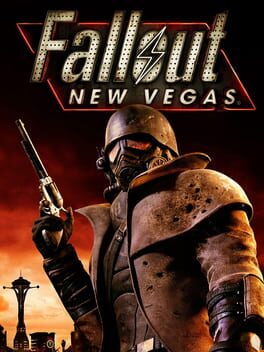
Historically, Bethesda has been reluctant to hand the reins of its most lucrative IPs to outside developers, preferring to keep the creative pipeline in‑house. The lone notable exception was Fallout: New Vegas, a 2010 title crafted by Obsidian Entertainment under Bethesda’s license, which managed to capture critical acclaim while still respecting the core Fallout formula. That partnership was born out of a unique convergence of market pressure and internal bandwidth constraints, and it has since become a cautionary tale for Bethesda’s executives: the allure of an external spin‑off must be weighed against the risk of diluting a brand that functions as the company’s financial cornerstone.
What Happened?
In a recent interview, the self‑styled Skyrim Loremaster—an influential voice within the modding community—revealed that Bethesda’s senior leadership remains “very protective” of the Elder Scrolls franchise, treating it as a golden goose that must not be over‑exploited. According to the Loremaster, internal discussions have repeatedly dismissed the notion of commissioning an outside studio to produce a spin‑off that could bridge the fifteen‑year gap between major releases. The rationale, as explained, hinges on a fear that a sub‑par or stylistically divergent title could tarnish the series’ reputation, erode player trust, and ultimately cannibalise the anticipation for the forthcoming mainline entry.
The decision contrasts sharply with Bethesda’s earlier willingness to outsource Fallout: New Vegas, a move driven by the need to keep the Fallout brand alive while Bethesda was still deep in the development of Fallout 4. At that time, the market was hungry for fresh content, and Microsoft’s acquisition of Obsidian later cemented the partnership’s legacy. Today, however, Bethesda operates under the umbrella of Microsoft’s Xbox Game Studios, and the strategic calculus has shifted: the company now leans on the massive reach of Xbox Game Pass and the promise of exclusive titles to drive console subscriptions, reducing the incentive to gamble on external collaborations that could fragment the brand’s identity.
Analysis
From a market‑performance perspective, Bethesda’s protective stance safeguards the premium pricing power of its flagship IPs. By keeping development tightly controlled, the studio avoids the pitfalls that befell other publishers who licensed out beloved franchises only to see them diluted by inconsistent quality—think of the numerous spin‑offs that plagued the Star Wars gaming universe in the early 2000s. Moreover, the absence of an external Elder Scrolls spin‑off means Bethesda can funnel all its resources into delivering a technically ambitious sequel that leverages the latest iteration of its Creation Engine, potentially setting new benchmarks for world scale, AI complexity, and dynamic storytelling. This concentration of effort may also translate into a stronger launch window, essential for maintaining the franchise’s relevance amidst fierce competition from titles like Cyberpunk 2077’s post‑launch revival and the ever‑expanding open‑world offerings from Ubisoft.
On the console ecosystem front, Bethesda’s integration into Microsoft’s portfolio has altered the calculus of licensing entirely. Xbox Game Pass users now enjoy immediate access to Bethesda’s back catalogue, turning the Elder Scrolls library into a subscription‑driven magnet rather than a series of discrete sales events. An external spin‑off, especially on a rival platform, could undermine this strategy by siphoning attention away from the Game Pass value proposition. Conversely, the PlayStation ecosystem, still eager for exclusive RPG experiences, could have benefited from a Bethesda‑licensed title, but Microsoft’s ownership effectively closes that avenue, reinforcing the notion that Bethesda’s “protective” posture is as much about platform politics as it is about brand purity.
XPLog Opinion
At XPLog UK we believe Bethesda’s caution is understandable but not without opportunity cost. The studio’s unrivalled world‑building expertise could be amplified through carefully curated collaborations—think a limited‑run, narrative‑focused DLC produced by a studio with a proven track record in RPG storytelling, released exclusively on Game Pass to boost subscriber churn. Such a partnership would preserve creative control while delivering fresh content to a starving fanbase, keeping the Elder Scrolls conversation alive without compromising the integrity of the core series.
Final Thoughts
In sum, Bethesda’s decision to keep the Elder Scrolls franchise firmly under its own roof reflects a strategic blend of brand stewardship, financial prudence, and platform alignment. As the development of The Elder Scrolls VI continues behind closed doors, the industry will be watching for any shift in licensing philosophy, especially as Microsoft levers its subscription model to extract maximum value from its prized IPs. Until then, the next concrete milestone to watch is Bethesda’s upcoming E3 showcase—expected in early 2027—where the studio may finally lift the veil on its long‑awaited sequel and perhaps hint at whether the golden goose will ever be allowed to lay a second egg.