.png)
Overview
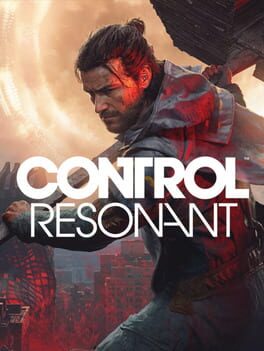
When Remedy Entertainment unveiled Control Resonant earlier this year, the gaming world watched with a mixture of awe and skepticism. The studio, long‑hailed for its cinematic storytelling in titles such as Alan Wake and Max Payne, ventured into a more overtly RPG‑styled experience, marrying its signature narrative flair with a sprawling, upside‑down world that demanded both exploration and mastery. The launch arrived at a moment when the industry is increasingly rewarding games that can sustain player engagement beyond the initial 40‑hour playthrough, and Remedy’s decision to lean into post‑launch content reflects a broader shift from one‑off premium releases toward a hybrid model that blends traditional single‑player depth with live‑service longevity.
That strategic pivot is not happening in a vacuum. The last three years have seen giants like Ubisoft, Square Enix, and CD Projekt Red experiment—sometimes clumsily—with downloadable content, seasonal updates, and free‑to‑play expansions to keep titles relevant in a market saturated with streaming services and subscription bundles. Players now expect a steady stream of polish, new mechanics, and community‑driven features that extend the lifespan of a game they love. Control Resonant’s forthcoming Photo Mode and the intriguingly named New Game Plus Plus (NG+ ++) are Remedy’s answer to these expectations, promising to turn the title into a platform for creative expression and endless replayability, rather than a static narrative experience.
What Happened?
During a recent livestream, Remedy’s creative director confirmed that the next month will see the rollout of three major post‑launch additions. First, a suite of new outfits will allow players to customize their avatar’s appearance, tapping into the growing demand for personalization that has become a staple of modern RPGs. Second, a dedicated Photo Mode will give players granular control over camera angles, depth of field, and lighting—tools that will let the community capture the surreal vistas of Resonant’s inverted reality and share them across social platforms, effectively turning the game into a user‑generated content engine. Finally, the studio teased New Game Plus Plus, an iteration on the classic NG+ loop that not only carries over core progress but also layers additional challenges, hidden quests, and a dynamic difficulty scaling that promises “never‑ending playthroughs,” as the developer put it.
Remedy emphasized that these features are not mere cosmetic afterthoughts; they are built on the same engine architecture that powers the core game, meaning they will integrate seamlessly with the existing save‑state system and world‑state persistence. The studio also hinted at a “run‑counter” mechanic that will track the number of complete cycles a player undertakes, encouraging a meta‑progression loop that rewards dedication with exclusive gear and narrative snippets. This design philosophy mirrors the studio’s earlier experiments with post‑launch content in Alan Wake II, where narrative extensions were delivered as free updates, reinforcing the notion that Remedy is treating Control Resonant as a living, evolving experience rather than a closed book.
Analysis
From a market perspective, Remedy’s post‑launch roadmap positions Control Resonant to capture both the hardcore core‑gamer demographic and the burgeoning creator community that fuels titles like Fortnite and Minecraft. Photo Modes have become a de‑facto standard for AAA releases, driving organic marketing through player‑shared screenshots and videos that reach audiences far beyond traditional advertising channels. By embedding a robust Photo Mode from the outset, Remedy not only enhances player agency but also creates a pipeline of free, user‑generated promotion that can extend the game’s visibility well into its second year of life.
Equally significant is the New Game Plus Plus system, which tackles a long‑standing criticism of the traditional NG+ loop: its tendency to become a mere replay of content without meaningful new stakes. By layering procedurally generated challenges and a persistent run counter, Remedy injects a roguelike‑style endurance factor that aligns Control Resonant with titles such as Hades and Elden Ring, both of which have demonstrated the commercial viability of “infinite” replay loops. This move also dovetails with Microsoft’s Xbox Game Pass strategy, where games that can sustain long‑term engagement are more likely to retain subscribers, potentially boosting Remedy’s visibility across console ecosystems.
XPLog Opinion
In XPLog’s view, Remedy’s decision to double‑down on post‑launch content is a calculated gamble that could redefine the studio’s identity from pure narrative artisans to hybrid creators capable of delivering evergreen experiences. While there is a risk that the added features may dilute the tightly‑woven story that made the original launch so compelling, the potential payoff—a vibrant community that continually uncovers new layers of Resonant’s world—outweighs the danger. If Remedy can balance narrative integrity with the open‑ended freedom promised by NG+ ++, it will not only cement Control Resonant as a benchmark for post‑launch evolution but also set a new standard for how story‑driven studios approach longevity in an era dominated by service‑oriented gaming.
Final Thoughts
Control Resonant’s upcoming Photo Mode and New Game Plus Plus updates signal Remedy’s commitment to turning a single‑player RPG into a persistent playground, a strategy that could reshape expectations for narrative‑heavy titles in the years to come. With the first wave of post‑launch content slated for release next month, players and analysts alike will be watching closely to see whether the promised “665 runs if you want” becomes a badge of honor for the community or a cautionary tale of over‑extension. Keep an eye on Remedy’s official channels and the Xbox Game Pass roadmap for the exact launch dates and any further surprise additions that may deepen the Resonant experience.