.png)
Overview
The Fire Emblem franchise, birthed in 1990 on the Famicom and shepherded for three decades by Intelligent Systems, has long been a barometer for Nintendo's ability to marry narrative depth with tactical rigor. From the clunky beginnings of Marth's first foray into pixelated warfare to the cinematic grandeur of Three Houses, each iteration has reflected the evolving expectations of core gamers while nudging Nintendo's hardware roadmap forward. The arrival of Fire Emblem: Fortune's Weave on the newly launched Switch 2 arrives at a pivotal moment: the console is still solidifying its install base, and Nintendo is eager to demonstrate that the handheld‑hybrid can sustain heavyweight, content‑rich experiences without compromising the portable ethos that made the original Switch a cultural phenomenon.
In the broader market, 2026 has seen a surge of hybrid and cloud‑first titles vying for the attention of strategy aficionados who traditionally gravitated toward PC‑centric wargames or mobile tactical RPGs. Sony’s PlayStation 5 continues to dominate raw horsepower, while Microsoft leans heavily on subscription services to deliver indie gems. Within this competitive maelstrom, a high‑profile, multi‑protagonist Fire Emblem launch serves not only as a showcase of Nintendo’s first‑party pedigree but also as a strategic counter‑punch, reminding the ecosystem that depth of design and replayability can be just as compelling as graphical fidelity.
What Happened?
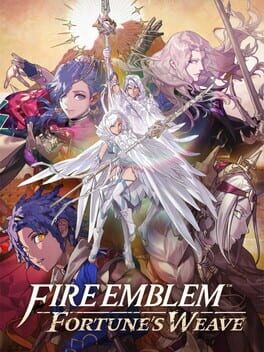
Last week, Intelligent Systems unveiled Fire Emblem: Fortune's Weave on the Switch 2, positioning it as the most ambitious entry in the series to date. The game introduces five distinct protagonists—Cai, Leda, Deitrich, Theodora, and Eshmel—each commanding their own narrative thread that intertwines with a central geopolitical crisis. Early players report that fully exploring every character’s arc, side‑quests, and hidden battle maps can easily push playtime beyond a triple‑digit hour count, a milestone rarely achieved on a Nintendo platform. Critical reception has been overwhelmingly positive, with Metacritic currently assigning an 89, signaling both a strong consensus among reviewers and a solid foundation for word‑of‑mouth momentum.
Developer statements emphasize that Fortune's Weave is built on a refined iteration of the series’ “branching‑path” engine, originally introduced in Fire Emblem: Awakening, but now augmented with dynamic weather systems, AI‑driven enemy tactics, and a fully orchestrated soundtrack that reacts to battlefield outcomes. Intelligent Systems also highlighted a new “legacy” mechanic, allowing decisions made by one protagonist to echo across the storylines of the others, thereby deepening the sense of agency and encouraging multiple playthroughs. The announcement was accompanied by a robust marketing push, including a series of livestream demos, a partnership with major esports organizers to trial a competitive mode, and a limited‑edition Switch 2 bundle that bundles the game with a custom controller.
Analysis
From a market perspective, Fortune's Weave arrives at a juncture where Nintendo’s hardware sales have plateaued but the install base remains hungry for flagship experiences that justify the premium price point of the Switch 2. The game’s projected launch window aligns with the holiday season in key territories, a timing decision that historically boosts first‑week sales for Nintendo’s premier titles. Moreover, the sheer volume of content—estimated at over 100 hours of primary narrative plus extensive post‑game material—positions the title as a long‑tail revenue generator, feeding both physical sales and digital DLC pipelines for at least two years. This durability is crucial for Nintendo, which has been seeking to diversify its revenue beyond the traditional “one‑off” cartridge model.
Competitively, the title pits Intelligent Systems directly against Square Enix’s revived tactical series and the burgeoning “tactical roguelike” niche on PC and mobile platforms. While those rivals lean heavily on procedural generation and micro‑transactions, Fortune's Weave leans into handcrafted storytelling and a premium pricing strategy, betting on brand loyalty and the franchise’s reputation for depth. Technically, the Switch 2’s upgraded GPU and expanded SSD bandwidth enable more complex battle simulations and richer visual fidelity without sacrificing the series’ signature isometric clarity. However, the ambitious multi‑protagonist architecture also introduces development risk: balancing narrative cohesion across five arcs demands meticulous writing and rigorous QA, a challenge that could surface in post‑launch patches if any storyline threads feel under‑cooked.
XPLog Opinion
At XPLog UK we view Fortune's Weave as a decisive statement that Nintendo is not content to rest on the laurels of its nostalgic catalog; instead, it is actively pushing the strategic genre forward, leveraging the Switch 2’s hardware to deliver a console‑native experience that rivals the depth of PC‑first titles. The decision to embed a “legacy” mechanic across five protagonists is a bold design gamble that, if executed cleanly, could set a new benchmark for narrative interconnectivity in RPGs. Our verdict is clear: this is not merely another Fire Emblem entry—it is a litmus test for Nintendo’s ability to marry massive content scopes with the portable convenience that defines the Switch brand.
Final Thoughts
Fire Emblem: Fortune's Weave stands as a watershed moment for both the franchise and the Switch 2 ecosystem, promising to keep core strategy fans engaged for months while providing Nintendo with a robust flagship to anchor its hardware sales through the end of the year. Players and analysts alike should keep an eye on the upcoming sales report slated for early November, as well as the planned post‑launch content roadmap that will reveal whether Intelligent Systems can sustain the momentum with meaningful expansions. Regardless of the numbers, the game’s ambition alone reaffirms Nintendo’s commitment to delivering deep, narrative‑driven experiences that continue to shape the future of console strategy gaming.