.png)
Overview
When Bandai Namco’s Ace Combat franchise first entered the console arena in the late 1990s, it carved a niche that blended arcade‑style dogfighting with a surprisingly cinematic narrative. Over two decades the series evolved from pixel‑packed skies on the PlayStation to the photorealistic, emotionally resonant aerial battles of Ace Combat 7: Skies Unknown, which not only became the best‑selling entry in the line‑up but also demonstrated that there remains a robust appetite for high‑octane, story‑driven flight combat in an era dominated by open‑world shooters and battle‑royales. The commercial triumph of Skies Unknown handed Bandai Namco’s newly formed Aces studio a rare combination of financial freedom and heightened expectations, setting the stage for a sequel that must both honor its predecessor’s legacy and justify the resources now at its disposal.
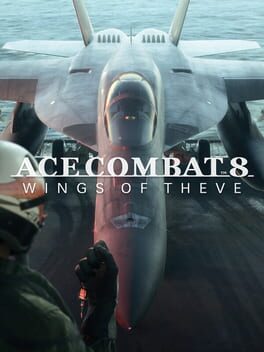
Launching exclusively on the PlayStation 5, Ace Combat 8: Wings of Theve arrives at a moment when next‑gen hardware is finally being leveraged for true cinematic immersion. The console’s ultra‑fast SSD, ray‑traced lighting, and haptic feedback present an opportunity for the series to redefine the sensory experience of aerial combat, something that developers have hinted at since the title’s initial reveal at a recent Sony State of Play. Moreover, the broader market is witnessing a resurgence of niche simulators—whether it’s the resurgence of Microsoft Flight Simulator or the steady growth of mech‑focused titles—indicating that a well‑executed, premium flight title can capture both hardcore enthusiasts and newcomers seeking a polished, narrative‑rich experience.
What Happened?
The announcement, delivered via a 15‑minute showcase streamed globally, confirmed that Wings of Theve would ship in early 2025, positioning it as a flagship PS5 exclusive for the platform’s second‑year cycle. Bandai Namco emphasized that the game’s narrative will revolve around a newly introduced geopolitical conflict in the fictional continent of Theve, featuring a cast of pilots whose personal arcs intertwine with a broader commentary on AI‑driven warfare. Early gameplay footage showcases a dramatically expanded roster of aircraft, ranging from classic legacy jets like the F‑14 Tomcat to speculative hypersonic prototypes, each rendered with unprecedented fidelity thanks to the console’s ray‑tracing capabilities.
Beyond visual fidelity, the developers have highlighted a suite of systemic upgrades: a revamped flight physics engine that promises a more nuanced balance between arcade accessibility and realistic aerodynamics, a dynamic weather system that influences combat tactics in real time, and an overhauled multiplayer architecture that supports seamless cross‑region matches with up to 64 participants in massive aerial engagements. The inclusion of a “Pilot’s Log” progression system, which tracks individual flight performance and unlocks bespoke customization options, signals an intent to deepen player investment over the long term, while the promised post‑launch content pipeline—additional campaigns, aircraft, and seasonal events—aims to keep the community engaged well beyond the initial launch window.
Analysis
From a market standpoint, Ace Combat 8 arrives at a crossroads where premium, narrative‑driven single‑player experiences are increasingly rare on consoles, supplanted by live‑service models that prioritize recurring revenue over artistic ambition. By committing to a robust post‑launch roadmap while preserving a strong single‑player core, Bandai Namco appears to be hedging against both trends, hoping to capture the loyalty of long‑time fans while also tapping into the lucrative “games as a service” ecosystem. The decision to remain a PS5 exclusive—at least for the first twelve months—further underscores a strategic partnership with Sony, granting the title premium placement on the PlayStation Store and potentially leveraging Sony’s marketing machinery to reach a broader audience that may not traditionally gravitate toward flight simulators.
Technically, the shift to a fully ray‑traced rendering pipeline places Ace Combat 8 among a select group of titles that are pushing the limits of the PS5’s GPU. This move is not merely cosmetic; accurate light scattering and reflective surfaces can dramatically affect player perception of altitude, speed, and spatial awareness—critical factors in a game where split‑second decisions dictate life‑or‑death outcomes. However, the ambition also introduces a risk: the need to balance visual fidelity with frame‑rate stability, especially in multiplayer skirmishes where latency and responsiveness are paramount. If the studio can deliver a consistent 60 fps experience without compromising on the promised atmospheric effects, it will set a new benchmark for the genre and could pressure competitors to raise their own technical standards.
XPLog Opinion
At XPLog, we view Wings of Theve as a litmus test for how legacy franchises can evolve in the next‑gen era without losing their soul. Bandai Namco’s willingness to pour next‑gen resources into a niche genre signals confidence that there is still a viable market for high‑quality, story‑centric aerial combat. If the game delivers on its technical promises while maintaining the series’ trademark blend of fast‑paced action and emotional storytelling, it could rejuvenate interest in flight combat titles and inspire a wave of new entrants seeking to emulate its success. Conversely, any misstep—be it performance hiccups, shallow multiplayer depth, or a narrative that feels tacked on—could reinforce the industry’s bias toward broader‑appeal, multiplayer‑first experiences.
Final Thoughts
In sum, Ace Combat 8: Wings of Theve stands as a high‑stakes gamble for Bandai Namco Aces: it must leverage the PS5’s hardware to deliver an unforgettable aerial spectacle while navigating the shifting sands of modern game monetisation and player expectations. With a slated release in early 2025 and a clear roadmap of post‑launch support, the title will be one to watch not only for its own merits but for the broader signal it sends about the future viability of premium, narrative‑driven flight simulators in a market that increasingly favours live‑service ecosystems.