.png)
Overview
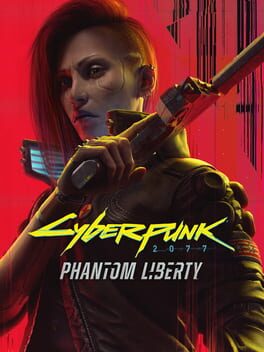
When CD Projekt Red announced the expansion pack Phantom Liberty, the most immediate buzz centered on its narrative promise of political intrigue and neon‑drenched streets. Yet beneath the glossy trailers lay a quieter, more labor‑intensive story: the development of the Chimera tank boss, a sequence that would consume roughly two years of the studio’s resources and become, by the team’s own admission, one of the most expensive art assets ever created for a video game. This revelation is not merely a footnote; it signals a shift in how AAA studios allocate budgets, balancing cinematic set‑pieces against the ever‑tightening constraints of post‑launch live‑service expectations.
Historically, CD Projekt Red’s reputation has oscillated between groundbreaking ambition and overpromised delivery, most famously with the fraught launch of Cyberpunk 2077 in 2020. The company’s subsequent redemption arc—through relentless patches, the launch of the free‑to‑play multiplayer venture, and now Phantom Liberty—has been under intense scrutiny from both investors and the core gamer community. In this climate, the decision to pour extensive time and capital into a single combat encounter reflects a broader industry trend where studios treat marquee moments as brand‑defining assets, akin to the massive set pieces seen in titles like Horizon Forbidden West’s oceanic battles or Elden Ring’s colossal dragons.
What Happened?
According to a recent developer diary, the Chimera tank fight required a two‑year development cycle that spanned concept art, high‑resolution modeling, physics simulation, and iterative gameplay testing. The team built a fully functional, destructible tank chassis, complete with a custom particle system for its plasma cannon, and integrated a dynamic AI director that adapts the encounter based on player skill. The “expensive” label stems not only from the sheer number of artist hours—estimated in the high hundreds—but also from the need to license proprietary motion‑capture rigs and bespoke sound design that could convey the visceral weight of a mechanized behemoth crashing through Night City’s underbelly.
Developer lead Marcin Iwiński emphasized that the sequence was designed to be more than a visual showcase; it serves as a narrative crucible where V must confront the morally ambiguous machinations of the expansion’s antagonists. The team’s iterative approach involved multiple playtests, each revealing new balance challenges that forced revisions to the tank’s armor values, weapon cooldowns, and even the surrounding environment’s destructibility. This meticulous refinement underscores a broader commitment from CD Projekt Red to deliver a combat experience that feels both cinematic and mechanically satisfying, a lesson hard‑learned from the original game’s early combat criticisms.
Analysis
The allocation of such a disproportionate amount of resources to a single encounter is a gamble that could reshape budgeting philosophies across the industry. On one hand, a high‑impact set piece can act as a marketing catalyst, drawing in both returning fans and new players who crave “epic moments” that are easily shareable on social media. On the other hand, it raises questions about opportunity cost: could those same artist hours have been distributed to improve the game’s broader systems, such as AI behavior or world‑building depth? Competitors like Ubisoft have recently embraced a more distributed asset pipeline, focusing on modular, reusable components that can be repurposed across multiple titles, thereby mitigating risk.
From a technical standpoint, the Chimera tank showcases the maturation of CD Projekt Red’s in‑house REDengine 4, now capable of handling massive real‑time destruction without compromising frame‑rate on current‑gen consoles. This achievement may set a new benchmark for future open‑world titles, compelling rivals to either match the fidelity or find alternative ways to differentiate—perhaps through procedural storytelling or hybrid live‑service models. Moreover, the financial outlay signals to investors that the studio is willing to double down on premium experiences, a stance that could influence upcoming fiscal forecasts and shareholder confidence.
XPLog Opinion
At XPLog UK, we view the Chimera tank as a bold, if risky, statement of intent: CD Projekt Red is betting that a single, unforgettable combat vignette can re‑anchor its brand in the eyes of a skeptical community, while also proving that the studio has emerged from its 2020 missteps with the technical chops to back up its ambitions. If the encounter lives up to the hype, it could act as a keystone for Phantom Liberty’s commercial success, but the true test will be whether the surrounding world feels equally polished, lest the tank become a gilded cage that highlights lingering systemic flaws.
Final Thoughts
The Chimera tank fight stands as a microcosm of the evolving AAA development ethos—where cinematic ambition, financial risk, and player expectation intersect in a high‑stakes dance. As Phantom Liberty rolls out on December 7, 2024, the industry will watch closely to see if CD Projekt Red’s two‑year, multimillion‑dollar investment pays dividends in player retention, critical acclaim, and long‑term franchise health. Keep an eye on post‑launch metrics and community feedback; they will reveal whether this colossal tank was a triumph of artistry or a cautionary tale of over‑concentration.