.png)
Overview
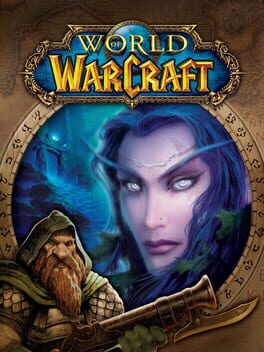
When Blizzard first launched World of Warcraft in 2004, it did more than introduce a new game; it created a cultural touchstone that reshaped the expectations of online role‑playing experiences. The original title's blend of a persistent, richly detailed world, a steady stream of content, and a social architecture that encouraged both casual raids and hardcore guild politics set a benchmark that countless successors have tried—often unsuccessfully—to emulate. Over the past two decades the franchise has oscillated between expansion‑driven growth cycles and periods of player fatigue, as the core loop grew increasingly dependent on hyper‑inflated loot tables, subscription fatigue, and a design philosophy that favored breadth over the intimate sense of discovery that defined the early years.
In response to this erosion of player goodwill, Blizzard introduced World of Warcraft Classic in 2019, a curated recreation of the 2006 “Vanilla” experience that deliberately stripped away the polish of later expansions in favor of the raw, emergent gameplay that first captivated a generation. The success of Classic proved that there remained a deep, untapped appetite for the original formula, prompting the studio to experiment further with nostalgic iterations. The latest incarnation, World of Warcraft: Forever, builds upon that foundation, promising not merely a nostalgic trip but a reimagined platform that seeks to fuse the timeless allure of the original world with modern quality‑of‑life upgrades, thereby attempting to reconcile the divergent demands of legacy fans and new entrants in a saturated MMO market.
What Happened?
Announced at Blizzard’s mid‑year digital showcase, World of Warcraft: Forever is positioned as a “living classic” that will retain the core map layout, quest architecture, and progression curves of the 2004 launch while integrating a suite of backend enhancements. These include a revamped matchmaking system that reduces queue times for dungeon groups, an updated UI that respects the aesthetic of the original yet offers drag‑and‑drop customization, and a cross‑regional server architecture designed to mitigate latency issues that have long plagued the franchise’s global player base. Blizzard’s lead designer, Alexei Petrov, emphasized that the project is not a mere “remaster” but a “re‑engineered experience” that leverages the current engine’s scalability to host a player count that rivals modern live‑service titles.
The announcement also detailed a phased rollout strategy: an initial “Beta Horizon” open to legacy players who have logged at least 200 hours on any Classic server, followed by a “Global Launch” slated for Q2 2027. Monetisation will remain subscription‑based, but with a tiered model that offers optional cosmetic micro‑transactions—an approach that attempts to balance revenue stability with community expectations that have grown wary of pay‑to‑win accusations. Early developer statements hint at a dynamic content pipeline that will introduce “Living Lore” events, where world‑changing story beats are triggered by collective player actions, a concept that could set a new standard for persistent narrative in MMOs.
Analysis
From a market perspective, Forever arrives at a pivotal moment when the MMO genre is fragmenting across niche experiences—battle‑royale hybrids, looter‑shooters, and subscription‑free “games as a service” dominate the revenue charts. By re‑entering the space with a product that simultaneously honors its heritage and adopts contemporary technical standards, Blizzard is betting on brand equity to recapture lapsed subscribers while attracting a younger cohort that values streamlined onboarding. The decision to retain a subscription model, albeit with a flexible tier, signals confidence that the core audience still perceives value in a curated, ad‑free environment, a stance that could pressure competitors to rethink their free‑to‑play monetisation frameworks.
Technical hurdles remain significant. Integrating modern server sharding with a world originally designed for a monolithic architecture will require sophisticated load‑balancing and state‑synchronisation solutions to prevent the infamous “realm hopping” that plagued earlier expansions. Moreover, the promise of “Living Lore” events introduces a layer of emergent narrative that demands robust analytics and real‑time decision‑making pipelines—areas where Blizzard has historically lagged behind more data‑driven studios. Success in these domains could not only rejuvenate the WoW franchise but also provide a template for legacy titles seeking to modernise without alienating their foundational player bases.
XPLog Opinion
At XPLog UK we view World of Warcraft: Forever as a calculated gamble that could redefine how legacy IPs evolve in the live‑service era; if Blizzard can deliver the promised blend of nostalgic fidelity and modern convenience, they will not only restore faith among disenfranchised veterans but also set a benchmark for sustainable MMO design that balances content depth with player agency, a balance that has been elusive for far too long.
Final Thoughts
In sum, Forever represents Blizzard’s most ambitious attempt to reconcile its storied past with the demands of a rapidly shifting industry, and its trajectory will be watched closely by both investors and developers alike. With the beta slated for late 2026 and the full launch expected in mid‑2027, the next twelve months will reveal whether the magic of Azeroth can truly be reborn for a new generation, or if the weight of nostalgia will prove too heavy for a market that has moved on.