.png)
Overview
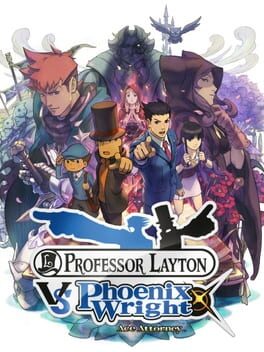
As the legal calendar flips to the next month, the courtroom drama of Phoenix Wright will celebrate a quarter‑century of pixel‑perfect jurisprudence, while the bespectacled professor of puzzles prepares to don his iconic hat once more for a fresh adventure later this year. Both franchises have become cultural touchstones for the handheld generation, each carving a distinct niche—Wright with his theatrical cross‑examination mechanics and Layton with his cerebral, story‑driven riddles—yet they have also shared a surprising synergy that first manifested in the 2019 3DS hybrid, Professor Layton vs. Phoenix Wright: Ace Attorney. That title proved that the marriage of narrative intrigue and logical challenge could thrive on Nintendo’s portable hardware, a fact that now fuels speculation that the game will be reborn for modern audiences.
In the broader industry context, the last few years have witnessed an unprecedented wave of retro revivals, from full‑scale remasters to cloud‑based streaming of legacy libraries. Nintendo itself has leaned heavily on nostalgia, repackaging classic titles for the Switch and re‑launching the Switch Lite as a budget-friendly handheld. The rumour of a new, “modern release” of the Layton‑Wright crossover therefore lands at a moment when the market appetite for polished, portable experiences is at a historic high, and when developers are eager to capitalize on anniversaries to re‑ignite dormant fan bases.
What Happened?
According to a leak that surfaced on a popular Nintendo‑focused forum, a build of the original 3DS title appears to have been uploaded to a cloud storage service with a filename hinting at a “Switch Port 2026.” While the file itself is not publicly downloadable, screenshots of the build metadata suggest that the original assets have been re‑wrapped for the current console architecture, complete with higher‑resolution textures and revised UI scaling. The leak also includes a short developer comment, attributed to a senior producer at Level‑5, noting that “the team is revisiting the crossover to ensure it meets the expectations of a new generation of handheld players.”
Industry insiders further report that Capcom, the steward of the Ace Attorney franchise, is collaborating closely with Level‑5 to align the release with Phoenix Wright’s 25th‑year celebration events slated for October. The partnership is expected to leverage both companies’ marketing pipelines, with a coordinated social media push, limited‑edition physical releases, and potential cross‑promotional DLC that could tie the crossover into upcoming mainline entries for both series. Should the rumours hold true, a launch window in early 2027 would give both publishers ample runway to fine‑tune the experience and integrate community feedback gathered from recent fan‑run petitions.
Analysis
The commercial calculus behind a Switch‑or‑future‑console port is compelling. The original 3DS version sold modestly, buoyed largely by the novelty of the crossover rather than sustained franchise momentum. By contrast, the Switch’s eShop has demonstrated a robust appetite for niche titles that combine strong IP recognition with low development risk, as evidenced by the success of indie revivals like Shovel Knight: Treasure Trove. A polished port could tap into this ecosystem, generating incremental revenue without the overhead of a ground‑up remake, while also refreshing the title’s visual fidelity to match the 720p standard of modern handhelds.
From a technical perspective, the transition from the 3DS’s dual‑core ARM11 architecture to the Switch’s NVIDIA Tegra X1 presents both opportunities and challenges. The original game’s puzzle logic and dialogue trees are already well‑optimized, but the art assets will likely require upscaling and re‑authoring to avoid a “pixelated” feel on larger screens. Moreover, integrating the Switch’s online features—such as cloud saves and optional co‑op play—could deepen player engagement but will demand careful coordination between Level‑5’s in‑house engine and Capcom’s networking stack. If executed cleanly, the port could serve as a showcase for how legacy handheld experiences can be rejuvenated without sacrificing their core charm.
XPLog Opinion
At XPLog UK we view the potential resurrection of Professor Layton vs. Phoenix Wright not merely as a nostalgic cash‑grab, but as a strategic bellwether for how legacy IPs can be leveraged to sustain Nintendo’s handheld relevance in an increasingly mobile‑first market. By aligning the release with a high‑profile anniversary and delivering a technically competent port, Level‑5 and Capcom stand to reaffirm the viability of hybrid puzzle‑adventure titles, a genre that has historically struggled to find a mainstream foothold. Should the project succeed, it could pave the way for further cross‑franchise collaborations, encouraging publishers to explore untapped synergies that appeal to both veteran fans and newcomers alike.
Final Thoughts
While the leak remains unconfirmed, the convergence of anniversary milestones, market demand for portable revivals, and the technical feasibility of a Switch‑era port creates a fertile environment for the Layton‑Wright crossover to re‑enter the spotlight. Gamers should keep an eye on official channels from Level‑5, Capcom, and Nintendo throughout the remainder of 2026, when a formal announcement is likely to surface ahead of a Q1 2027 launch. If the whispers prove true, the industry will witness a compelling case study in how celebrated IPs can be repackaged for modern hardware without diluting the original experience that made them beloved.