.png)
Overview
Microsoft’s relentless push to cement Xbox Game Pass as the de‑facto subscription service for console and PC gamers entered another pivotal moment on September 23, when six fresh titles were added to the rotating catalogue. The move arrives at a juncture where the subscription model is no longer a novelty but a strategic battleground, pitting Microsoft’s all‑inclusive ecosystem against Sony’s traditional launch‑first approach and Nintendo’s hybrid of first‑party exclusivity and indie support. By bolstering the library with a mixture of nostalgic mechanics and modern design philosophies, Microsoft signals its intent to keep the service appealing to both legacy fans and the newer, experience‑seeking cohort that has gravitated toward games‑as‑a‑service.
Historically, Xbox’s content strategy has oscillated between high‑budget blockbusters and a steady stream of indie gems, a duality that mirrors the console’s broader market positioning. The September rollout is particularly noteworthy because it follows the annual Game Pass Showcase and precedes the holiday shopping rush, a window that developers and publishers have long coveted for maximum visibility. In an industry where launch windows can dictate a title’s commercial destiny, bundling these releases into the subscription model not only guarantees immediate player exposure but also reinforces Microsoft’s narrative that owning an Xbox console is synonymous with accessing a curated, ever‑evolving game library.
What Happened?
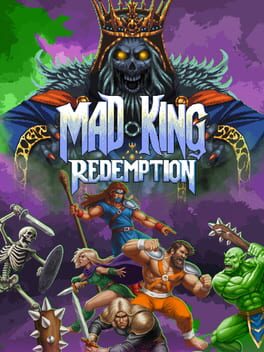
The six titles introduced span a broad spectrum of genres, from a retro‑styled brawler that leans heavily on pixel‑perfect combat to a narrative‑driven adventure that promises emotional depth. Among them, Mad King Redemption stands out as a throwback to classic arcade beat‑'em‑ups while integrating roguelite progression systems—a hybrid that aims to capture the attention of both veteran arcade enthusiasts and younger players craving replayability. The game’s developer highlighted its “old‑school brawler with roguelite elements” in a brief statement, emphasizing the desire to blend familiar button‑mashing satisfaction with modern, procedural challenges that keep each run fresh.
All six games are immediately accessible to Xbox Game Pass Ultimate, Premium, and PC subscribers, a distribution model that underscores Microsoft’s commitment to platform agnosticism. By making the titles available across console, cloud, and PC, Microsoft not only widens the potential player base but also leverages its cross‑play infrastructure to reduce friction for gamers who toggle between devices. The announcement also hinted at upcoming community events and seasonal content drops tied to these releases, suggesting a longer‑term engagement plan rather than a simple one‑off addition.
Analysis
From a market performance perspective, the infusion of six new games—especially a title like Mad King Redemption that taps into the resurging interest in roguelite mechanics—bolsters Game Pass’s value proposition at a time when subscriber churn is a critical metric for Microsoft. Competitors such as Sony have begun experimenting with subscription bundles of their own, yet Microsoft’s advantage lies in its willingness to integrate a diverse catalogue without the same level of exclusivity constraints. This strategy mitigates risk; if a single title underperforms, the overall health of the subscription remains buoyed by the breadth of offerings, a lesson learned from the early days of Game Pass when a handful of flagship titles carried disproportionate weight.
Technical hurdles also play a subtle but significant role. Delivering a fast‑paced brawler like Mad King Redemption over Xbox Cloud Gaming demands low latency and precise input handling, challenges that Microsoft has been addressing through continuous server upgrades and edge‑computing deployments. Success in this arena could set a precedent for future high‑skill, latency‑sensitive games to join the cloud roster, expanding the service’s appeal beyond casual or single‑player experiences and potentially reshaping how developers prioritize cross‑platform optimization.
XPLog Opinion
At XPLog UK, we view today’s rollout as a decisive affirmation that Microsoft is no longer content with merely matching the competition—it is actively redefining the subscription paradigm by marrying nostalgic design with forward‑looking service mechanics. The inclusion of Mad King Redemption, a title that feels both like a love letter to the arcade era and a nod to today’s procedural trends, exemplifies the kind of calculated risk that can keep the Game Pass ecosystem vibrant and unpredictable, a quality that hardcore gamers increasingly crave in a market saturated with safe, formulaic releases.
Final Thoughts
In sum, the September 23 release wave enriches the Xbox Game Pass catalogue at a strategically critical moment, offering both immediate gameplay value and long‑term strategic leverage for Microsoft’s subscription model. As the holiday season approaches, the true test will be how these titles drive engagement metrics and influence subscriber growth, but early indicators suggest that the blend of retro appeal and modern design could become a template for future additions, keeping the Xbox ecosystem both relevant and exciting for the core gaming community.