.png)
Overview
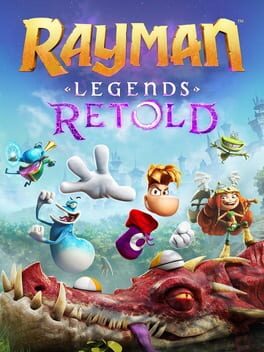
Ubisoft has long leveraged the Rayman franchise as a barometer for the health of the 2‑D platformer genre, and the latest announcement of Rayman Legends Retold arrives at a moment when the market is craving both nostalgic polish and fresh technical ambition. The original Rayman Legends, first launched in 2013, set a benchmark for hand‑drawn artistry, rhythmic level design, and cooperative play that still influences indie titles today. By positioning a retold edition for a December 3, 2026 launch, Ubisoft is not merely re‑packaging a beloved classic; it is signalling confidence that the platformer formula can thrive alongside the live‑service behemoths that dominate current console ecosystems.
From a broader industry perspective, the move dovetails with a resurgence of high‑profile remasters and definitive editions that aim to capture both legacy fans and a new generation of players who have migrated to the current generation of consoles and PC. Nintendo’s Switch continues to dominate the family‑friendly space, yet the platform’s hardware limits have left room for a version that can exploit the raw horsepower of the PlayStation 5, Xbox Series X|S, and modern PCs. The timing also aligns with Ubisoft’s broader “Future Classics” roadmap, which seeks to revitalize its flagship IPs ahead of the next fiscal reporting period, thereby smoothing revenue streams in a market still recovering from the post‑pandemic slowdown.
What Happened?
The overview trailer unveiled on Ubisoft’s official channels showcases Rayman Legends Retold in a light that feels both familiar and dramatically upgraded. Every level is rendered with a higher dynamic range, richer texture detail, and a frame‑rate that climbs to 60 fps on compatible hardware, while the signature whimsical soundtrack has been remastered in lossless audio. The trailer also hints at new quality‑of‑life features, such as an expanded tutorial system, adaptive difficulty sliders, and seamless cross‑save functionality that bridges the Switch and other platforms, a first for the series.
Accompanying the visual showcase, Ubisoft’s publishing lead emphasized that this iteration is not a simple port but a “complete retelling” that incorporates feedback gathered from the community over the past decade. The statement underscored a commitment to preserving the core cooperative chaos that defined the original while introducing optional modern conveniences like ray‑traced lighting, HDR support, and a re‑engineered physics system that promises smoother character interactions. The company also confirmed that the launch will be simultaneous across PlayStation 5, Xbox Series X|S, PC via Ubisoft Connect, and a refreshed version for the Switch, ensuring the title reaches the widest possible audience.
Analysis
From a market performance standpoint, the retold edition arrives at a juncture where platformers are carving out a niche amid the dominance of shooters and battle‑royales. Ubisoft’s strategy mirrors that of Sony and Microsoft, who have both leaned heavily on remastered catalogues to bolster their platform libraries without incurring the full development costs of brand‑new IPs. By delivering a technically superior version, Ubisoft hopes to capture both the nostalgic spend of long‑time fans and the premium price point that modern gamers are accustomed to paying for next‑gen visual fidelity. This could translate into a modest but steady revenue stream that offsets the higher risk associated with their larger‑scale ventures such as the Assassin’s Creed franchise.
Technically, the undertaking is not without hurdles. Up‑scaling a game originally built on the UbiArt Framework to leverage ray‑tracing and HDR requires a substantial rewrite of the rendering pipeline, and ensuring parity across vastly different hardware architectures—particularly the Switch’s ARM‑based chipset—poses a significant engineering challenge. Competitors like Nintendo have recently demonstrated that they can deliver visually impressive indie platformers on the Switch, raising the bar for what players expect even from a remaster. Ubisoft’s success will therefore hinge on how seamlessly it can balance visual upgrades with the fluid, responsive gameplay that made the original a critical darling.
XPLog Opinion
At XPLog UK we view Rayman Legends Retold as a calculated gamble that could pay dividends beyond the immediate sales window; it reinforces Ubisoft’s reputation for nurturing its legacy titles while simultaneously testing the viability of high‑fidelity platformers in an ecosystem increasingly dominated by multiplayer live services. If the retold edition delivers on its promises, it will not only rejuvenate the Rayman brand but also set a precedent for how classic 2‑D experiences can be re‑imagined for the next generation without sacrificing the soul that made them iconic.
Final Thoughts
In sum, Rayman Legends Retold stands as a litmus test for Ubisoft’s ability to blend nostalgia with next‑gen polish, and its performance will likely influence the publisher’s roadmap for other legacy franchises. Players should keep an eye on post‑launch updates slated for early 2027, as well as potential DLC expansions that could further extend the game’s lifespan and cement its place within the modern platformer renaissance.