.png)
Overview
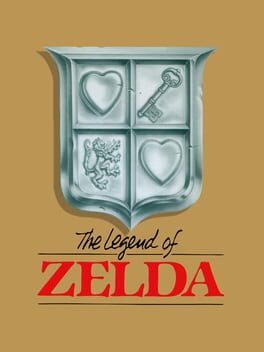
The Legend of Zelda has been Nintendo's flagship adventure series for nearly four decades, and its 40th‑anniversary celebrations have become a litmus test for how the company leverages nostalgia in a hyper‑competitive console market. By bundling a specially designed Switch 2 console with an Ocarina of Time‑themed cover, a custom dock, and a suite of commemorative accessories, Nintendo is not merely selling hardware; it is packaging a cultural artifact that taps into the collective memory of gamers who first experienced the seminal 1998 title on the Nintendo 64. This approach mirrors earlier collector‑focused releases such as the 2017 "Super Mario Odyssey" limited‑edition console and the 2020 "Pokemon Sword & Shield" special editions, which demonstrated that premium pricing and artificial scarcity can generate outsized revenue streams while reinforcing brand loyalty.
At the same time, the broader console ecosystem is undergoing a seismic shift. Sony’s PlayStation 5 and Microsoft’s Xbox Series X|S have cemented a high‑performance, media‑centric paradigm, while Nintendo continues to occupy the niche of family‑friendly, innovative gameplay. The Switch 2, rumored to feature a more powerful NVIDIA chipset and an OLED‑enhanced display, is positioned as a bridge between Nintendo’s quirky hardware identity and the raw horsepower demanded by modern gamers. In this environment, limited‑edition hardware serves a dual purpose: it creates a halo effect that draws attention to the upcoming flagship console, and it provides a testbed for premium accessory ecosystems that could become recurring revenue sources long after the base console’s launch.
What Happened?
In early September, Nintendo confirmed the rollout of a 40th‑anniversary Zelda collection that includes a limited‑edition Switch 2 adorned with the iconic Ocarina of Time artwork, a matching Joy‑Con set, a themed dock, and a collector’s box containing a replica of the Master Sword keychain and a specially printed art book. The package was slated for a staggered release across flagship Nintendo stores in Japan, the United States, and select European territories, with each region receiving a tightly controlled allocation of roughly 5,000 units. Nintendo’s official statement framed the collection as “a tribute to the legacy that shaped a generation,” emphasizing that the design was crafted in collaboration with the original Ocarina of Time development team to ensure authenticity.
Within hours of the pre‑order window opening, reports emerged that a single European retailer—identified only as “Retailer X”—had inadvertently placed an order double the intended quantity. Internal logistics data leaked to the press suggested that the retailer’s ordering system misread the stock‑limit flag, resulting in a request for 10,000 units instead of the allocated 5,000. This misstep triggered a cascade of stock shortages across neighboring outlets, prompting frantic social‑media outcry from fans who feared they would miss out on what many consider the most coveted piece of Nintendo memorabilia to date. Nintendo’s corporate communications team issued a brief apology, citing “an unexpected surge in demand” while promising to “review distribution protocols” ahead of the official launch.
Analysis
The immediate market impact of the ordering glitch is twofold. First, the artificial scarcity created by the limited‑edition run has already inflated secondary‑market prices, with listings on platforms such as StockX and eBay reaching up to three times the retail price. This price escalation not only fuels a lucrative aftermarket but also signals to investors that Nintendo’s premium‑hardware strategy can generate high‑margin revenue streams beyond the traditional software pipeline. Second, the incident underscores a persistent challenge for Nintendo: balancing the allure of scarcity with the risk of alienating core fans who view such tactics as gatekeeping. If the company continues to rely on limited runs to drive hype, it must invest in robust inventory management tools to avoid repeat mishaps that could erode consumer trust.
From a competitive standpoint, Nintendo’s focus on commemorative hardware differentiates it from Sony and Microsoft, whose flagship releases are anchored primarily in raw performance metrics. By leveraging the emotional capital of a franchise like Zelda, Nintendo can command premium pricing without the need to match the silicon specifications of its rivals. However, this strategy also places the onus on Nintendo to deliver a Switch 2 that lives up to the expectations set by its collector’s edition. Should the next‑gen console fall short in terms of frame rates, load times, or battery life, the disconnect between the high‑priced collector’s item and the everyday user experience could become a liability, especially as the industry moves toward cloud‑gaming and cross‑platform ecosystems.
XPLog Opinion
At XPLog UK we view the Ocarina of Time limited‑edition as a masterstroke of brand‑centric marketing, but we caution Nintendo against letting scarcity become a crutch. The real test will be whether the Switch 2 can sustain momentum once the collector’s hype subsides; a robust launch lineup, backward compatibility, and transparent supply chains will be essential to convert nostalgia‑driven sales into lasting platform loyalty. Nintendo should consider expanding limited‑edition runs in a tiered fashion—offering a “standard” commemorative bundle alongside an ultra‑rare version—to satisfy both hardcore collectors and the broader fanbase without inflating secondary‑market speculation.
Final Thoughts
As the launch window for the Switch 2 narrows toward the end of the year, the Zelda limited‑edition saga offers a microcosm of Nintendo’s broader strategic dilemma: harness the power of its storied franchises to drive premium hardware sales while ensuring the underlying platform remains competitive in an increasingly performance‑driven market. Keep an eye on the official release date—projected for 15 November 2026—and the forthcoming “Tears of the Kingdom” sequel, both of which will serve as litmus tests for whether Nintendo can translate collector enthusiasm into sustained ecosystem growth.