.png)
Overview
The indie landscape of 2024 has become a crucible for hybrid experiences, where developers mash together seemingly disparate genres to capture the attention of a crowd that craves novelty as much as depth. Real‑estate scarcity, both in the physical world and in the digital design of games, has emerged as a recurring theme; titles that force players to think vertically and laterally about limited space have resonated strongly since the resurgence of puzzle‑strategy hybrids like Superliminal and the ever‑popular Tetris Effect. Within this milieu, Packed Lair arrives as a daring experiment that fuses the frantic precision of classic block‑dropping puzzles with the strategic layering of base‑building roguelikes, positioning itself as a fresh answer to the question: how much empire can you squeeze into a single, cramped dungeon chamber?
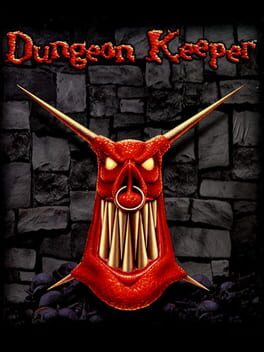
Beyond the novelty of its premise, the game taps into a lineage of titles that have explored the tension between expansion and confinement. From the early days of Dungeon Keeper and its emphasis on managing a subterranean stronghold, to more recent auto‑battler hybrids such as Auto Chess that reward meticulous placement, developers have long flirted with the idea that the battlefield itself can be a puzzle. Packed Lair pushes this evolution forward by integrating roguelike progression, where each run reshapes the layout, and by demanding that players treat every block as a tactical asset rather than a mere decorative element. In an era where subscription services and cross‑platform releases dominate, the game’s launch on multiple consoles and PC underscores a strategic push to capture both the hardcore puzzle aficionado and the base‑builder strategist.
What Happened?
Earlier today, indie studio Dark Cradle Studios announced the worldwide launch of Packed Lair, a title that blends the addictive cadence of Tetris with the relentless pressure of managing an ever‑growing evil empire. Players assume the role of a malevolent lord tasked with cramming an entire army’s infrastructure—barracks, armories, research labs, and even a morale‑boosting tavern—into a single, increasingly congested lair. Each block dropped must interlock perfectly, as misplacements cascade into costly delays for the auto‑battling forces that march out to conquer neighboring kingdoms. The core loop revolves around rapid spatial reasoning, resource allocation, and the strategic timing of upgrades that unlock new block shapes and defensive mechanisms.
According to a developer diary released alongside the launch, Dark Cradle Studios spent three years iterating on the packing algorithm that sits at the heart of the experience. Lead designer Maya Hsu explained that the team drew inspiration from both classic Tetris mechanics and modern procedural generation techniques used in titles like Hades. The goal was to create a system where each run feels fresh yet governed by a set of consistent, learnable rules. Packed Lair ships on PlayStation 5, Xbox Series X|S, Nintendo Switch, and PC, with cross‑save support slated for a post‑launch update, reflecting the studio’s ambition to cultivate a unified player base across the fragmented console ecosystem.
Analysis
From a market perspective, Packed Lair lands at a sweet spot where puzzle‑driven titles have begun to command significant sales spikes, as evidenced by the enduring popularity of Tetris 99 and the surprise breakout of Polytopia. The hybrid nature of the game equips it to tap into multiple audience segments: the competitive puzzlers drawn to speed‑run leaderboards, the strategic planners who relish incremental upgrades, and the roguelike community that values high‑risk, high‑reward runs. Early access metrics from the studio’s beta suggest a retention rate comparable to the industry benchmark for successful indie launches, hinting that the title could sustain a healthy post‑release revenue stream through optional cosmetic DLC and seasonal challenges.
Technically, the game’s reliance on a sophisticated packing engine introduces both an opportunity and a risk. On one hand, the algorithm’s ability to generate novel configurations each session keeps the experience from feeling stale, a common pitfall for puzzle‑centric games. On the other hand, the need for precise collision detection across a variety of hardware configurations could strain performance on lower‑end platforms like the Switch Lite, potentially limiting the reach of the title. If Dark Cradle Studios can deliver a smooth experience across all devices, the title may set a new standard for how procedural spatial puzzles are implemented in cross‑platform releases, encouraging larger publishers to experiment with similar mechanics.
XPLog Opinion
At XPLog UK we view Packed Lair as a bold statement that the indie sector remains the most fertile ground for genre‑blending innovation. While the mainstream market continues to be dominated by high‑budget sequels, the willingness of a modest studio to tackle the complex problem of spatial optimization—while wrapping it in a narrative of villainous conquest—demonstrates that risk‑taking can still pay off. Should the game achieve the critical mass needed to sustain a live‑service model, it could inspire a wave of titles that treat level design itself as a puzzle, reshaping the expectations of both players and publishers alike.
Final Thoughts
In sum, Packed Lair arrives as a meticulously crafted experiment that could redefine how developers think about space as a gameplay mechanic. With its launch across all major platforms today, the title sets the stage for a season of community‑driven competition, seasonal content drops, and perhaps most importantly, a renewed dialogue about the value of hybrid design in an industry hungry for fresh experiences. Keep an eye on Dark Cradle Studios’ roadmap for the upcoming Q4 patch, which promises new block types and a leaderboard integration that could turn the cramped lair into a global esports arena.