.png)
Overview
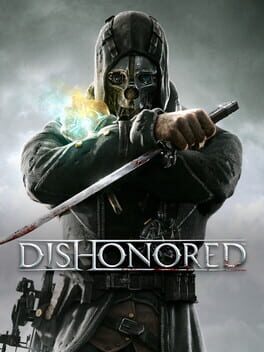
When Microsoft completed its $7.5 billion purchase of ZeniMax Media in 2021, the acquisition was heralded as a seismic shift for the Xbox ecosystem. Arkane Studios, the award‑winning developer behind the critically lauded Dishonored series, Prey, and the genre‑bending Deathloop, was thrust into a new corporate constellation that promised deeper integration with Xbox Game Pass and a broader canvas for narrative‑driven experiences. Yet, the very promise that made the deal attractive—unfettered creative freedom backed by a behemoth publisher—has become a double‑edged sword as the post‑acquisition landscape has been reshaped by a cascade of strategic realignments, most notably the massive restructuring following the Activision Blizzard merger.
Amid this turbulence, Arkane’s most public‑facing project, a Marvel‑licensed action‑adventure titled Blade, has been left in a state of limbo. Announced with much fanfare in early 2023, the title was positioned to leverage Arkane’s expertise in atmospheric world‑building while tapping into the burgeoning demand for superhero games. However, as Xbox’s senior leadership continues to prune its portfolio and re‑prioritise flagship franchises such as Halo, Forza, and the newly‑re‑energised Fable series, the future of Blade—and by extension Arkane’s role within the broader Microsoft strategy—remains an unresolved question that could reverberate across the entire console market.
What Happened?
During a company‑wide communiqué earlier this month, Xbox chief commercial officer Matt Booty outlined the next wave of workforce reductions, a move that directly follows the integration of Activision Blizzard’s studios into Microsoft’s corporate structure. Booty’s message, while largely focused on the operational health of Halo, Forza, and the upcoming Fable reboot, included a terse acknowledgment that “the status of Arkane Studios will be revisited in due course.” The phrasing, devoid of any concrete timeline or resource allocation, has sparked speculation that Arkane may either be earmarked for a strategic pivot or, conversely, be caught in the cross‑currents of budgetary tightening.
Compounding the uncertainty is the fact that Blade, which was slated to be a PlayStation‑exclusive title before the ZeniMax acquisition, never received a definitive development update after the deal closed. Sources close to the studio have indicated that pre‑production milestones were achieved, but the project was subsequently placed on hold pending a reassessment of Marvel licensing terms and the alignment of Arkane’s internal pipelines with Microsoft’s broader first‑party roadmap. The lack of a public statement from either Marvel or Xbox since the initial reveal underscores the delicate nature of licensing negotiations when a studio’s ownership changes hands.
Analysis
The ramifications of Arkane’s ambiguous status extend far beyond a single IP. From a market perspective, Microsoft’s aggressive acquisition strategy has been designed to fortify Game Pass as a subscription juggernaut, but the efficacy of that model hinges on a steady flow of exclusive, high‑profile releases. Arkane’s pedigree makes it a prime candidate for such exclusivity, yet the company’s recent history of experimental titles—Deathloop’s initial release on both platforms before becoming a timed Xbox exclusive—suggests a willingness to experiment with hybrid launch models. If Blade were to be resurrected under a Game Pass‑first banner, it could serve as a marquee example of how Microsoft leverages licensed properties to compete with Sony’s PlayStation Studios, which have historically dominated the superhero niche with titles like Marvel’s Spider‑Man.
Technical considerations also loom large. Arkane’s proprietary Void Engine, while lauded for its sophisticated lighting and AI systems, requires substantial engineering support to scale to the next‑gen console generation and to integrate seamlessly with Microsoft’s cloud‑based services. The recent layoffs have reportedly affected several support teams that provide the tooling and middleware essential for such scaling. Consequently, even if the studio receives a green light for Blade, the path to a polished launch could be protracted, potentially eroding the window of market relevance in a genre that thrives on timely cultural tie‑ins.
XPLog Opinion
From XPLog’s standpoint, the most prudent course for Microsoft is to grant Arkane a clear, well‑funded mandate that aligns with both the studio’s creative strengths and the strategic imperatives of the Xbox ecosystem. A half‑hearted commitment risks diluting Arkane’s brand equity and sending a chilling signal to other first‑party studios about the stability of their pipelines. By positioning Blade as a flagship Game Pass launch—complete with cross‑play support and robust post‑launch content—Microsoft could not only recoup its investment in Marvel licensing but also reaffirm its commitment to delivering narrative‑driven, immersive experiences that set the Xbox brand apart from its rivals.
Final Thoughts
While the next Xbox hardware showcase and the upcoming Bethesda Games Showcase will likely provide the first concrete hints about Arkane’s direction, the industry will be watching closely for any indication that Blade moves from “on hold” to “green‑lit.” Until then, the studio’s fate remains a microcosm of Microsoft’s broader challenge: balancing aggressive portfolio expansion with the need to nurture the creative engines that made those acquisitions attractive in the first place.