.png)
Overview
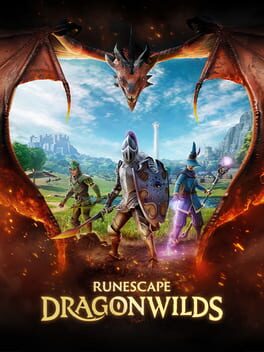
The arrival of RuneScape: Dragonwilds on Nintendo’s freshly unveiled Switch 2 has been met with a mixture of anticipation and trepidation, emblematic of a broader industry trend where venerable PC‑centric franchises are courting console audiences hungry for fresh experiences. Jagex, the London‑based studio behind the world‑renowned MMORPG RuneScape, has spent the past two years reimagining its sandbox survival spin‑off for a handheld that promises higher fidelity, faster load times, and a more robust online infrastructure than its predecessor. This strategic pivot arrives at a moment when Nintendo is aggressively courting third‑party developers to fill the content pipeline that has traditionally leaned heavily on first‑party IP, making Dragonwilds a litmus test for how well legacy online titles can translate to a console‑centric ecosystem.
Beyond the hardware considerations, the launch sits against a backdrop of an increasingly saturated open‑world survival market, where titles such as Ark, Valheim, and The Forest have set high bars for performance, stability, and community tools. Players accustomed to the near‑infinite scalability of RuneScape’s original servers now confront the constraints of a portable console, raising questions about how Jagex will balance the series’ hallmark persistence with the Switch 2’s comparatively modest RAM and storage. The stakes are amplified by the fact that Dragonwilds is not merely a port but a re‑engineered experience that aims to capture the social dynamism of the MMO while delivering the immediacy of a single‑player survival adventure.
What Happened?
Within days of the Switch 2 launch, the community began flagging a series of technical hiccups that threatened to undermine the game’s core promise of a seamless, persistent world. Most notably, players reported instances where their world saves became corrupted, effectively erasing hours of progress and forcing a hard reset. Jagex responded swiftly, deploying a comprehensive patch that targeted the save‑state handling routines, reinforced data integrity checks, and introduced a fallback recovery system to mitigate future loss. The patch also addressed a constellation of performance regressions, ranging from frame‑rate drops in densely populated biomes to intermittent connectivity glitches that disrupted the multiplayer fabric.
While the immediate patch restored a measure of confidence, Jagex publicly acknowledged that the “ongoing issues” cited by the community extend beyond the most visible bugs. In a developer diary posted to the official forums, the studio outlined a roadmap of “stability fixes” that will roll out over the coming weeks, including memory‑management optimizations, refined asset streaming pipelines, and enhanced error‑logging to capture edge‑case failures. This transparent, iterative approach mirrors the live‑service model that has become standard for large‑scale online games, yet it also underscores the challenges of delivering a polished experience on a platform still in its early adoption phase.
Analysis
The patch cadence and the nature of the issues reveal a deeper market narrative: legacy publishers are learning, often the hard way, that the expectations of console players differ markedly from those of PC audiences. Jagex’s rapid response demonstrates an acute awareness that first impressions on a new console can dictate long‑term adoption, especially when competing against established Nintendo exclusives and high‑profile third‑party releases. By committing resources to a post‑launch fix schedule, Jagex is signaling its intent to treat Dragonwilds as a live service rather than a one‑off port, a decision that could pay dividends in player retention if the underlying infrastructure proves resilient.
From a technical standpoint, the challenges stem from reconciling RuneScape’s historically server‑heavy architecture with the Switch 2’s hybrid architecture, which blends a custom NVIDIA Tegra‑X2 GPU with a shared memory pool. The original MMO’s reliance on sprawling world persistence and rapid data syncs places significant strain on the console’s bandwidth, necessitating clever compression algorithms and asynchronous loading strategies. The recent patch’s focus on memory‑management and asset streaming hints at Jagex’s ongoing battle to squeeze a traditionally PC‑first experience into a portable form factor without sacrificing the depth that long‑time fans expect.
XPLog Opinion
At XPLog UK, we view Dragonwilds’ rocky debut as both a cautionary tale and a promising opportunity: the missteps highlight the perils of under‑estimating platform‑specific constraints, yet the decisive patch rollout showcases Jagex’s commitment to its community. If the studio can sustain this momentum and deliver the promised stability, Dragonwilds could become a flagship example of how legacy online worlds can thrive on Nintendo hardware, potentially opening the floodgates for other MMO veterans to explore the handheld market.
Final Thoughts
In the weeks ahead, the real measure of success will be whether Dragonwilds can evolve from a patch‑laden launch into a stable, content‑rich destination that satisfies both RuneScape purists and newcomers drawn by the Switch 2’s portability. Players and analysts alike should keep an eye on Jagex’s update cadence, upcoming DLC announcements, and any performance metrics disclosed at the next Nintendo Developer Conference, where the studio is expected to reveal its long‑term vision for the title on Nintendo’s expanding ecosystem.