.png)
Overview
In the ever‑shifting landscape of live‑streamed promotion, moments of unscripted authenticity can become cultural flashpoints, especially when they intersect with the fervent world of game modding. A recent incident involving Benjamin Burnley, the unmistakable voice behind American rock outfit Breaking Benjamin, exemplifies this phenomenon. While delivering a mid‑set address at a music festival, Burnley was thrust into the spotlight not by a rehearsed marketing spiel but by the sudden failure of a snare drum, leaving a conspicuous gap of dead air that he chose to fill with an impromptu spiel about a Fallout 4 first‑person virtual‑reality (VR) mod he had crafted.
This seemingly off‑the‑cuff confession arrived at a time when Bethesda’s post‑launch support for Fallout 4 has settled into a mature phase, with the community’s creative engine still churning out ambitious projects that push the boundaries of the game’s engine. Simultaneously, the broader industry is witnessing a resurgence of VR adoption, driven by next‑gen headsets and a renewed focus on immersive experiences. Burnley’s unexpected endorsement, therefore, sits at the confluence of two powerful trends: the enduring vitality of mod culture and the mainstreaming of virtual reality as a legitimate platform for narrative exploration.
What Happened?
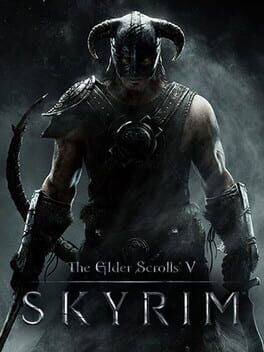
During a brief intermission in his set, Burnley’s drum technician reported a malfunction that rendered the snare silent. Rather than allowing the silence to linger, the singer seized the moment, launching into a detailed description of his own Fallout 4 mod—a fully realized first‑person VR experience that transports players into the Commonwealth with a level of immersion previously reserved for purpose‑built titles. He explained that the mod was born out of a personal fascination with both the game’s post‑apocalyptic world and the sprawling landscapes of The Elder Scrolls V: Skyrim, which he had also explored extensively in VR.
Burnley clarified that the promotion was not part of a coordinated marketing campaign; it was an on‑the‑fly decision to fill the unexpected void. He emphasized his love for VR as a medium that allows “wandering around Tamriel and the Commonwealth” in a way that feels physically present, a sentiment echoed by many in the modding community who view VR as the next evolutionary step for open‑world exploration. While no official partnership between the band’s label and Bethesda was disclosed, the anecdote quickly spread across social media, igniting discussions about the crossover potential between music fandoms and gaming subcultures.
Analysis
The incident underscores a broader market dynamic: the blurring of lines between entertainment sectors as creators leverage personal platforms to champion niche products. From a commercial perspective, Burnley’s endorsement—though unplanned—functions as a form of organic influencer marketing, reaching an audience that may not be actively engaged with Bethesda’s traditional channels. This kind of cross‑pollination can accelerate adoption curves for VR accessories, especially as hardware manufacturers continue to battle price‑sensitivity and content scarcity. Moreover, the mod’s existence highlights the sustained relevance of Bethesda’s Creation Kit, a tool that, despite its age, still empowers hobbyists to construct experiences that rival commercial releases in scope and polish.
Competitively, the episode puts pressure on rival publishers to nurture their own mod ecosystems. While Valve’s Steam Workshop and Epic’s support for user‑generated content have become staples, the Fallout 4 VR mod demonstrates that legacy franchises can still generate fresh revenue streams through community‑driven innovation. It also signals to developers that supporting VR extensions—even as optional add‑ons—can yield goodwill and extend a title’s lifecycle well beyond its initial sales window. The technical challenges of translating a sprawling, third‑person open world into a performant first‑person VR experience remain non‑trivial, but the successful execution of Burnley’s project serves as a proof‑of‑concept that may inspire more studios to allocate resources toward similar endeavors.
XPLog Opinion
At XPLog UK we view Burnley’s off‑the‑cuff promotion as a micro‑case study in the power of authentic, community‑rooted advocacy; it illustrates that when a respected figure speaks passionately about a mod, the ripple effect can be profound—driving traffic to download portals, spurring media coverage, and even nudging publishers to reconsider official VR support. This is precisely the kind of organic synergy that the industry needs to cultivate, especially as the next wave of console generations promises tighter integration of VR capabilities. Developers would do well to embrace these grassroots champions rather than treating them as peripheral curiosities.
Final Thoughts
In the months ahead, observers should keep an eye on Bethesda’s response to the growing VR mod scene, as well as any potential collaborations between music artists and game studios seeking to tap into overlapping fan bases. Burnley’s spontaneous endorsement may well be the catalyst that transforms a niche hobby into a mainstream revenue channel, reinforcing the notion that the most compelling marketing often emerges not from meticulously scripted campaigns, but from the genuine enthusiasm of creators who love to explore virtual frontiers.