.png)
Overview
When Konami first introduced Silent Hill in 1999, the series instantly became a benchmark for psychological terror, marrying unsettling sound design with fog‑laden streets that forced players to confront inner demons as much as external monsters. Over the past two decades the franchise has oscillated between critical triumphs—Silent Hill 2, 3, and 4—and missteps that left the brand bruised, most notably the 2022 remake of Silent Hill 2, which, despite technical polish, alienated purists with its altered pacing and narrative tone. In the broader console landscape, the rise of next‑gen hardware has rekindled interest in atmospheric horror, as developers leverage ray‑traced lighting, haptic feedback, and 3D audio to amplify dread. Konami, once a powerhouse of survival horror, retreated into mobile ventures and legacy ports, leaving a vacuum that competitors like Capcom and indie studios have eagerly filled.
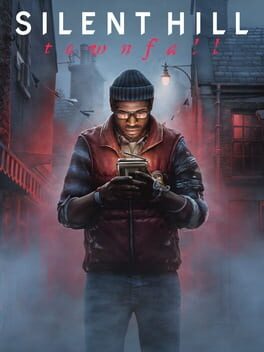
That vacuum set the stage for Silent Hill: Townfall, a title that deliberately leans into the series' classic DNA while embracing the capabilities of the PlayStation 5. The announcement arrived at a moment when the horror genre is experiencing a renaissance, spurred by titles such as Resident Evil Village and the resurgence of indie dread experiences on both consoles and PC. Townfall’s developers framed it as a “return to roots” project, promising a more traditional, puzzle‑heavy experience that harks back to the original games’ emphasis on environmental storytelling, but with a fresh geographical twist—Scotland’s mist‑shrouded highlands replace the eponymous American town, offering a new cultural canvas for the series’ signature uncanny atmosphere.
What Happened?
Konami officially unveiled Silent Hill: Townfall for the PS5 during a streamed showcase earlier this month, revealing that the game shifts to a first‑person perspective while retaining the series’ hallmark blend of exploration, limited resources, and psychological narrative. The decision to adopt first‑person aligns with a broader industry trend that sees horror franchises moving away from third‑person distance to immerse players directly in the terror, a move popularised by Resident Evil 7 and the recent remake of Silent Hill 2. Townfall’s setting—a remote Scottish village beset by an otherworldly fog—draws on Celtic folklore, promising new monster designs inspired by local mythos, while the core gameplay loop remains anchored in solving intricate environmental puzzles that demand careful observation and note‑taking.
Beyond the aesthetic overhaul, the development team disclosed that Townfall will exploit the PS5’s DualSense controller, employing adaptive triggers to simulate the tension of a rusted door creaking open and haptic vibrations that echo the subtle thrum of distant, unseen entities. The game is slated for a Q4 2026 launch, positioning it as a holiday flagship for Konami’s console strategy. In a statement, the studio’s creative director emphasized that Townfall is not merely a nostalgic cash‑in but a “rebirth” intended to re‑engage long‑time fans while inviting newcomers who have only recently discovered the series through streaming platforms and retro revivals.
Analysis
From a market perspective, Townfall arrives at a crossroads where the survival horror genre is both saturated and hungry for differentiation. By embracing first‑person immersion and a geographically distinct setting, Konami is attempting to carve a niche that separates it from the increasingly homogenised horror experiences on the PS5. The technical ambition of leveraging ray‑traced global illumination to render the ever‑present Scottish fog could set a new visual standard, but it also raises concerns about performance stability, especially given the series’ historical reliance on claustrophobic level design that demands consistent frame rates to maintain tension. Moreover, the decision to remain a PS5 exclusive signals a strategic gamble: while it deepens Konami’s partnership with Sony, it potentially narrows the audience in a market where cross‑platform releases dominate sales charts.
Long‑term, Townfall could serve as a litmus test for Konami’s broader revival strategy. If the title succeeds commercially and critically, it may unlock the studio’s dormant IP pipeline, encouraging investments in sequels or spin‑offs that could re‑establish Silent Hill as a flagship franchise alongside Metal Gear and Castlevania. Conversely, a lukewarm reception might reinforce the perception that the series’ golden era is irretrievable, prompting Konami to pivot further toward live‑service or mobile models. For the PlayStation ecosystem, a strong horror entry bolsters the console’s reputation as a home for narrative‑driven, atmospheric experiences, potentially influencing third‑party developers to prioritize similar titles for the platform.
XPLog Opinion
At XPLog UK we view Silent Hill: Townfall as Konami’s most earnest attempt in a decade to reclaim its horror pedigree, and the gamble is justified: the series’ legacy is built on unsettling ambience and cerebral puzzles, elements that modern hardware can finally render without compromise. While the first‑person shift may alienate some purists, the move is a necessary evolution that aligns with contemporary player expectations for immersion. If Konami can deliver a tightly crafted experience that respects the franchise’s narrative depth while exploiting the PS5’s sensory capabilities, Townfall could reignite a dormant fanbase and set a new benchmark for horror design in the next console generation.
Final Thoughts
Silent Hill: Townfall represents a pivotal moment for both Konami and the broader survival‑horror landscape, marrying nostalgic design philosophy with cutting‑edge technology to re‑engage a community that has long yearned for a worthy successor to the series’ early triumphs. As the Q4 2026 release window approaches, industry watchers should monitor pre‑order trends, early review impressions, and community sentiment on platforms such as Reddit and Discord, all of which will indicate whether Townfall can truly resurrect the dread‑laden corridors of Silent Hill for a new generation of gamers.