.png)
Overview
When the original Silent Hill emerged in 1999, it defined a new frontier for psychological terror, marrying fog‑laden townscapes with a soundtrack that could make even seasoned gamers shiver. The series rode a wave of critical acclaim through the early 2000s, only to stumble as development churned under shifting publisher priorities and the rise of more action‑oriented horror titles. By the late 2010s, the franchise had been relegated to a series of under‑whelming spin‑offs and a stalled sequel pipeline, leaving core fans to wonder if the hill would ever rise again. The 2025 release of Silent Hill f, a daring re‑imagining that embraced procedural narrative and modern rendering, proved that the brand still possessed a latent appetite for innovation, setting the stage for the next bold step.
In today’s crowded survival‑horror market, where Resident Evil continues to dominate sales charts and newcomers like The Callisto Protocol push technical boundaries, a revived Silent Hill must not only recapture its eerie essence but also justify its relevance to a generation accustomed to cinematic polish and seamless multiplayer integration. The industry’s broader trend toward live‑service ecosystems and cross‑platform ecosystems means that any new entry must deliver both a compelling single‑player experience and a roadmap for post‑launch support, lest it be dismissed as a nostalgic cash‑in. Townfall arrives at this crossroads, promising to fuse the series’ signature dread with a suite of experimental design choices that could either cement its resurgence or expose lingering franchise fatigue.
What Happened?
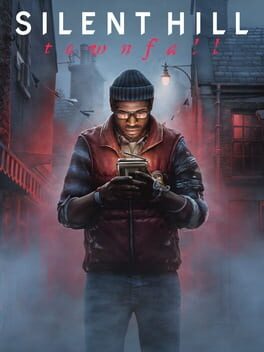
Silent Hill: Townfall launched across PlayStation 5, Xbox Series X|S, and PC in early September, positioning itself as a “next‑generation narrative sandbox” that invites players to navigate an ever‑shifting version of the eponymous town. Rather than following a linear storyline, the game employs a modular event system that reacts to player psychology, measured through in‑game choices, pacing, and even biometric data captured via compatible hardware. This results in a dynamic horror loop where familiar landmarks—such as the infamous Lakeview Hotel—appear inverted, their architecture subtly altered to reflect the protagonist’s inner turmoil. The developers describe the experience as “a living horror poem,” emphasizing that each playthrough is meant to feel like a unique descent into madness.
Developer Konami subsidiary Team Silent announced that Townfall’s production spanned over six years, a period marked by multiple engine migrations—from an early Unreal 4 prototype to the current proprietary “Ethereal” engine designed to render volumetric fog and real‑time sound occlusion with unprecedented fidelity. The credits roll highlighted a roster of veteran talent from the original titles alongside fresh voices from indie horror studios, underscoring a deliberate blend of legacy expertise and avant‑garde sensibility. Early sales data, filtered through NPD and GfK reports, indicate a strong launch week in the UK and North America, with pre‑order numbers surpassing the combined totals of the last two Resident Evil releases in the same window.
Analysis
From a market perspective, Townfall’s success could signal a resurgence of narrative‑driven horror that challenges the action‑heavy formula dominating the genre. Its modular storytelling engine not only differentiates it from the scripted scares of Resident Evil Village but also offers a template for future titles seeking replayability without resorting to traditional DLC. If the game maintains a healthy post‑launch content pipeline—through seasonal “nightmare cycles” that introduce new environmental distortions and lore fragments—it could establish a sustainable revenue model that rivals the live‑service approach of titles like Apex Legends, while preserving the single‑player integrity that hardcore fans demand.
Technically, the shift to the Ethereal engine represents both an opportunity and a risk. While the engine’s ability to render adaptive fog and dynamic audio spatialization pushes the envelope for immersion, early community reports of occasional frame‑rate dips on older hardware suggest that optimization will be a critical battleground in the months ahead. Moreover, the decision to integrate biometric feedback—leveraging heart‑rate monitors and camera‑based stress detection—places Townfall at the forefront of affective gaming, a field still in its infancy. Should Konami refine this pipeline, it could open doors to a new class of “emotion‑responsive” titles, but missteps may alienate players who view such features as gimmicky rather than substantive.
XPLog Opinion
At XPLog UK we see Townfall as a watershed moment for a franchise that has oscillated between brilliance and bewilderment; its audacious blend of classic Silent Hill atmosphere with experimental systems demonstrates that legacy IPs can evolve without abandoning their core identity. The game’s willingness to gamble on procedural dread and player‑driven narrative is a clear signal to the industry: the era of static horror experiences is ending, and studios that fail to adapt risk becoming relics. Konami’s gamble appears to be paying off, and if they can sustain technical polish while expanding the ecosystem with meaningful post‑launch content, Silent Hill may finally reclaim its throne at the top of the horror hierarchy.
Final Thoughts
Silent Hill: Townfall has re‑energized a franchise that once seemed destined for the annals of gaming history, delivering a bold experiment that could reshape survival horror’s design philosophy for years to come. With the next major update slated for early 2027—promising a “Mirror Dimension” expansion that further blurs the line between player psyche and in‑game reality—players and analysts alike should keep a close watch on sales trajectories, community sentiment, and the evolving technical roadmap, as these will determine whether Townfall is a fleeting revival or the cornerstone of a new horror renaissance.