.png)
Overview
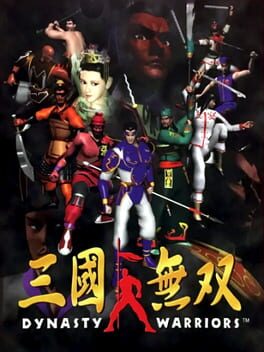
The venerable hack‑and‑slash franchise that launched over two decades ago on the original PlayStation is poised for a fresh wave of attention as Koei Tecmo rolls out a remastered version of Dynasty Warriors 3: Complete Edition for the next‑generation Nintendo hardware. The series, which pioneered the “musou” style of combat by pitting players against swarms of enemies in dramatized renditions of China’s Three Kingdoms era, has endured through eight mainline releases, numerous spin‑offs, and a reputation for both addictive button‑mashing and surprisingly deep strategic layers. By positioning the third entry—a title that originally debuted in 2000 and marked the first true expansion of the series’ mechanics—in a modern, high‑definition wrapper, the publisher is not merely cashing in on nostalgia; it is re‑introducing a cornerstone of the genre to a new console generation that has yet to see a major Koei Tecmo showcase.
The timing of this announcement dovetails with the broader industry shift toward cross‑generational launch windows, where developers release demos months before the full product to generate sustained buzz. Nintendo’s upcoming Switch 2, rumored to arrive later in 2026 with upgraded GPU performance and a hybrid‑first design philosophy, offers a fertile platform for legacy titles to find fresh audiences. For Nintendo, securing a high‑profile Koei Tecmo demo signals a strategic partnership aimed at diversifying the console’s library beyond its traditional family‑friendly and indie strongholds, while for Koei Tecmo it represents an opportunity to tap into the Switch’s massive install base, which now exceeds 130 million units worldwide.
What Happened?
On 24 September 2026, a downloadable demo of Dynasty Warriors 3: Complete Edition will become available exclusively on the Switch 2, granting players a limited but fully polished slice of the game’s signature large‑scale battles. The demo is marketed as a “thrilling” tactical action experience, allowing gamers to pilot legendary figures such as Liu Bei, Cao Cao, and Sun Quan through recreated historical skirmishes that blend cinematic storytelling with frenetic combat. Koei Tecmo has confirmed that the demo will showcase the remaster’s upgraded textures, rebalanced enemy AI, and a refreshed UI that aligns with modern controller ergonomics, all while preserving the core feel that long‑time fans cherish.
The full version of Dynasty Warriors 3: Complete Edition is slated for a global launch on 1 October 2026, just one week after the demo’s release. This tight rollout window is designed to capitalize on the immediate excitement generated by the hands‑on experience, reducing the risk of hype decay that can plague longer gaps between demo and launch. In addition to the base game, Koei Tecmo has hinted at post‑launch support in the form of online two‑player modes, a feature that was absent from the original PlayStation release and reflects a broader industry trend toward integrating cooperative multiplayer into traditionally single‑player franchises.
Analysis
The decision to resurrect Dynasty Warriors 3 rather than focusing on a brand‑new entry underscores Koei Tecmo’s calibrated approach to portfolio management. By leveraging an established IP with a proven sales record—historically, the early entries in the series have consistently moved between 1 and 2 million copies per region—the company mitigates development risk while still delivering a product that feels fresh due to the technical overhaul. Moreover, the Switch 2’s projected hardware capabilities, including a higher frame rate ceiling and expanded memory bandwidth, enable the classic “hundreds‑of‑enemies‑on‑screen” spectacle to finally meet contemporary performance expectations, something the original PlayStation hardware could only approximate.
From a market dynamics perspective, the demo’s release positions Koei Tecmo against competing titles that are also leveraging the Switch 2’s launch window, such as Capcom’s upcoming Resident Evil remake and Square Enix’s new Final Fantasy spin‑off. While those franchises target narrative‑driven or RPG audiences, Dynasty Warriors appeals to a niche yet passionate core of action‑oriented gamers who value spectacle and historical fantasy. This differentiation could translate into a stronger per‑unit revenue stream, especially if the post‑launch online two‑player component stimulates ongoing engagement and potential micro‑transactional content—an area the series has historically avoided but which is increasingly expected by today’s players.
XPLog Opinion
At XPLog UK we view the Dynasty Warriors 3 remaster as a shrewd move that balances reverence for the series’ legacy with the practicalities of today’s multiplayer‑centric market. The inclusion of an online co‑op mode signals that Koei Tecmo finally acknowledges the community’s demand for shared experiences, and the narrow demo‑to‑launch cadence suggests confidence in the product’s ability to convert curiosity into sales. If the technical enhancements live up to the hype, this title could set a benchmark for how classic action franchises can be revitalized without diluting their core identity, and it may well become a cornerstone of the Switch 2’s early library, attracting both veterans and newcomers alike.
Final Thoughts
In sum, the upcoming Dynasty Warriors 3: Complete Edition demo on Switch 2 offers a tantalizing glimpse of how legacy content can be re‑engineered for modern hardware while still delivering the visceral thrills that defined the genre. With the full launch slated for 1 October 2026 and the promise of online two‑player functionality, Koei Tecmo is positioning the title as both a nostalgic celebration and a forward‑looking serviceable product. Gamers and analysts alike should mark the 24 September demo drop as a key indicator of how effectively the series can adapt to evolving player expectations, and keep an eye on post‑launch updates that could reshape the competitive landscape of action‑heavy multiplayer experiences on Nintendo’s next‑gen platform.