.png)
Overview
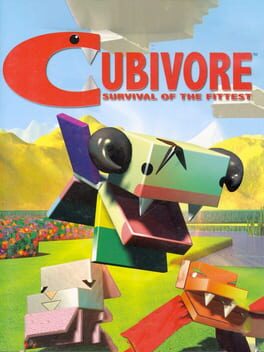
Since its inception in the early 2010s, Box Art Brawl has become more than a whimsical showdown of cover art; it has evolved into a cultural barometer for the retro‑gaming community, measuring the pulse of nostalgia against the relentless march of next‑gen hardware. The series, originally conceived as a light‑hearted fan‑driven competition, now commands millions of views on streaming platforms, with each duel sparking heated debate across forums, Discord servers, and even mainstream gaming news outlets. Its latest installment pits the 1998 GameCube oddity Cubivore: Survival Of The Fittest against a roster of contemporary and classic titles, turning a once‑obscure creature‑evolution game into the centrepiece of an international conversation about what defines “timeless” in a market saturated with high‑budget sequels.
In the broader industry context, the duel arrives at a moment when publishers are scrambling to monetize legacy libraries while simultaneously courting a generation of players who grew up with cartridge‑size experiences but now demand digital convenience. Nintendo, Sony, and Microsoft have each launched aggressive retro‑relaunch programs—Nintendo Switch Online’s expanding catalogue, PlayStation’s “Classic” line, and Xbox’s backward‑compatibility push—yet Box Art Brawl demonstrates that community endorsement can be just as potent as corporate marketing. The event underscores a shift: success is no longer measured solely by sales forecasts but also by the cultural resonance a title can generate when fans collectively re‑examine it through the lens of modern aesthetics and gameplay expectations.
What Happened?
Last week the Box Art Brawl editorial team announced a head‑to‑head duel featuring Cubivore: Survival Of The Fittest as the underdog contender. The format, a live‑voted poll split across three major regions—Europe, North America, and Japan—asked participants to choose which title deserved the coveted “Brawl Trophy.” The results were decisive: Europe and North America rallied behind Cubivore, delivering a combined 66 % of the total vote, while Japan trailed with a modest 34 %. The victory was celebrated with a digital trophy displayed on the series’ homepage, accompanied by a short video montage highlighting the game’s quirky art direction, evolutionary mechanics, and the community’s passionate commentary.
Developer statements poured in from both the original creator, Intelligent Systems, and Nintendo’s legacy team. They lauded the renewed interest as evidence that “even the most unconventional design philosophies can find a home in today’s diverse gaming ecosystem.” The announcement also hinted at a possible re‑release on the Nintendo Switch eShop, noting that the surge in votes has already prompted internal discussions about a “Cubivore 2.0” patch that would address longstanding performance quirks while preserving the game’s distinctive charm. The duel’s outcome, therefore, is not merely a trophy on a webpage but a tangible catalyst for potential commercial and technical revitalisation.
Analysis
From a market perspective, the Cubivore duel illustrates how low‑profile IPs can be leveraged as strategic assets in an era dominated by blockbuster franchises. By galvanising a niche audience, Nintendo can extract incremental revenue from digital storefronts without the overhead of a full‑scale remake. Moreover, the regional split in voting patterns reveals a subtle but meaningful divergence in player preferences: Western markets appear more receptive to experimental gameplay loops, whereas the Japanese audience remains anchored to established series. This data point could inform future localisation decisions, encouraging Nintendo to allocate resources toward titles that demonstrate cross‑regional appeal.
Technically, resurrecting a GameCube‑era title for modern hardware presents both opportunities and hurdles. The original Cubivore engine, built on a proprietary 1990s framework, lacks the scalability required for high‑resolution rendering and online leaderboards—features that contemporary players now expect. However, Nintendo’s recent success with “HD‑remaster” pipelines for titles like Mario Kart 8 Deluxe suggests that a targeted engineering effort could modernise Cubivore’s visual fidelity while preserving its core mechanics. The community‑driven hype generated by Box Art Brawl effectively lowers the risk ceiling, granting developers a clearer ROI calculation for allocating engineering time toward such a port.
XPLog Opinion
At XPLog UK we view the Cubivore triumph as a bellwether for the power of grassroots enthusiasm to reshape publisher roadmaps. When a title that sold fewer than 200,000 copies worldwide can command a majority vote in a global poll, it signals that the market’s appetite for novelty has not been exhausted by AAA spectacles. Publishers would do well to monitor these community‑led metrics, treating them as early‑stage validation before committing to costly remasters or sequels. In short, the Box Art Brawl model provides a low‑risk, high‑visibility laboratory for testing the commercial viability of legacy gems, and Nintendo’s willingness to listen could set a precedent that ripples across the entire console ecosystem.
Final Thoughts
Box Art Brawl’s Cubivore duel has turned a forgotten GameCube curiosity into a catalyst for potential revival, highlighting how fan‑driven platforms can influence corporate strategy in real time. As we await Nintendo’s next major announcement—likely in the upcoming September Direct—players should keep an eye on further Box Art Brawl events, where the next underdog could emerge from the depths of gaming history, reshaping both nostalgia economics and the future of retro‑centric publishing.