.png)
Overview
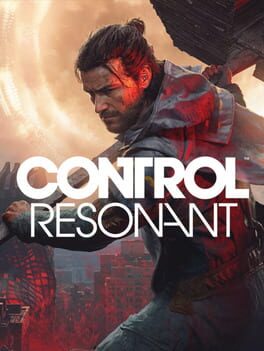
The arrival of Control: Resonant on the Xbox family arrives at a pivotal moment for Microsoft’s console strategy, as the company seeks to cement the Series X as a premium flagship while positioning the Series S as a more affordable, yet still next‑gen, entry point. Historically, Microsoft has walked a tightrope between pushing technical ambition and ensuring a broad install base; the original Xbox One launch in 2013, followed by the rapid iteration to the Xbox One X, demonstrated how performance differentials can both excite enthusiasts and fragment the community. In the current generation, the Series X boasts a 12 teraflop GPU and 16 GB of GDDR6 memory, whereas the Series S trims that down to 4 teraflops and 10 GB, a design decision that has sparked endless debate about visual fidelity versus price accessibility.
Against this backdrop, the fresh wave of benchmark footage released by Digital Foundry and independent tester Fuzion Xbox Testing offers a rare, side‑by‑side visual comparison that goes beyond mere frame‑rate counters. The timing is crucial: Control’s latest expansion, Resonant, is a graphically demanding title that pushes ray‑traced lighting, volumetric fog, and high‑resolution textures to their limits. By juxtaposing raw gameplay from both consoles, the community can finally gauge how the Series S handles the same visual load, and whether Microsoft’s “play anywhere” promise holds up when the hardware budget is dramatically lower. This data point will inform not only the expectations for upcoming releases like Starfield, but also the broader conversation about the viability of a two‑tiered next‑gen ecosystem.
What Happened?
In the past week, Digital Foundry published a detailed technical breakdown of Control: Resonant running on both the Series X and Series S. Their analysis highlighted that the Series X consistently delivered 60 fps at native 4K resolution, leveraging hardware‑accelerated ray tracing to illuminate the game’s signature surreal environments with a level of realism that rivals high‑end PC rigs. Meanwhile, the Series S capped at 30 fps, dynamically up‑scaled to 1440p and then to 4K via Microsoft’s FidelityFX Super Resolution (FSR) 2.0. The lower‑end console also disabled certain ray‑tracing effects, substituting them with baked lighting solutions to preserve performance, a compromise that is evident in the slightly softer shadows and reduced reflection fidelity.
Fuzion Xbox Testing complemented the numbers with extended, commentary‑free gameplay footage, allowing viewers to experience the qualitative differences without the overlay of technical jargon. In the longer playthroughs, the Series S exhibited occasional micro‑stutters during intense combat sequences, a symptom of its reduced memory bandwidth when handling the massive asset streaming that Control demands. Nevertheless, the overall experience remained fluid enough to be considered “playable” for a large segment of the Xbox install base. Both sources converged on a key takeaway: the Series S, while not matching the visual opulence of its bigger sibling, still delivers a compelling rendition of Resonant, proving that Microsoft’s down‑scaled architecture can handle flagship‑level titles with judicious compromises.
Analysis
The performance gap highlighted by these benchmarks underscores a strategic inflection point for Microsoft. On one hand, the Series X’s ability to run Control: Resonant at full 4K with ray tracing validates the company’s investment in a high‑end console that can serve as a “PC‑like” anchor for the ecosystem, attracting hardcore gamers who demand uncompromised visual fidelity. On the other hand, the Series S’s respectable 30 fps performance, bolstered by FSR 2.0, demonstrates that the same software pipeline can be scaled down without alienating budget‑conscious players. This dual‑track approach mirrors Sony’s recent PlayStation 5 and PS5 Digital Edition strategy, yet Microsoft’s more aggressive price differential may force developers to adopt adaptive scaling techniques as a norm rather than an exception.
From a market perspective, the data could influence publisher decisions on future titles. Studios that have been hesitant to target the Series S due to concerns over “lowest common denominator” performance may now see a viable path forward, especially if Microsoft continues to refine its up‑scaling and dynamic resolution tools. Moreover, the clear delineation of performance tiers may encourage a wave of “dual‑mode” releases, where developers ship a single build that intelligently toggles between ray‑traced and rasterized pipelines based on hardware detection. This could reduce development overhead while preserving a premium experience for Series X owners, ultimately expanding the overall Xbox market share in a competitive console landscape.
XPLog Opinion
At XPLog we view the Control: Resonant comparison as a watershed moment that validates Microsoft’s two‑pronged hardware philosophy; the Series S is not a compromise‑only platform but a purposeful, cost‑effective conduit for next‑gen experiences, and the Series X remains the benchmark for visual ambition. The real triumph lies in the fact that both consoles can now run a title of Control’s caliber, meaning the ecosystem no longer forces players into an either‑or scenario but offers a spectrum of quality that aligns with personal budgets and preferences.
Final Thoughts
In sum, the raw footage and technical analysis of Control: Resonant provide concrete evidence that Microsoft’s divergent hardware strategy is functioning as intended: the Series X delivers the flagship spectacle, while the Series S offers a respectable, accessible alternative that still feels genuinely next‑gen. As we look ahead to the launch windows for Starfield, Hellblade II, and a host of indie titles, the industry will be watching closely to see whether this performance scaling becomes the new norm, and whether the Xbox brand can leverage it to capture a broader slice of the global console market. Keep an eye on the upcoming Xbox Series S performance patches slated for Q4 2026, which promise to further close the visual gap through driver optimisations and enhanced FSR integration.