.png)
Overview
Since its 2018 launch, Monster Hunter World has been the franchise’s most ambitious entry, delivering a seamless open‑world experience, photorealistic ecosystems and a global multiplayer infrastructure that resonated with both veteran hunters and newcomers. Its success on PlayStation 4, Xbox One and later PC demonstrated that Capcom could translate the series’ traditionally niche appeal into a mainstream blockbuster, selling over 20 million copies and redefining the expectations for action‑RPG scale on the seventh‑generation consoles.
With Nintendo’s next‑generation handheld‑hybrid, the Switch 2, slated for release later this year, the gaming community has been rife with speculation about whether World will finally receive a Nintendo port. The Switch family has already proven a lucrative home for the series, thanks to Monster Hunter Rise and its expansion, which leveraged the platform’s portable nature and introduced the “Palamute” companion system. Yet the technical gulf between the Switch 2’s projected hardware envelope and the high‑fidelity demands of World remains a pivotal factor, prompting Capcom to weigh the cost of a full remake against the strategic value of expanding its audience on Nintendo’s ecosystem.
What Happened?
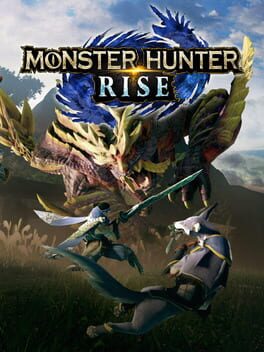
During a recent developer briefing, Capcom confirmed that a Monster Hunter World port to the Switch 2 is not on the immediate roadmap, citing the necessity of a “complete remake” to meet the console’s performance targets. The statement underscored that the original engine, built around the MT Framework 2.0 architecture, would require extensive re‑engineering to run at a stable 30‑60 fps while preserving the game’s massive monster models, dynamic weather systems, and seamless online matchmaking. In lieu of a direct port, the company is channeling resources into polishing the upcoming entry, Monster Hunter Rise Sunbreak, which will debut on the new hardware with upgraded textures, faster load times and a suite of quality‑of‑life improvements tailored to the Switch 2’s hybrid capabilities.
Capcom’s decision also reflects a broader strategic pivot: rather than retrofitting a legacy title, the publisher aims to capitalize on the momentum generated by Rise’s success on the original Switch. By delivering a next‑gen iteration of Rise, Capcom can showcase the Switch 2’s graphical leap while maintaining a coherent development pipeline that avoids the pitfalls of a fragmented codebase. This approach mirrors industry trends where studios favor iterative upgrades—such as Naughty Dog’s “Remaster” strategy for The Last of Us Part I—over costly, full‑scale conversions that risk diluting brand equity.
Analysis
The omission of World from the Switch 2 launch slate has several market ramifications. First, it preserves Capcom’s resource allocation for a title that aligns more naturally with Nintendo’s hardware philosophy: fast, accessible, and designed around shorter play sessions. Rise’s monster‑hunting loops are inherently more adaptable to handheld play, whereas World’s sprawling environments and longer quest structures cater to a couch‑based experience. By focusing on Rise, Capcom can deliver a product that feels native to the Switch 2, reinforcing the console’s reputation as a “core‑friendly” platform without compromising performance.
Second, the decision signals a subtle shift in the competitive landscape between Sony, Microsoft and Nintendo. Sony’s PlayStation 5 and Microsoft’s Xbox Series X|S continue to dominate high‑end performance metrics, and Capcom’s flagship titles have historically found a home there. By opting out of a World port, Capcom tacitly acknowledges that the Switch 2, while more powerful than its predecessor, may still lag behind the raw horsepower of the ninth‑generation consoles, especially for a game that pushes the envelope of particle effects, AI complexity and open‑world streaming. This could reinforce the perception that Nintendo’s ecosystem remains a niche for “scaled‑down” experiences, prompting third‑party publishers to prioritize native or next‑gen exclusive projects over costly cross‑platform adaptations.
XPLog Opinion
From XPLog’s perspective, Capcom’s restraint is a pragmatic move that safeguards both brand integrity and player expectations; forcing a sub‑par World experience onto the Switch 2 would likely erode the series’ reputation and fuel community backlash, whereas a polished Rise Sunbreak launch can deepen the franchise’s foothold on Nintendo hardware and set a benchmark for future cross‑generation titles.
Final Thoughts
In summary, while the absence of Monster Hunter World on the Switch 2 may disappoint a vocal segment of the fanbase, the strategic emphasis on a next‑gen Rise experience aligns with Capcom’s long‑term vision of delivering technically sound, platform‑appropriate content. Players should keep an eye on Capcom’s upcoming fiscal reports and the official Switch 2 launch window, where further details about Sunbreak’s feature set and post‑launch DLC roadmap are expected to surface.