.png)
Overview
When Jagex announced that RuneScape: Dragonwilds would launch on Xbox Game Pass as a day‑one title, the move was hailed as a watershed moment for a company that has spent two decades cultivating one of the most enduring browser‑based MMOs in history. The original RuneScape, launched in 2001, built a global community through its sandbox freedom and low‑cost accessibility, eventually evolving into a multi‑platform juggernaut that now spans PC, mobile, and, with Dragonwilds, the console arena. This expansion is not merely a platform hop; it reflects a broader industry shift where legacy online games are seeking fresh revenue streams by tapping into subscription services that dominate the modern console ecosystem.
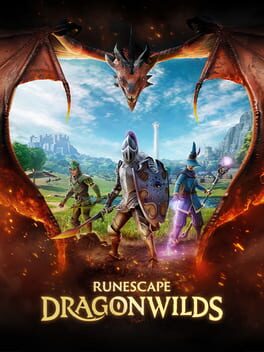
Dragonwilds itself is a departure from the classic open‑world grind of its predecessor. Designed as a co‑op survival adventure, it drops players into a harsh, myth‑laden wilderness where resource management, creature hunting, and collaborative crafting replace the traditional skill‑training loops. The title arrived on PC earlier in the year and was praised for its atmospheric design and the way it leveraged RuneScape’s rich lore in a more focused, narrative‑driven experience. Its console debut, therefore, carried the weight of both fan expectation and the strategic imperative for Jagex to prove that its IP can thrive in a crowded subscription‑driven marketplace alongside heavyweights such as Valheim, The Forest and the newly launched New World.
What Happened?
Within hours of the Xbox Game Pass launch, reports began to surface that a significant subset of console players were encountering corrupted save files, effectively locking them out of progress and forcing repeated restarts. The issue appears to be tied to the way the game’s cross‑save infrastructure translates cloud‑based data from the PC environment to the console’s local storage, a process that has historically been a pain point for many developers transitioning from PC‑centric architectures. Players posted screenshots of error messages and shared logs that indicated the save parser was failing to reconcile version mismatches, a scenario that Jagex’s engineering team confirmed was not part of the original QA matrix.
In response, Jagex released a terse statement declaring that “the entire QA and development teams are working flat‑out” to diagnose and patch the problem. The company has opened a dedicated support ticket pipeline on its forums, promised a hot‑fix within the week, and assured Xbox Game Pass subscribers that any lost progress will be restored retroactively. While the tone is reassuring, the speed of the response is being measured against the backdrop of recent high‑profile launch‑day fiascos, such as Cyberpunk 2077’s console debacle and the patch‑lag that plagued Diablo IV’s early days, both of which have left lasting scars on developer reputations.
Analysis
The immediate market impact of the corrupted saves bug is likely to be modest in raw subscriber numbers, but the reputational cost could be outsized. Xbox Game Pass users tend to be early adopters who value seamless experiences; a glitch that erases progress can erode trust not only in the title but also in the perceived curation quality of the service itself. Competitors such as PlayStation Plus and Amazon Luna will watch Jagex’s remediation closely, as any prolonged downtime could become a talking point in the ongoing battle for console subscription supremacy. Moreover, the incident underscores the fragility of cross‑platform save ecosystems, a technical challenge that has tripped up even seasoned studios when porting live‑service games to consoles.
From a development standpoint, the situation offers a cautionary tale about the importance of parallel QA pipelines that mirror the exact hardware and cloud‑service stack of the target platform. Jagex’s legacy tools were built around Java‑based server architecture and a lightweight client that thrived on browsers; adapting that to the Xbox Series X|S’s more rigid sandbox required significant engineering effort. The current scramble suggests that the integration layer—responsible for translating PC‑centric save schemas into the Xbox’s sandboxed storage—was insufficiently stress‑tested. Going forward, Jagex will likely invest in a more robust CI/CD pipeline that incorporates automated save‑integrity checks, a move that could pay dividends across its broader portfolio, including upcoming mobile expansions.
XPLog Opinion
At XPLog we view this hiccup as a pivotal moment for Jagex’s console ambitions; the company has the opportunity to turn a crisis into a showcase of its commitment to player experience. A swift, transparent patch that not only restores lost data but also offers a goodwill gesture—perhaps a limited‑time in‑game reward for affected players—could convert disgruntled early adopters into loyal advocates. Conversely, a drawn‑out fix would reinforce the narrative that legacy MMOs struggle to adapt to modern console ecosystems, potentially nudging investors to question the long‑term viability of Jagex’s diversification strategy. In short, the next 48‑72 hours will be a litmus test for how well Jagex can marry its historic, community‑driven ethos with the exacting standards of today’s subscription‑centric console market.
Final Thoughts
While the corrupted saves issue is an unwelcome blemish on an otherwise promising console launch, the situation is far from irreversible. Jagex has pledged a hot‑fix within the week and has indicated that a post‑patch validation will be streamed for the community, a move that could restore confidence and set a new benchmark for transparency in live‑service launches. Players and analysts alike should keep an eye on the patch notes slated for release on September 25th, as well as on any follow‑up communications from Xbox Game Pass that may affect the title’s placement on the service’s front page. If Jagex navigates this storm effectively, Dragonwilds could become a cornerstone of the company’s multi‑platform future, cementing RuneScape’s relevance for a new generation of console gamers.