.png)
Overview
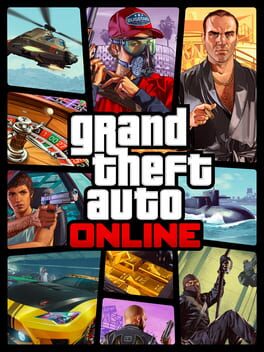
Since its launch in 2013, Grand Theft Auto Online has evolved from a modest side‑mode into a revenue juggernaut that consistently outperforms many full‑priced releases, generating billions of dollars for Rockstar and its parent company Take‑Two Interactive. The service’s success has been built on a relentless cadence of content drops, a sophisticated microtransaction ecosystem, and an ever‑expanding player‑driven economy that keeps the world of Los Santos alive long after the single‑player narrative concludes. As the industry pivots toward live‑service models, GTA Online stands as a benchmark for how a sandbox can be monetised without alienating its core audience—provided the balance between creative updates and aggressive monetisation is carefully managed.
Now, as Rockstar prepares to unveil Grand Theft Auto VI on 19 November, the company’s silence on a successor to GTA Online is both conspicuous and strategic. The announcement that the initial launch will contain only a single‑player campaign has ignited speculation across forums, analyst reports, and the streaming platform Twitch, where CEO Dan Clancy has suggested that a full‑scale online component could materialise sometime in the following calendar year. This conjecture arrives at a moment when the console generation is transitioning from the PlayStation 5 and Xbox Series X|S to a more cloud‑centric future, and when competitors such as Ubisoft’s “Rainbow Six Siege” and Epic Games’ “Fortnite” continue to push the boundaries of persistent online worlds. Rockstar’s decision—whether to delay, redesign, or even abandon a traditional online mode—will reverberate through the broader ecosystem, influencing publisher roadmaps, platform revenue shares, and the expectations of a player base that has grown accustomed to a decade of post‑launch support.
What Happened?
In a brief press release accompanying the GTA VI reveal, Rockstar confirmed that the game’s debut will focus exclusively on the single‑player experience, with no mention of an accompanying online service. The omission is noteworthy because Rockstar has historically treated its multiplayer offering as an integral part of the franchise’s lifecycle, often releasing major updates in tandem with new single‑player DLC. Industry insiders report that the development team has allocated a separate, parallel studio to explore “next‑generation multiplayer” concepts, but the details remain tightly guarded. Meanwhile, Twitch’s CEO Dan Clancy, speaking at a recent gaming summit, hinted that internal chatter and leaked development milestones suggest a full‑scale multiplayer launch could be slated for early 2025, aligning with the tail end of the current console generation’s market peak.
Clancy’s comments, while speculative, are grounded in observable trends: Rockstar’s historical pattern of staggering content releases, the company’s recent hiring surge in live‑service talent, and the broader market’s appetite for expansive, shared‑world experiences. Moreover, the timing aligns with Take‑Two’s fiscal strategy to diversify revenue streams beyond the traditional “sell‑once” model, a tactic that has become increasingly important as physical sales decline and subscription services dominate. Should Rockstar follow through, the anticipated online component would need to integrate seamlessly with the new engine, support cross‑generation play, and perhaps adopt a more modular approach to monetisation—less reliance on high‑price “shark cards” and more on cosmetic and experiential micro‑transactions that respect the evolving regulatory landscape around loot‑box mechanics.
Analysis
The prospect of a GTA VI Online rollout next year forces analysts to reevaluate Rockstar’s competitive positioning against both legacy and emerging live‑service titans. On one hand, the brand’s unparalleled cultural cachet grants it a head‑start; on the other, the market has seen several high‑profile live‑service failures where over‑ambitious feature sets and poor post‑launch support eroded player trust. Rockstar’s historical mastery of post‑launch content pipelines—evident in the steady stream of “Heists,” “Cayo Perico Heist,” and “The Diamond Casino & Resort” updates—suggests it possesses the operational discipline to avoid such pitfalls, provided it adapts to the heightened expectations of 2025 players who demand faster update cycles and more transparent monetisation models. Additionally, the delayed online launch could serve as a strategic buffer, allowing Rockstar to fine‑tune server architecture, integrate next‑gen cloud‑based services, and perhaps experiment with cross‑play between consoles and PC, a feature that competitors have leveraged to sustain player bases well beyond a title’s initial hype window.
From a platform perspective, the timing is equally critical. Both Sony and Microsoft are courting exclusive live‑service titles to differentiate their subscription bundles, yet a delayed GTA VI Online could become a bargaining chip in negotiations, potentially yielding lucrative revenue‑share agreements or promotional tie‑ins. If Rockstar opts for a staggered rollout—single‑player first, online later—it could also smooth out the revenue curve for Take‑Two, mitigating the typical post‑launch dip that plagues many AAA releases. However, this approach carries risk: an extended gap may erode the momentum built by the single‑player narrative, prompting players to migrate to alternative sandbox experiences that already offer persistent worlds. The success of the eventual online component will hinge on Rockstar’s ability to re‑ignite the communal fervour that made GTA Online a cultural phenomenon while simultaneously delivering a technically robust, content‑rich environment that meets modern standards of player agency and fairness.
XPLog Opinion
At XPLog UK, we view the silence not as indecision but as a calculated pause; Rockstar appears to be re‑architecting its live‑service playbook to align with a market that now values ethical monetisation, rapid content cadence, and cross‑platform accessibility. The Twitch CEO’s prediction, while speculative, underscores a broader industry belief that Rockstar cannot afford to abandon the multiplayer frontier without ceding ground to rivals. Our stance is that a 2025 launch, if executed with the precision and player‑first ethos that defined the golden era of GTA Online, could rejuvenate the franchise’s revenue engine and set a new benchmark for post‑launch stewardship. Conversely, a half‑baked or delayed effort would risk alienating a community that has grown accustomed to a decade of continuous updates, potentially accelerating the shift toward open‑world competitors that have embraced community‑driven development from the outset.
Final Thoughts
In sum, Rockstar’s decision to withhold details on GTA VI’s online future injects both intrigue and uncertainty into an already volatile live‑service market. While the single‑player launch on 19 November will undoubtedly dominate headlines, the real narrative will unfold over the next twelve months as the company either delivers a polished, next‑generation online experience or retreats from the arena altogether. Players, investors, and platform holders should keep a close eye on official communications slated for early 2025, as those announcements will likely crystallise Rockstar’s long‑term strategy and shape the competitive dynamics of sandbox multiplayer gaming for years to come.