.png)
Overview
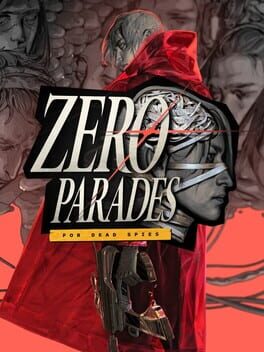
The announcement that Zero Parades: For Dead Spies will debut on PlayStation 5 as a Director’s Cut on 3 November 2026 has instantly become a barometer for how indie narrative studios navigate the volatile post‑launch landscape. ZA/UM, the studio that vaulted to global acclaim with the genre‑defining Disco Elysium, has spent the last three years in a maelstrom of internal upheaval, high‑profile departures, and a public debate over creative ownership. The arrival of this expanded edition is therefore more than a simple content patch; it is a litmus test for whether the studio can re‑forge its identity while capitalising on the heightened expectations of a market that now prizes deep, choice‑driven storytelling as a premium commodity.
Industry analysts have noted that the timing aligns with Sony’s aggressive push to enrich its PlayStation 5 catalogue with exclusive, narrative‑heavy experiences that can compete with Xbox’s Game Pass strategy. By positioning Zero Parades as a PS5‑first Director’s Cut, ZA/UM is not merely chasing platform‑specific sales; it is signalling an intent to embed itself within the console’s ecosystem, leveraging the console’s hardware capabilities—such as fast SSD streaming and 3D audio—to deliver a more immersive, text‑rich experience. This move also reflects a broader trend where developers resurrect and re‑package earlier titles with substantial additions, a practice that has proved financially lucrative for franchises ranging from The Witcher to Resident Evil.
What Happened?
According to the official release, the Director’s Cut will introduce a fresh narrative arc that expands the geopolitical intrigue surrounding the titular “dead spies,” alongside new dialogue trees that promise deeper characterisation and branching outcomes. In addition, the update adds two previously unreleased gameplay modes: a detective‑focused investigative sandbox and a competitive “intel‑scramble” mode that pits players against each other in timed information‑gathering challenges. Technical enhancements are also on the docket, with refined lighting, higher‑resolution textures, and a suite of quality‑of‑life tweaks designed to streamline the game’s notoriously dense UI.
ZA/UM’s lead writer, who opted to remain anonymous amid the studio’s ongoing restructuring, described the Director’s Cut as “the culmination of a three‑year iterative process that allowed us to revisit the world with fresh eyes, unburdened by the constraints that shaped the original launch.” The statement underscores a key narrative: the team behind Zero Parades is now largely distinct from the core Disco Elysium crew, a fact that both excites and unsettles fans who associate the studio’s brand with a particular auteurial voice. Nonetheless, the publisher has committed to a robust post‑launch support roadmap, promising periodic content drops that will keep the community engaged well beyond the November debut.
Analysis
From a market perspective, the Director’s Cut arrives at a moment when narrative RPGs are experiencing a renaissance, driven by the success of titles such as Baldur’s Gate 3 and the resurgence of point‑and‑click adventures on modern consoles. ZA/UM’s decision to double‑down on its narrative strengths while augmenting the game with multiplayer‑style modes suggests an attempt to broaden its demographic reach, courting both solo story‑seekers and competitive players who thrive on social interaction. This hybrid approach could mitigate the risk of niche confinement—a pitfall that befell many indie studios after a strong debut but limited post‑launch scalability.
However, the move is not without risk. The internal churn that followed Disco Elysium’s launch left a cloud of uncertainty around the studio’s creative continuity. Competitors such as Larian Studios have demonstrated that maintaining a consistent auteurial vision across expansions can be a decisive factor in sustaining long‑term player loyalty. If the new creative leads fail to capture the philosophical depth and tonal nuance that defined Disco Elysium, the Director’s Cut may be perceived as a shallow cash‑grab rather than a genuine artistic evolution. Moreover, the exclusive PS5 release could alienate the PC‑centric fanbase that originally championed ZA/UM’s work, potentially fracturing the community and diluting word‑of‑mouth momentum.
XPLog Opinion
At XPLog UK we view the Zero Parades Director’s Cut as a bold, if precarious, gamble that could either cement ZA/UM’s resurgence or cement its status as a cautionary tale of post‑hit studio fragmentation. The added content demonstrates a commendable ambition to deepen the world’s lore, but the true test will be whether the new narrative layers feel organically integrated or merely retrofitted to pad runtime. If the studio can harness the PlayStation 5’s technical prowess to deliver a genuinely richer storytelling experience, it will not only vindicate its turbulent past but also set a new benchmark for how indie developers can leverage next‑gen hardware to elevate text‑heavy games.
Final Thoughts
In sum, the November 3 release of Zero Parades: For Dead Spies Director’s Cut stands as a pivotal moment for ZA/UM, offering a chance to rewrite its own narrative while redefining the expectations of narrative‑driven RPGs on console platforms. Players, critics, and investors alike should keep a close eye on the launch metrics, community reception, and the cadence of subsequent content updates, all of which will reveal whether this ambitious expansion marks the beginning of a sustainable renaissance or a fleeting flash in the indie spotlight.