.png)
Overview
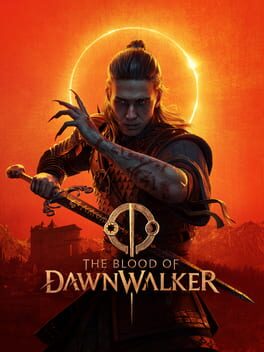
The Blood of Dawnwalker arrived on the market with a promise that felt simultaneously nostalgic and revolutionary: a sprawling, dark‑fantasy RPG that placed the ticking clock of a dying world directly onto the player's shoulders. From its opening cutscene, the game forced players to reckon with a finite amount of in‑game time to rescue a captured family, a design choice that turned every quest, every dialogue option, and even the decision to linger in a tavern into a calculated expenditure of minutes. This time‑cost system, while lauded by some as a masterstroke of tension‑driven storytelling, sparked a polarizing debate across forums, Twitch streams, and review sites, with critics arguing that it transformed exploration—a core pillar of the genre—into a series of hurried check‑lists.
That controversy erupted at a moment when the broader industry is wrestling with the balance between innovation and accessibility. The last few years have seen titles like Death Stranding and Cyberpunk 2077 push the envelope of narrative ambition, only to be met with mixed commercial outcomes that underscore the market’s sensitivity to risk‑laden mechanics. Meanwhile, the rise of live‑service models and the dominance of streaming-friendly, low‑commitment experiences have nudged publishers toward safer, repeatable formulas. In this climate, Dawnwalker’s audacious time mechanic stood out as a litmus test for how far developers can push player agency before alienating the very audience they seek to captivate.
What Happened?
During a recent interview, Konrad Tomaszkiewicz, the game’s director, clarified that the divisive time mechanic is not a guaranteed fixture in any future sequel. Tomaszkiewicz explained that while the original design was intended to mirror the protagonist’s desperation, the mixed reception forced the studio to reconsider its core loop. He noted that the development team is currently evaluating player feedback, internal analytics, and the financial performance of the title to decide whether to retain, refine, or discard the mechanic entirely in the next iteration.
The director also hinted at a possible hybrid approach for a sequel, one that could preserve the narrative weight of urgency without imposing a hard clock on every action. He mentioned early prototyping of a “dynamic pressure system” that would adapt the time constraints based on player skill and narrative milestones, thereby offering a more personalized pacing experience. No firm release window has been announced, but the studio has signaled that a sequel is on the roadmap, with a tentative development cycle slated for the next 24‑30 months.
Analysis
From a market perspective, the decision to potentially drop the time mechanic could be read as a strategic retreat aimed at broadening the franchise’s appeal. The original title, while critically praised for its atmospheric world‑building, suffered from a modest sales curve that plateaued shortly after launch—a pattern that mirrors other experimental RPGs that failed to capture a mass audience. By softening the most contentious gameplay element, the publisher stands to attract players who were previously deterred by the perceived “stress‑induced” nature of the experience, thereby expanding the install base and improving long‑term revenue streams through DLC and possible live‑service extensions.
Technically, the time‑cost system introduced a suite of challenges that extended beyond UI design into AI scheduling, quest gating, and world state persistence. The engine had to constantly recalculate event triggers based on the remaining minutes, which in practice limited the scalability of open‑world content and increased testing overhead. A more flexible, player‑driven pressure model would alleviate these bottlenecks, allowing the development team to allocate resources toward richer side content, deeper character arcs, and higher fidelity visuals—areas that have traditionally driven player retention in the genre.
XPLog Opinion
At XPLog UK we view the potential abandonment of the hard clock as a pragmatic evolution rather than a capitulation. Innovation thrives on risk, but sustainable franchises require a delicate equilibrium between artistic ambition and player comfort. By listening to the community and iterating on the core loop, the Dawnwalker team demonstrates a mature, data‑informed design philosophy that could set a new benchmark for how narrative urgency is delivered without alienating the core demographic that fuels the RPG market.
Final Thoughts
Whether the sequel will retain any semblance of Dawnwalker’s original temporal pressure remains to be seen, but the conversation it sparked has already left an indelible mark on the industry’s approach to time‑based mechanics. As the studio refines its vision over the coming years, players and analysts alike should keep an eye on upcoming developer diaries, beta test invitations, and the studio’s participation in major showcases such as Gamescom and the Tokyo Game Show, where the next chapter of this ambitious franchise is likely to be unveiled.