.png)
Overview
Koei Tecmo has spent the better part of two decades refining a formula that blends visceral combat with historically flavored storytelling, from the samurai‑laden corridors of the Samurai Warriors series to the sprawling dynastic intrigue of the Dynasty Warriors franchise. In recent years the publisher has also cultivated a reputation for daring genre‑bending experiments, most notably the critically lauded Wo Long: Fallen Dynasty, which married the kinetic swordplay of its predecessors with a darker, more unforgiving difficulty curve reminiscent of FromSoftware's titles. The announcement of Wo Long 2: Wings of Ember arrives at a moment when the global market is hungry for fresh takes on mythic narratives, especially those that draw from under‑explored Asian folklore, and it signals Koei Tecmo’s intent to stake a claim in the high‑stakes arena of premium action RPGs for the next console generation.
Alongside the reveal, the studio has dropped an alpha‑stage demo that can be downloaded immediately, a move that reflects the industry's shift toward early‑access engagement as a way to build community hype and gather real‑time feedback. This strategy mirrors the rollout patterns of contemporaries such as Elden Ring and Horizon Forbidden West, where pre‑launch playtests helped fine‑tune difficulty spikes and balance multiplayer elements. By offering a hands‑on taste now, Koei Tecmo not only fuels speculation about the game’s final form but also positions itself to iterate on core systems before the slated March 2027 launch, a timeline that deliberately avoids the crowded holiday window and aims to dominate the early‑year sales lull.
What Happened?
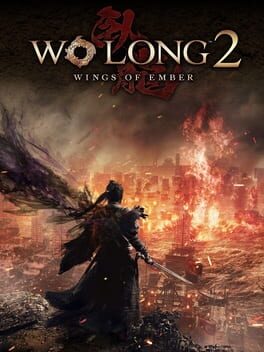
The newly released demo thrusts players into a sprawling, mist‑shrouded battlefield where the line between history and myth blurs beneath the towering silhouettes of legendary Chinese demons. Combat retains the series’ signature blend of precise timing, parry‑heavy swordplay, and fluid rolling, but expands the toolkit with elemental “ember” abilities that allow warriors to ignite foes or summon spectral allies drawn from ancient folklore. Open‑area encounters encourage strategic positioning, rewarding players who can read enemy patterns and exploit environmental hazards, while the inclusion of massive, multi‑limb bosses hints at set‑piece moments that could become the franchise’s hallmark.
Accompanying the demo, Koei Tecmo confirmed a firm release window of March 2027 across PlayStation 5, Xbox Series X|S, and PC, with a promise of cross‑generation support for the newer hardware. In a developer interview, creative director Hiroshi Kudo emphasized the team’s commitment to “deepening the mythic tapestry” by collaborating with scholars of Chinese mythology to ensure that each demon feels both authentic and terrifying. The studio also hinted at post‑launch content, including seasonal challenges and a potential expansion that could explore the untamed frontier of the Silk Road, suggesting a live‑service component designed to extend the game’s longevity in a market increasingly dominated by ongoing content streams.
Analysis
From a market perspective, Wo Long 2 arrives at a juncture where action RPGs with a strong narrative backbone are experiencing a resurgence, driven by consumer appetite for titles that marry challenging gameplay with rich world‑building. Koei Tecmo’s decision to anchor the sequel in Chinese mythological motifs not only differentiates it from Western fantasy staples but also taps into a growing global fascination with Eastern lore, a trend evidenced by the success of titles like Genshin Impact and the renewed interest in classic Chinese epics. Should the game deliver on its promised depth, it could capture a sizable share of the premium action‑RPG segment, bolstering Koei’s financials at a time when its traditional Musou franchises are plateauing in sales.
Technically, the project faces the classic dilemma of scaling up from a tightly focused, corridor‑based experience to a more open, sandbox‑style battlefield without sacrificing the razor‑sharp combat fidelity that defined its predecessor. The integration of “ember” mechanics introduces a layer of elemental strategy that may require substantial engine optimisations, particularly on older console hardware. Moreover, balancing the difficulty for both hardcore veterans and newcomers will be pivotal; an overly punitive curve could alienate the broader audience that the demo appears to attract, while a softened challenge might dilute the series’ hard‑core identity. Koei’s prior experience with live‑service updates will be tested as they attempt to keep the community engaged through post‑launch content without fragmenting the player base.
XPLog Opinion
In XPLog’s view, Wo Long 2: Wings of Ember represents Koei Tecmo’s most ambitious gamble yet—a calculated attempt to evolve beyond the Musou formula and claim a foothold in the premium action‑RPG market that has been dominated by a handful of Western studios. The demo demonstrates that the studio has learned from its past missteps, delivering a more expansive combat arena while preserving the unforgiving precision that earned the original a cult following. If the March 2027 launch lives up to the promise of its mythic scope, Koei could not only revitalize its brand but also set a new benchmark for culturally rooted, high‑skill action games.
Final Thoughts
As the demo circulates and community feedback begins to shape development, all eyes will be on Koei Tecmo’s ability to translate this early momentum into a polished, launch‑ready experience that satisfies both die‑hard fans and newcomers craving a fresh mythic adventure. With the March 2027 window now etched into the calendar, the next few months will be crucial for refining combat systems, polishing world design, and cementing the game’s place in an increasingly competitive genre. Keep an eye on official patch notes, upcoming developer livestreams, and the eventual release date announcement for the definitive launch day.