.png)
Overview
Koei Tecmo’s decision to anchor the sequel to its critically acclaimed action‑RPG Wo Long: Fallen Dynasty on Nintendo’s upcoming Switch 2 platform marks a strategic pivot that reverberates through the broader market. The original title, which blended the brutal melee choreography of the Dynasty Warriors lineage with a grim, myth‑laden reinterpretation of the Three Kingdoms era, proved a surprise hit on both PlayStation and Xbox ecosystems, selling over two million copies worldwide despite its niche aesthetic. Its arrival on the original Switch earlier this year was a calculated move to capture the portable‑first audience that has long been underserved by high‑fidelity, narrative‑driven titles. By confirming a March 2027 launch for Wo Long 2: Wings of Ember, Koei Tecmo signals confidence not only in the technical capabilities of the next‑gen handheld but also in the appetite of Nintendo’s expanding user base for darker, more mature experiences.
The timing of the announcement dovetails with Nintendo’s broader push to position the Switch 2 as a true hybrid powerhouse capable of delivering “console‑grade” graphics without sacrificing battery life. Industry analysts have noted that the console’s projected 30‑percent performance uplift over its predecessor will close the gap that has historically forced developers to either compromise visual fidelity or abandon the platform entirely for AAA projects. In this context, Koei Tecmo’s commitment serves as a bellwether: if a studio known for demanding combat systems and intricate historical research can comfortably target the new hardware, other publishers may follow suit, reshaping the competitive dynamics between Nintendo, Sony, and Microsoft in the mid‑2020s.
What Happened?
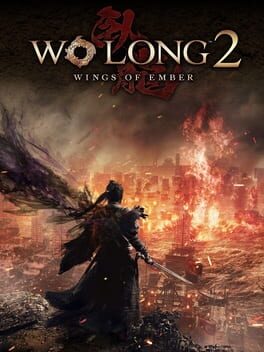
In an official update released on NintendoLife, Koei Tecmo confirmed that Wo Long 2: Wings of Ember will ship on 4 March 2027 for the Switch 2, with a simultaneous global rollout across all major platforms. The sequel promises to deepen the series’ signature blend of visceral combat and mythic storytelling, introducing a more expansive open‑world map that spans the war‑torn landscapes of the Three Kingdoms while weaving in newly explored supernatural factions. Development director Hiroshi Kawai hinted that the game will feature a “next‑generation combat engine” that leverages the Switch 2’s enhanced GPU to render real‑time particle effects for fire, blood, and ethereal magic without the frame‑rate penalties that plagued the original on less powerful hardware.
Alongside the release date, Koei Tecmo announced a cross‑platform demo that will be available in the weeks leading up to launch. Players who download the demo will unlock a “cool helmet” cosmetic for the full game—a nod to the series’ tradition of rewarding early adopters with exclusive gear. While the demo is slated for PlayStation, Xbox, and PC, the full version will be a launch title on the Switch 2, underscoring Nintendo’s renewed willingness to host darker IPs. The trailer accompanying the announcement showcases a sprawling battlefield drenched in rain, a new protagonist wielding a flaming spear, and a glimpse of the “Wings of Ember” mechanic that appears to grant temporary god‑like powers, hinting at a deeper integration of mythic abilities into the core combat loop.
Analysis
The decision to lock a 2027 launch window is a calculated gamble that aligns Koei Tecmo’s product pipeline with Nintendo’s hardware refresh cycle. Historically, third‑party support has been a decisive factor in a console’s longevity; the PlayStation 2’s dominance, for example, was bolstered by a flood of third‑party titles that filled its library beyond Sony’s first‑party output. By securing a marquee franchise for the Switch 2’s launch, Koei Tecmo not only guarantees a headline draw but also signals to the development community that the platform can handle the computational load of intricate AI, large‑scale particle systems, and high‑resolution textures—areas where the original Switch was forced to compromise.
From a market perspective, the move could catalyze a shift in the demographic composition of Switch owners. The console’s user base has traditionally skewed younger and family‑oriented, but recent successes like Elden Ring on Switch via cloud streaming and the resurgence of mature indie titles suggest a growing appetite for gritty experiences. If Wo Long 2 delivers on its promise, it may broaden the console’s appeal, encouraging retailers to allocate more shelf space to “hardcore” titles and prompting Nintendo to reconsider its traditionally conservative content guidelines. Competitors such as Sony’s PlayStation 6, slated for a 2028 release, will need to respond with comparable exclusive line‑ups or risk ceding market share in the niche but lucrative dark fantasy segment.
XPLog Opinion
At XPLog UK we view Koei Tecmo’s Switch 2 commitment as a watershed moment that validates Nintendo’s evolution from a family‑first console to a true hybrid powerhouse capable of courting the “core” segment without alienating its traditional audience. The strategic placement of Wo Long 2 as a launch‑window flagship demonstrates that Nintendo’s hardware roadmap is finally aligning with the performance expectations of developers who have long been hesitant to target the platform for premium experiences. This partnership could usher in a new era where dark fantasy and historically grounded IPs become staples on Nintendo hardware, forcing the rest of the industry to recalibrate its assumptions about platform exclusivity and audience segmentation.
Final Thoughts
In sum, the March 2027 release of Wo Long 2: Wings of Ember on Switch 2 is more than a simple sequel announcement; it is a litmus test for the console’s ability to host demanding, narrative‑rich titles and a harbinger of a potentially broader shift in Nintendo’s market positioning. As the demo rollout begins and anticipation builds, the industry will be watching closely to see whether the game’s performance and reception can translate into sustained third‑party confidence—a factor that could ultimately define the commercial success of the Switch 2 and reshape the competitive landscape for the next generation of gaming hardware.