.png)
Overview
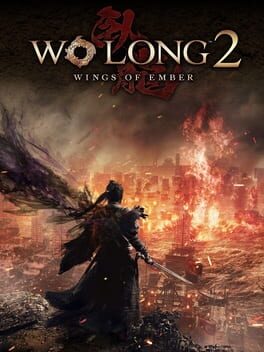
When Team Ninja unveiled Wo Long 2: Wings of Ember, the announcement reverberated far beyond the niche corridors of hardcore action‑RPG forums. The original Wo Long, released to modest fanfare, had already carved a reputation as a kinetic crucible where reflexes met strategy, largely thanks to its daring deflection mechanic that turned every enemy swing into a high‑stakes gamble. In an era where many studios lean on loot‑box monetisation and live‑service scaffolding, Team Ninja’s decision to double down on pure, skill‑centric combat signalled a bold affirmation of the studio’s design philosophy—a philosophy honed through the blood‑soaked corridors of Ninja Gaiden, the samurai‑laden arenas of Nioh, and the competitive precision of Dead or Alive.
The timing of the sequel’s reveal is equally significant. The current console generation is entering a saturation point, with major publishers scrambling to differentiate their flagship titles through either expansive open worlds or aggressive post‑launch monetisation. Meanwhile, a growing segment of the player base—particularly on PC and next‑gen consoles—has vocalised fatigue with formulaic, grind‑heavy experiences. Wo Long 2 arrives as a potential antidote, promising to synthesise the visceral combat of Ninja Gaiden, the deep stamina and posture systems of Nioh, and the fluid, player‑driven pacing that made Dead Alive a staple of competitive fighting. This convergence not only reasserts Team Ninja’s relevance but also challenges the market’s prevailing assumptions about what an action‑RPG can be.
What Happened?
At the core of the announcement, Team Ninja confirmed that Wings of Ember will retain the original’s hallmark deflection system while expanding its tactical depth through a revamped morale mechanic and a more nuanced momentum gauge. Early gameplay footage shows enemies reacting with distinct animation cues, encouraging players to read attack patterns and counter with split‑second timing—a clear evolution from the first title’s more binary parry window. Moreover, the sequel introduces a “dual‑stance” system, allowing warriors to toggle between a heavy, armor‑piercing stance and a light, evasive mode on the fly, a design decision that mirrors the stance‑switching seen in recent entries of the Dark Souls lineage but with a uniquely Ninja‑Gaiden flair.
Beyond combat, the developers highlighted a broader world‑building ambition. Set in a mythic rendition of the late Ming dynasty, the game will feature sprawling, interconnected districts that reward exploration not merely with gear but with narrative fragments that flesh out the empire’s collapse. This narrative emphasis is a direct response to criticism that the original’s story was too skeletal, and it aligns with the industry’s broader shift toward integrating lore into environmental storytelling. Team Ninja’s lead designer, who previously steered Nioh 2’s narrative integration, emphasized that each district will possess its own morale challenges, compelling players to engage with side content that feels consequential rather than perfunctory.
Analysis
From a market perspective, Wo Long 2 positions itself at the intersection of three potent trends: the resurgence of skill‑based combat, the appetite for historically flavored settings, and the desire for content that rewards mastery without resorting to pay‑to‑win mechanics. By leveraging the technical expertise accumulated across Ninja Gaiden’s fast‑paced platforming, Nioh’s intricate stamina calculus, and Dead or Alive’s competitive balance, Team Ninja may set a new benchmark for action‑RPGs that eschew microtransactions in favour of pure gameplay depth. This could pressure rivals such as FromSoftware and CD Projekt Red to double‑down on combat refinement rather than expanding narrative scope alone.
However, the ambition is not without risk. Implementing a dual‑stance system that feels intuitive on both console controllers and PC keyboards demands meticulous input design, and any misstep could alienate the very core audience that values precision. Additionally, the decision to embed a richer story within a traditionally combat‑first framework may stretch development resources, potentially leading to delays or compromises in either narrative or combat polish. Should Team Ninja navigate these technical hurdles successfully, the payoff could be a flagship title that redefines the premium action‑RPG experience and reasserts the studio’s reputation as a pioneer rather than a follower.
XPLog Opinion
At XPLog UK, we view Wo Long 2: Wings of Ember as a litmus test for the future of high‑skill, single‑player experiences in an industry increasingly dominated by live services. The game’s commitment to expanding the deflection mechanic—while weaving in lessons from Team Ninja’s broader portfolio—signals a courageous bet that gamers still crave mastery‑driven challenges. If the sequel delivers on its promise, it will not only cement Wo Long’s place in the pantheon of modern action‑RPGs but also prove that deep, handcrafted combat loops can thrive commercially alongside the more lucrative, service‑oriented models that currently dominate the market.
Final Thoughts
Wo Long 2: Wings of Ember stands as a potential watershed moment for Team Ninja and the wider action‑RPG genre. By marrying the relentless tempo of Ninja Gaiden, the strategic stamina of Nioh, and the competitive polish of Dead or Alive, the sequel aspires to deliver an experience that feels both familiar and revolutionary. Players and analysts alike should keep a close eye on upcoming beta windows and the studio’s post‑launch support roadmap, as these will reveal whether the ambitious design philosophy can translate into sustained critical and commercial success.