.png)
Overview
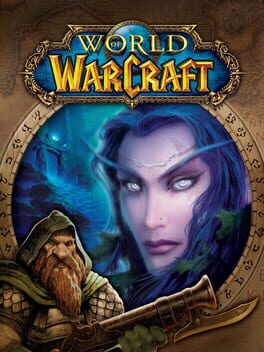
BlizzCon 2024 turned the usual fan‑fare into a rare glimpse of the company’s long‑range roadmap, with the studio unveiling tentative launch windows for Diablo V (2029) and an ambitious open‑world StarCraft shooter slated for 2030. The announcements, while distant, sparked a wave of speculation about the state of Blizzard’s flagship MMO, World of Warcraft, which has been quietly evolving under the banner “World of Warcraft: Forever.” The industry’s attention shifted to the question that has haunted the community for years: will there ever be a true sequel, a World of Warcraft 2, that offers something fundamentally new beyond the incremental updates that have defined the franchise for nearly two decades?
To understand the stakes, one must recall the historical arc of the MMO market. In the early 2000s, WoW’s launch reshaped subscription models, set the standard for persistent worlds, and forced rivals like EverQuest and Star Wars Galaxies into reactive positions. Over the subsequent fifteen years, the genre saw a surge of “games as a service” titles, many of which borrowed heavily from WoW’s design language while attempting to differentiate through narrative resets, battle‑royale modes, or hybrid PvE‑PvP structures. Blizzard’s decision to keep WoW alive through continuous expansions rather than a hard reboot mirrors a broader industry trend where legacy IPs are refreshed rather than replaced, a strategy that mitigates risk but can also breed player fatigue.
What Happened?
During the keynote, senior Blizzard executives emphasized a “future‑first” philosophy, positioning Diablo V and the StarCraft shooter as flagship experiences that will define the next generation of their portfolio. When the floor opened for Q&A, a journalist asked directly about a possible World of Warcraft sequel. The response was measured: Blizzard acknowledged the “elephant in the room” but reiterated that the current “Forever” roadmap—comprising a series of expansions, system overhauls, and cross‑title integrations—remains the primary vehicle for innovation. No concrete dates or concrete sequel plans were disclosed, signaling a deliberate choice to keep the conversation focused on long‑term content pipelines rather than a headline‑grabbing sequel.
The announcement also highlighted Blizzard’s commitment to “technical evolution” over “rebranding.” Engineers discussed plans to overhaul the rendering pipeline, integrate next‑gen AI‑driven NPC behavior, and expand the game’s underlying data architecture to support truly massive, seamless zones. While these upgrades could, in theory, lay the groundwork for a next‑gen WoW experience, the studio framed them as enhancements to the existing live service, not as a prelude to a clean‑slate sequel. This stance suggests that Blizzard views the cost of a full reboot—both in development resources and community goodwill—as outweighing the perceived benefits.
Analysis
From a market perspective, Blizzard’s reluctance to announce a World of Warcraft 2 reflects a calculated response to shifting player expectations and competitive pressures. The MMO sector has fragmented, with newer titles like Final Fantasy XIV and the resurgence of Elder Scrolls Online proving that a well‑executed live‑service model can outlive a single title’s lifecycle. Meanwhile, the rise of “sandbox” MMOs and hybrid action‑RPGs has raised the bar for what players consider “next‑gen” content—dynamic world events, player‑driven economies, and cross‑platform play. By focusing on deep, systemic upgrades within the existing WoW framework, Blizzard can leverage its massive subscriber base while avoiding the brand dilution that a poorly received sequel might cause.
Technical hurdles also play a crucial role. Transitioning a codebase that has been iteratively built since 2004 to a modern engine capable of supporting 2025‑era graphics, ray‑traced lighting, and true open‑world persistence is a monumental undertaking. The announced pipeline improvements hint at a possible “engine‑first” approach that could eventually enable a sequel, but such an effort would likely span multiple years and require a dedicated team separate from the live‑service crew. In the interim, the “Forever” model allows Blizzard to monetize incremental improvements while buying time to solve these engineering challenges without the pressure of a fixed launch window.
XPLog Opinion
At XPLog UK, we view Blizzard’s current trajectory as both pragmatic and slightly short‑sighted. Pragmatic because preserving the WoW brand through continuous expansion protects a revenue stream that still tops $1 billion annually; short‑sighted because the MMO audience is maturing, and many veteran players crave a decisive evolution rather than endless iteration. A true World of Warcraft 2—if it were to arrive with a fresh narrative premise, a reimagined class system, and next‑gen technical foundations—could reinvigorate the franchise, attract lapsed subscribers, and set a new benchmark for live services. Until Blizzard commits to that bold step, the “Forever” mantra risks becoming a euphemism for stagnation, especially as competitors double down on next‑gen experiences.
Final Thoughts
In summary, Blizzard’s BlizzCon disclosures painted a picture of a studio looking far ahead, yet still anchored to its most iconic live‑service title. While the technical upgrades promised for World of Warcraft suggest a roadmap that could eventually culminate in a sequel, the absence of any concrete WoW 2 announcement indicates that Blizzard prefers to safeguard its existing ecosystem for now. Players and analysts alike should keep an eye on future expansion reveals—particularly those that tout “world‑scale” changes or “engine‑level” overhauls—as these may be the subtle harbingers of a true next‑generation WoW hidden beneath the “Forever” veneer. The next major milestone to watch will be the Q4 2025 expansion cycle, when Blizzard is expected to reveal whether the promised upgrades are merely cosmetic or the foundation for a more ambitious rebirth.