.png)
Overview
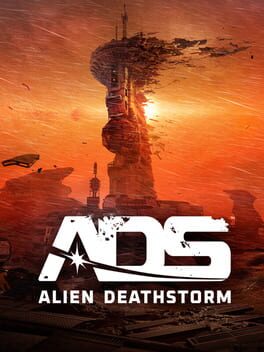
Gamescom’s third day has traditionally been a crucible where the industry’s most ambitious projects either cement their legacy or fade into the background. Amid a sea of polished showcases, the event’s atmosphere is often a blend of exhilaration and fatigue, a cocktail intensified by the inevitable post‑expo malaise that even seasoned journalists can’t escape. This year, however, a new entrant burst onto the stage with a ferocity that cut through the haze: Alien Deathstorm, an unannounced first‑person shooter that thrust players into a relentless, hyper‑intense combat loop that felt more akin to a high‑octane arcade experience than a conventional showcase demo.
While the market has seen a resurgence of fast‑paced shooters—from the battle‑royale frenzy to the resurgence of arena‑style titles—the arrival of Alien Deathstorm signals a potential shift toward a hybrid model that marries visceral immediacy with narrative depth. The title’s aesthetic, a grimy fusion of sci‑fi horror and industrial grit, taps into a nostalgia for early‑2000s shooters while simultaneously leveraging modern rendering pipelines that deliver staggering visual fidelity. In the broader context, its surprise debut underscores a growing willingness among mid‑tier publishers to gamble on bold, genre‑bending concepts at flagship events, a trend that could recalibrate how studios allocate marketing budgets and development resources.
What Happened?
During a tightly scheduled demo slot, the developers—still operating under a veil of anonymity—unleashed a half‑hour segment that thrust attendees into a non‑stop barrage of alien adversaries, environmental hazards, and adaptive AI that punished hesitation. The gameplay loop emphasized split‑second decision making, with a weapon system that encouraged aggressive reload mechanics and a health regeneration model that rewarded continuous combat engagement. The demo’s pacing was deliberately unforgiving, a design choice that left players breathless and, according to on‑site interviews, yearning for more despite the physical exhaustion it induced.
Accompanying the live demonstration, a brief developer Q&A revealed that Alien Deathstorm is being built on a proprietary engine optimized for low‑latency multiplayer and dynamic lighting effects, aiming to deliver a seamless experience across both next‑gen consoles and high‑end PCs. The team hinted at a staggered release strategy, targeting a late‑2025 launch with an emphasis on post‑launch content that will expand the game’s universe through episodic narrative arcs and community‑driven map creation tools. Though concrete sales figures remain undisclosed, the buzz generated suggests a strong potential for the title to capture a slice of the competitive shooter market that has been dominated by a handful of legacy franchises.
Analysis
The introduction of Alien Deathstorm at Gamescom could have ripple effects across the FPS landscape, challenging incumbents that have long relied on incremental updates to maintain relevance. By foregrounding relentless intensity and a high skill ceiling, the game positions itself as a direct competitor to titles like Call of Duty’s fast‑paced modes and the emergent arena‑style contenders such as Valorant and Overwatch. Moreover, the developers’ commitment to a proprietary engine suggests a strategic move to reduce dependency on third‑party middleware, potentially lowering licensing costs and granting greater control over performance optimization—a critical factor as console hardware continues to evolve toward more modular, cloud‑integrated architectures.
From a market perspective, the demo’s reception indicates a latent demand for experiences that blend old‑school arcade brutality with modern narrative ambition. If the studio can translate the demo’s kinetic energy into a polished, content‑rich launch, it may catalyze a wave of similar projects that prioritize adrenaline‑fueled gameplay over the increasingly prevalent “live service” model. However, the intensity that made the demo memorable also raises concerns about accessibility; the title will need to balance its hardcore appeal with scalable difficulty options to avoid alienating a broader player base, a lesson learned from past high‑intensity shooters that struggled to retain casual audiences.
XPLog Opinion
At XPLog UK, we view Alien Deathstorm as a bold statement that the shooter genre is far from stagnant; it is a clarion call that developers willing to take creative risks can still capture the imagination of a community that has grown weary of formulaic releases. The demo’s raw energy and unapologetic difficulty echo the golden era of competitive shooters, yet its technical underpinnings hint at a forward‑looking vision that could redefine how intensity and storytelling coexist on modern platforms. Should the final product deliver on its promise, it will not only enrich the FPS ecosystem but also compel larger studios to reconsider their own design philosophies, potentially ushering in a renaissance of high‑skill, high‑reward experiences.
Final Thoughts
Alien Deathstorm’s unexpected showcase at Gamescom serves as both a reminder of the genre’s roots and a beacon pointing toward its future. As the industry watches for further details—beta windows, platform exclusivity announcements, and the forthcoming release timetable—the title stands poised to challenge established hierarchies and invigorate a player community hungry for fresh, unforgiving combat. Keep an eye on the developer’s channels and the upcoming Summer Game Fest, where we expect more concrete revelations that will shape the trajectory of this ambitious shooter.