.png)
Overview
In the increasingly crowded arena of modern fighting games, publishers have leaned heavily on brand recognition and cross‑platform accessibility to capture both hardcore enthusiasts and casual newcomers. Sony, intent on bolstering its PlayStation ecosystem, has pursued a strategy of pairing high‑profile licences with studios renowned for tight, animation‑driven combat systems—an approach that has historically yielded titles like *Gran Turismo* and *MLB The Show*. Yet the market’s appetite for instant, flawless experiences has never been higher, especially on PC where players expect rapid iteration, robust matchmaking, and a level of technical polish that rivals the console flagship.
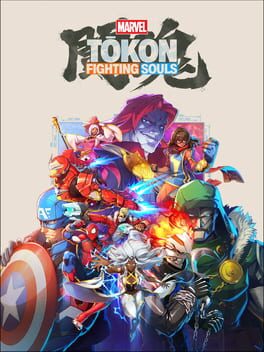
Enter *Marvel Tokon: Fighting Souls*, Arc System Works’ ambitious synthesis of the Marvel Universe with the studio’s signature anime‑style aesthetics. The game promised a roster that spanned iconic heroes and villains, a deep combo‑centric combat engine, and a live‑service model that would keep the meta evolving long after launch. When Sony rolled the title out in early August on both PS5 and PC, the console version lived up to expectations, but the PC build arrived riddled with frame‑rate cliffs, input latency spikes, and a matchmaking system that struggled to pair players of comparable skill. For a community that has grown accustomed to near‑instant patch cycles on platforms like Steam, these early‑day shortcomings threatened to erode trust not only in the title itself but in the broader promise of cross‑generation releases.
What Happened?
Arc System Works took to its official blog on September 12th to issue a public apology, acknowledging that the PC launch of *Marvel Tokon* fell short of the standards set by its console counterpart. The post detailed a litany of technical missteps: a poorly optimized graphics pipeline that caused stuttering on mid‑range GPUs, a networking stack that failed to maintain stable connections during ranked bouts, and a series of UI glitches that rendered character selection menus unusable for a subset of Windows configurations. The developers emphasized that these issues were not the result of a rushed launch but rather stemmed from an under‑estimated variance in PC hardware profiles and a lack of sufficient QA time allocated to the Windows build.
Beyond the apology, Arc System Works outlined a concrete roadmap for remediation. The studio pledged a series of balance updates aimed at fine‑tuning character abilities, a “Performance Patch 1.0” that will overhaul the rendering engine to better leverage DirectX 12 and Vulkan pathways, and a revamp of the matchmaking algorithm to incorporate latency‑aware region selection. Moreover, the company committed to weekly transparency reports, inviting community feedback through Discord channels and a dedicated subreddit. By positioning these fixes as part of an ongoing “Living Game” philosophy, Arc signals its intent to treat *Marvel Tokon* not as a static product but as a continually evolving service that will adapt to player sentiment and competitive meta‑shifts.
Analysis
The immediate market repercussions of the PC debacle are twofold. First, Sony’s reputation as a curator of premium, launch‑ready experiences is at risk, especially as rival platforms such as Xbox Game Pass and Nintendo Switch continue to emphasize seamless cross‑play and rapid post‑launch support. A rocky PC entry can undermine consumer confidence in future Sony‑published cross‑platform fighters, potentially nudging developers toward exclusive deals or more conservative multi‑platform rollouts. Second, Arc System Works’ brand equity, built on titles like *Guilty Gear* and *Dragon Ball FighterZ*, now faces scrutiny; a pattern of post‑launch patches could be perceived as a strength—demonstrating commitment to longevity—or as a sign that initial quality gates were insufficient.
From a technical standpoint, the challenges highlighted by Arc underscore a broader industry trend: the difficulty of delivering parity across heterogeneous PC ecosystems while maintaining the high frame‑rate thresholds demanded by fighting game purists. Competitors such as Capcom and Bandai Namco have invested heavily in proprietary netcode solutions (e.g., GGPO, rollback netcode) to mitigate latency, and they have begun to standardise on middleware that abstracts hardware variance. If Arc can successfully implement a more resilient networking layer and optimise its rendering pipeline, it may not only salvage *Marvel Tokon*’s PC reputation but also set a benchmark for future cross‑platform fighters. Failure to do so, however, could accelerate a shift toward console‑first exclusivity for high‑skill competitive titles.
XPLog Opinion
At XPLog UK we view Arc System Works’ transparent approach as a necessary, albeit overdue, corrective measure; the company’s willingness to publicly own its shortcomings and lay out a detailed patch cadence demonstrates a mature understanding that modern fighting games live and die by their community’s trust. Nonetheless, the onus now lies on both Sony and Arc to deliver on these promises without further delay, because each missed deadline compounds the narrative of a title that was over‑promised and under‑delivered—a narrative that can be hard to reverse in a market where players have a plethora of polished alternatives at their fingertips.
Final Thoughts
In sum, *Marvel Tokon: Fighting Souls* stands at a pivotal crossroads: the forthcoming performance and balance patches will either restore faith in the title’s competitive viability or cement its reputation as a cautionary tale of cross‑platform ambition outpacing execution. Players should keep a close eye on Arc System Works’ weekly update logs, with the next major patch slated for early October, and monitor Sony’s communications regarding potential incentives for early adopters who endured the rough launch. The next few months will reveal whether *Marvel Tokon* can transcend its shaky debut and become a staple of the global fighting‑game ecosystem, or whether it will fade into the annals of missed opportunities.