.png)
Overview
Blizzard Entertainment has long been synonymous with tightly controlled ecosystems, from the early days of Battle.net as a pioneering matchmaking service to the modern, subscription‑driven portals that house World of Warcraft, Diablo IV, and the forthcoming Overwatch 2 expansions. In an era where digital distribution has become a battlefield for market share, the company’s recent decision to expand its storefront with heavyweight titles like CD Projekt Red’s The Witcher 3 and Cyberpunk 2077 appears, at first glance, to be a bold move toward the kind of catalogue depth that Steam and Epic Games Store flaunt. Yet the underlying philosophy remains unmistakably Blizzard‑centric: Battle.net is being fashioned not as a massive marketplace, but as a curated boutique where each addition is hand‑picked to align with the brand’s quality standards and community expectations.
The timing of this shift is no accident. The past five years have seen a consolidation of power among a handful of platform operators, each leveraging exclusive deals, revenue‑share incentives, and aggressive cross‑promotion to lock in developers and players alike. Meanwhile, consumer fatigue with fragmented libraries and perpetual sales has given rise to a niche demand for “trusted shelves” – digital spaces where the curation itself becomes a selling point. Blizzard’s announcement, therefore, is less about entering a price war with Steam’s 30 % cut or Epic’s 12 % developer fees, and more about reinforcing a legacy of quality control while subtly testing the limits of its ecosystem’s openness.
What Happened?
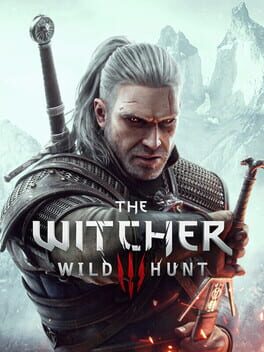
During a recent developer briefing, Blizzard confirmed that Battle.net will host The Witcher 3: Wild Hunt and Cyberpunk 2077, two of the most commercially successful RPGs of the last decade. The partnership was framed not as a licensing scramble but as a strategic alignment: CD Projekt Red’s narrative‑driven, single‑player focus dovetails with Blizzard’s emphasis on deep, immersive experiences. Both titles will arrive fully patched, with all post‑launch DLC integrated into a single, seamless offering on Battle.net, mirroring the approach Blizzard has taken with its own expansions. The company emphasized that these games will retain their original pricing structures and that any future updates will be delivered through Blizzard’s established patching pipeline, ensuring consistency across the platform.
Crucially, Blizzard made it clear that Battle.net’s expansion does not signal a shift toward becoming a generic storefront. Executives reiterated that the platform will continue to present a “hand‑picked basket” of experiences, deliberately limiting the breadth of its catalogue to maintain a high signal‑to‑noise ratio for players. This stance is underscored by the fact that, unlike Steam’s algorithmic recommendation engine, Battle.net will rely on editorial curation and community feedback to determine future additions. The move also includes a promise of deeper integration with Blizzard’s existing services – such as unified friend lists, cross‑title achievements, and a single‑sign‑on experience – which could set a new benchmark for convenience within a curated ecosystem.
Analysis
The decision to bring heavyweight third‑party RPGs onto Battle.net can be read as a calculated bet on brand synergy rather than a direct challenge to the volume‑driven models of Steam and Epic. By selecting titles that share a commitment to narrative depth and post‑launch support, Blizzard mitigates the risk of diluting its brand identity while simultaneously attracting a broader segment of the PC gaming audience that values curated quality over sheer quantity. From a market perspective, this could carve out a modest but lucrative niche: players disillusioned by the endless scroll of low‑effort releases on larger platforms may gravitate toward a trusted, albeit smaller, catalogue where every entry has passed Blizzard’s internal vetting process.
However, the strategy is not without technical and commercial hurdles. Integrating games built on different engines – REDengine for The Witcher series and the proprietary Cyber Engine – into Blizzard’s patch distribution and DRM framework demands significant engineering resources. Moreover, the revenue‑share model remains opaque; if Blizzard opts for a more favorable split to entice third‑party publishers, it could erode the very margin advantage that has sustained its storefront. Competitors may respond by tightening exclusivity clauses or by launching their own curated sections, potentially fragmenting the market further. Yet the long‑term payoff could be substantial: a loyal user base that associates Battle.net with a guarantee of polish, support, and community cohesion, thereby increasing lifetime value per user.
XPLog Opinion
From XPLog’s standpoint, Blizzard’s restrained expansion is a masterstroke of brand stewardship. In a landscape where many publishers chase headline‑grabbing exclusives, Blizzard is quietly reinforcing the trust it has cultivated over two decades. By refusing to become a “super‑store” and instead focusing on a meticulously curated lineup, Battle.net positions itself as the premium boutique for gamers who prioritize depth, stability, and a seamless social experience. This approach may not generate the explosive sales spikes of a blockbuster exclusive, but it builds a sustainable ecosystem that can weather the volatility of the broader digital distribution market.
Final Thoughts
Battle.net’s integration of The Witcher 3 and Cyberpunk 2077 marks a subtle yet significant evolution in Blizzard’s distribution philosophy: a curated expansion that respects the platform’s heritage while testing the limits of its openness. As the industry continues to grapple with the tension between marketplace abundance and quality curation, Blizzard’s experiment will be a bellwether for whether a trusted, limited catalogue can thrive alongside the giants of Steam and Epic. Players and analysts alike should keep an eye on the rollout schedule later this quarter and the subsequent performance metrics Blizzard releases, as they will reveal whether this boutique model can indeed compete in a market defined by scale.