.png)
Overview
At a time when the industry is scrambling to re‑ignite franchise momentum after a decade of pandemic‑induced disruption, two of the most storied studios in modern gaming have announced a partnership that could reshape cross‑genre collaborations. Blizzard Entertainment, fresh off the commercial resurgence of Diablo IV, and CD Projekt Red, still basking in the lingering afterglow of The Witcher 3’s enduring live‑service expansion, revealed at Gamescom that a joint venture was in the works. The announcement arrived against a backdrop of consolidations, with mega‑publishers seeking to diversify their portfolios and smaller studios hunting for marquee allies to broaden reach. Both companies have historically cultivated passionate, lore‑driven communities, and their convergence signals a strategic bet on shared universe storytelling as a catalyst for renewed player engagement.
Industry analysts have noted that the timing is no accident: the console market is entering a transitional phase, with the PlayStation 6 and Xbox Series X2 on the horizon, while PC remains a battleground for subscription services and cloud gaming. Blizzard’s decision to partner with CD Projekt Red dovetails with its broader push to integrate more narrative depth into its traditionally action‑oriented titles, while CD Projekt Red is looking to leverage Blizzard’s expertise in live‑event monetisation and global esports infrastructure. The collaboration is therefore not merely a fan‑service crossover but a calculated maneuver to intertwine two lucrative IP ecosystems, potentially unlocking new revenue streams through cross‑sell bundles, joint season passes, and shared in‑game economies.
What Happened?
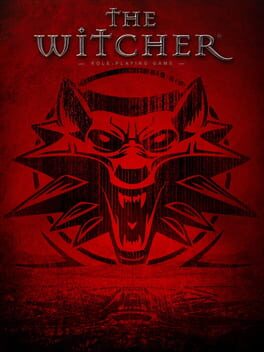
During day two of BlizzCon 2026, the stage was set for the first visual reveal of the Diablo IV × Witcher III collaboration. A cinematic trailer opened with Geralt of Rivia stepping through a storm‑torn portal, only to emerge in the bleak, gothic landscape of Sanctuary. The juxtaposition of Geralt’s silver sword against the demonic hordes of Diablo instantly sparked speculation about how the two gameplay philosophies would mesh. Developers from both studios took the stage to explain that the crossover will manifest as a limited‑time “Sanctuary Hunt” event in Diablo IV, where players can summon Witcher‑themed contracts, summon Geralt as an NPC ally, and acquire unique gear that blends the alchemical aesthetic of The Witcher with the dark fantasy iconography of Diablo.
Blizzard and CD Projekt Red also disclosed that the collaboration will extend beyond a single event. A new “Witcher’s Path” expansion for Diablo IV is slated for early 2027, introducing a series of narrative quests authored by CD Projekt Red’s writers, complete with branching dialogues, moral choices, and monster‑designs inspired by the Continent’s bestiary. Conversely, CD Projekt Red hinted at a “Diablo’s Curse” DLC for The Witcher III’s next‑generation remake, featuring a demonic invasion of the Northern Kingdoms that will require players to adopt Diablo‑style skill trees and rune‑based crafting. Both studios emphasized that all content will be fully integrated into existing progression systems, ensuring that the crossover feels organic rather than a superficial skins‑only affair.
Analysis
The market impact of this partnership could be profound. By intertwining two high‑value IPs, Blizzard and CD Projekt Red are effectively creating a shared‑world micro‑ecosystem that can drive player retention across multiple titles. Historically, cross‑overs such as the “Fortnite‑Marvel” events have demonstrated the power of short‑term hype to boost concurrent user counts, but this collaboration aims for sustained engagement through narrative continuity and shared loot economies. If executed well, the “Sanctuary Hunt” could serve as a template for future cross‑studio events, prompting competitors like Ubisoft and Square Enix to explore similar alliances, thereby reshaping the competitive landscape of live‑service games.
Technical challenges loom, however. Integrating CD Projekt Red’s dialogue‑heavy quest architecture into Blizzard’s real‑time combat engine will require careful synchronization of latency‑sensitive networking code, especially as both games support cross‑platform play. Moreover, balancing the power curve of Witcher‑themed gear within Diablo IV’s loot hierarchy could provoke community backlash if perceived as pay‑to‑win. Both studios have a history of listening to player feedback—Blizzard’s recent overhaul of Diablo IV’s end‑game and CD Projekt Red’s rapid patches for the Witcher III remake—so the success of this venture will hinge on transparent iteration cycles and robust telemetry to fine‑tune the experience post‑launch.
XPLog Opinion
From XPLog’s perspective, the Blizzard‑CD Projekt Red alliance represents a bold, if risky, evolution in franchise stewardship. It signals a willingness among legacy developers to break the silos that have traditionally defined their ecosystems, embracing a collaborative model that could rejuvenate aging player bases while courting new demographics. The key will be authenticity; fans of both series demand that the crossover respect the tonal gravitas of The Witcher’s morally ambiguous world and the unforgiving, loot‑driven grind of Diablo. Should the studios manage to deliver a seamless blend, they will not only set a new benchmark for cross‑IP storytelling but also prove that strategic partnerships can be a viable antidote to market saturation in the live‑service arena.
Final Thoughts
In sum, the Diablo IV × Witcher III collaboration is poised to become a landmark case study in how heavyweight publishers can leverage each other’s strengths to forge fresh, revenue‑rich experiences. With the first “Sanctuary Hunt” event slated for late 2026 and a full “Witcher’s Path” expansion expected in early 2027, the coming months will be critical for gauging player reception, balancing technical integration, and measuring the financial upside. Keep an eye on Blizzard’s quarterly earnings reports and CD Projekt Red’s community forums for the early signals that will determine whether this partnership reshapes the future of cross‑genre collaborations or fades into a fleeting novelty.