.png)
Overview
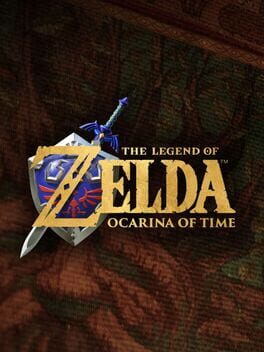
The latest Nintendo Directs have turned the industry’s attention back to one of its most hallowed franchises, unveiling a refreshed version of the seminal 1998 title The Legend of Zelda: Ocarina of Time for the Switch platform. While the headline announcement promised a straightforward remaster, the accompanying deep‑dive article on Nintendo Life enumerated twenty‑six nuanced details that signal Nintendo’s intent to treat the classic not merely as a nostalgic cash‑cow, but as a strategic lever in its broader 2026 console roadmap. This move arrives at a moment when Nintendo’s hardware sales have plateaued after the record‑breaking success of the original Switch, prompting the company to lean on its rich IP portfolio to sustain consumer engagement and justify the upcoming hardware iteration rumored for early 2027.
Historically, Nintendo has used high‑profile revivals—such as the 2017 Super Mario Odyssey launch and the 2022 Metroid Prime Remastered—to both fill gaps between first‑party releases and to test new monetisation models, including DLC and cross‑platform saves. The Ocarina of Time Switch 2, therefore, is more than a graphical polish; it is a litmus test for how the company can re‑engineer a beloved title to meet modern expectations—online leaderboards, quality‑of‑life tweaks, and potentially a new “master quest” mode—while preserving the delicate balance that made the original a cultural touchstone. The announcement also dovetails with Nintendo’s aggressive 2026 calendar, which is packed with a slate of new Switch titles that collectively aim to keep the platform’s install base active through the transition to next‑gen hardware.
What Happened?
During the second Direct, Nintendo’s senior vice president of software development, Shinya Takahashi, walked the audience through a series of visual comparisons, highlighting enhanced textures, refined lighting, and a re‑tuned audio mix that leverages the Switch OLED’s expanded colour gamut. Beyond the surface polish, the presentation revealed that the development team has implemented a dynamic difficulty scaling system, allowing newcomers to experience the narrative without the infamous “death spiral” that plagued early 3D Zelda titles, while veteran players can toggle a “classic mode” that reinstates the original enemy aggression and puzzle complexity. The reveal also confirmed the inclusion of a new “Chronicle” feature, a timeline‑based journal that logs player actions, side‑quests, and hidden collectibles, feeding directly into an upcoming online leaderboard that will rank runs based on completion time, secrets found, and combat efficiency.
Equally significant was the disclosure of a post‑launch content roadmap. Nintendo promised a series of free updates that will introduce previously cut dungeons, a revamped Master Sword quest, and a cooperative “Link‑link” mode that permits two players to explore Hyrule together via split‑screen—a first for any mainline Zelda title. The development studio, Nintendo EPD, cited the original game’s codebase as a “living artifact,” noting that they had to reconstruct portions of the engine to accommodate modern networking protocols and the Switch’s hybrid nature. These technical undertakings hint at a deeper commitment: the Switch 2 version is being built as a foundation for future cross‑title integrations, such as potential DLC that could tie into the forthcoming Breath of the Wild 2 narrative threads.
Analysis
From a market perspective, the Ocarina of Time Switch 2 serves as a strategic anchor for Nintendo’s “software‑first” philosophy, a stance that has become increasingly vital as hardware margins shrink and competition from cloud‑gaming services intensifies. By delivering a premium, content‑rich remake, Nintendo not only monetises an evergreen IP but also reinforces the Switch’s relevance against the PlayStation 5 and Xbox Series X, whose own libraries are increasingly dominated by third‑party shooters and live‑service titles. The addition of online leaderboards and cooperative play directly addresses a long‑standing criticism that Zelda games have been solitary experiences, thereby opening the franchise to a broader demographic that values shared gameplay and competitive metrics.
Technically, the decision to rebuild core engine components to support modern networking and UI overlays signals a shift in Nintendo’s development pipeline. Historically, the company has been reticent to retrofit legacy titles with online infrastructure, preferring to focus on new IPs. This pivot suggests that Nintendo recognizes the commercial upside of extending the lifecycle of its classics through continuous updates—a model popularised by Rockstar’s GTA Online and Ubisoft’s “Live Service” approach. However, the risk lies in over‑extending a beloved title, potentially alienating purists who view any alteration as sacrilege. Balancing authenticity with innovation will be the litmus test for Nintendo’s ability to leverage nostalgia without eroding brand equity.
XPLog Opinion
At XPLog UK, we view the Ocarina of Time Switch 2 as Nintendo’s most calculated gamble of the year: it is a masterclass in extracting value from legacy content while simultaneously using that content as a platform for future ecosystem growth. The depth of the announced features—particularly the cooperative mode and the robust post‑launch roadmap—demonstrates a willingness to evolve the Zelda formula in ways that could redefine player expectations for single‑player franchises. If Nintendo can execute these updates without compromising the core experience, the Switch will enjoy a renewed surge of active users, bolstering its market share ahead of the next hardware cycle.
Final Thoughts
In sum, the Ocarina of Time Switch 2 is more than a nostalgic cash‑in; it is a multifaceted initiative that intertwines technical overhaul, community‑centric features, and a forward‑looking content pipeline designed to keep the Switch ecosystem vibrant through 2027 and beyond. Gamers should mark the upcoming “Summer Patch” window—tentatively slated for August 2026—as the first opportunity to experience the new cooperative mode, and keep an eye on Nintendo’s quarterly financial briefings for clues about how this release will influence the company’s broader strategic trajectory.