.png)
Overview
The latest wave of Nintendo Switch Online additions has quietly reshaped the conversation around legacy content on modern hardware. By expanding the GameCube catalogue to include titles that were once confined to a niche segment of the market, Nintendo is not merely padding a subscription service; it is signalling a strategic commitment to preserve—and even enhance—its mid‑2000s heritage for a new generation of players. The timing is crucial: with the imminent launch of the Switch 2, a console that promises higher performance and a more flexible display pipeline, the decision to surface games in their native widescreen aspect ratios underscores a broader industry trend toward retro‑friendly fidelity, where nostalgia meets contemporary visual standards.
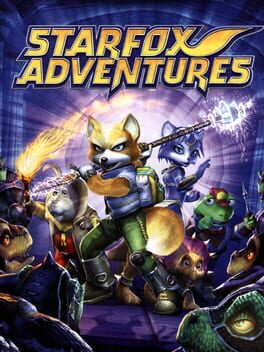
Star Fox Adventures, originally released in 2002 by Rare, occupies a particularly contentious spot in the franchise’s lineage. Conceived as a departure from the series’ classic rail‑shooter DNA, the game fused platforming, puzzle‑solving, and an open‑world structure that divided critics and fans alike. Its mixed reception was compounded by the fact that it arrived at the tail end of the GameCube’s lifespan, limiting its commercial impact. Yet, the title’s ambitious design and Rare’s storied pedigree have granted it a cult status that persists among core gamers. Presenting it in widescreen on the Switch 2 not only rectifies a technical shortfall of its original presentation but also offers a fresh lens through which the game’s ambitious world‑building can finally be appreciated.
What Happened?
In a brief but decisive update this week, Nintendo rolled out a toggle that activates native widescreen support for Star Fox Adventures across the Switch Online GameCube library. The move places the title alongside a small but noteworthy cohort of games—F‑Zero GX and SoulCalibur II—that already benefit from the same visual enhancement. By integrating a simple on‑the‑fly option, Nintendo sidesteps the need for a full‑scale remaster while still delivering a perceptible quality‑of‑life upgrade that aligns with the higher resolution output of the Switch 2’s OLED display.
The implementation hinges on the emulator’s ability to reinterpret the original 4:3 framebuffer and render it at a 16:9 aspect ratio without stretching or letterboxing. This technical nuance preserves the intended field of view while granting peripheral vision that modern players have come to expect. Moreover, the inclusion is bundled within the existing subscription model, meaning that long‑time subscribers receive immediate value without additional cost—a tactic that reinforces the service’s value proposition amid growing competition from Sony’s PlayStation Plus tiers and Microsoft’s Game Pass.
Analysis
From a market perspective, Nintendo’s decision to prioritize widescreen compatibility for legacy titles is a calculated response to two converging forces: the rising demand for authentic retro experiences and the competitive pressure to differentiate its subscription offering. While Sony and Microsoft have leaned heavily on streaming and cloud‑based retro libraries, Nintendo’s approach leverages its proprietary hardware ecosystem, ensuring that classic games not only run but also look appropriate on contemporary screens. This move also subtly prepares the groundwork for future retro releases; by perfecting the widescreen pipeline now, Nintendo can more efficiently port a broader swath of its archival catalogue when the Switch 2’s hardware capabilities become fully leveraged.
Technical hurdles are not trivial. The original GameCube architecture was designed around a fixed 4:3 output, and many titles relied on that framing for gameplay clarity and level design. Reworking the viewport to a widescreen format without introducing visual artifacts or gameplay imbalance demands meticulous emulator tuning. Nintendo’s confidence in rolling out this feature across multiple titles suggests that its internal emulation team has reached a maturity level that could accelerate the retro‑first strategy, potentially opening doors for more ambitious projects such as full‑scale remasters or even new entries that blend classic IPs with modern design sensibilities.
XPLog Opinion
At XPLog UK we view the widescreen rollout as a watershed moment for Nintendo’s preservation ethos; it demonstrates that the company is willing to invest engineering resources into polishing its back catalog rather than treating it as a static afterthought. For core gamers who grew up with the GameCube, the ability to finally experience Star Fox Adventures as it was meant to be seen—on a widescreen canvas that respects the original level geometry—reinvigorates the conversation around the title’s legacy and, more broadly, validates Nintendo’s strategy of incremental but meaningful enhancements to its retro library.
Final Thoughts
As the Switch 2 edges closer to launch, the widescreen update for Star Fox Adventures serves as both a nostalgic nod and a forward‑looking statement: Nintendo is preparing its classic arsenal for the next generation of high‑definition play. Players should keep an eye on upcoming Nintendo Directs for further announcements, as the company is likely to expand this widescreen initiative to other under‑served GameCube gems, cementing the Switch Online service as a premier destination for curated, technically refined retro experiences.