.png)
Overview
The indie landscape has long been a fertile proving ground for hybrid genre experiments, and the arrival of Shroom and Gloom in early access marks yet another bold foray into the intersection of roguelike progression and deck‑building strategy. Developed by a modest studio that has quietly cultivated a reputation for procedural ingenuity, the title arrives at a moment when players are craving fresh mechanical blends that move beyond the well‑trodden paths of either pure card games or traditional dungeon crawlers. In the broader market, titles such as Slay the Spire and Hades have demonstrated that iterative, post‑launch refinement can sustain long‑term engagement, and Shroom and Gloom appears poised to ride that wave, leveraging the allure of fungal aesthetics and a dual‑deck system to differentiate itself in an increasingly crowded early‑access arena.
Historically, the deck‑builder genre has oscillated between thematic flamboyance and mechanical purity, with early experiments like Magic: The Gathering’s digital offshoots giving way to more narrative‑driven experiences such as Monster Train. Meanwhile, roguelikes have evolved from ASCII‑based labyrinths to visually rich, story‑laden journeys exemplified by titles like Dead Cells. By marrying the two, Shroom and Gloom taps into a lineage of design cross‑pollination that dates back to the early 2000s, when games like Rogue Legacy hinted at card‑based upgrades within procedural runs. The current announcement therefore does not exist in a vacuum; it is a continuation of a decade‑long dialogue between randomness and strategic depth, now wrapped in a mycelial motif that could resonate with both collectors and speedrunners alike.
What Happened?
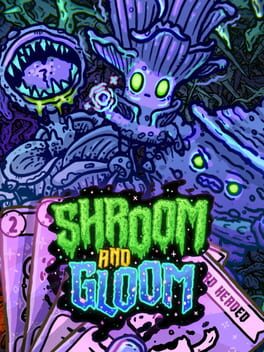
Earlier today the developers lifted the veil on Shroom and Gloom, releasing it to the Steam Early Access platform with a promise of ongoing content drops, balance patches, and community‑driven iteration. The core loop places players in spore‑infested catacombs where they must manage two distinct decks: one governing movement and exploration, the other dictating combat and resource manipulation. This bifurcated system forces players to constantly weigh positional decisions against the evolving threat matrix, a design choice that the studio claims was inspired by the biological symbiosis of mycelial networks. Early screenshots reveal hand‑drawn art that leans heavily into organic textures, while the UI adopts a parchment‑like feel, reinforcing the underground, alchemical atmosphere the team aims to cultivate.
In a developer livestream, the lead designer emphasized that the early‑access model is not a mere cash‑grab but a strategic partnership with the player base. They outlined a roadmap that includes weekly “spore‑sprints” – focused updates that introduce new card archetypes, enemy behaviors, and environmental hazards. Moreover, the team disclosed plans for a competitive ladder that will rank players based on run efficiency, encouraging meta‑development and fostering a community around high‑skill play. While concrete release dates for the full version remain fluid, the studio has pledged a “full launch” no later than Q2 2025, contingent on achieving a stable meta and satisfying a set of community‑derived quality‑of‑life milestones.
Analysis
From a market perspective, Shroom and Gloom’s dual‑deck mechanic could serve as a differentiator strong enough to carve a niche amidst heavyweight titles that dominate the roguelike‑deck‑builder hybrid space. The early‑access timing aligns with a resurgence of interest in procedural titles, driven in part by the success of games like Returnal and the sustained popularity of tabletop‑inspired digital experiences. However, the venture is not without risk: balancing two decks simultaneously introduces a steep learning curve that may alienate casual entrants, a challenge that past hybrids have mitigated through extensive tutorialization and adaptive difficulty. The studio’s commitment to weekly content drops suggests a development pipeline capable of rapid iteration, yet it also raises concerns about feature creep and the potential for unpolished mechanics to linger longer than players are willing to tolerate.
Competitively, the introduction of a ranked ladder could attract a subset of the player base that thrives on optimization, mirroring the community dynamics seen around Slay the Spire’s “metagame” discussions. This could generate a virtuous feedback loop where high‑skill players produce content that draws viewers, thereby expanding the game’s visibility beyond the typical early‑access audience. On the flip side, the reliance on community feedback to shape balance may lead to a “design by committee” scenario, where divergent player opinions stall decisive changes. The studio’s transparent roadmap and promise of community‑driven milestones will be critical in navigating these tensions, and successful execution could position Shroom and Gloom as a case study in sustainable early‑access development.
XPLog Opinion
At XPLog UK we view Shroom and Gloom as a bold experiment that could recalibrate expectations for what early‑access titles can achieve when they blend deep systems design with a cohesive thematic identity; if the developers manage to keep the dual‑deck complexity approachable while delivering consistent, high‑quality updates, they stand to not only capture a dedicated core audience but also set a new benchmark for iterative, community‑centric development in the indie sector.
Final Thoughts
In sum, Shroom and Gloom arrives as a timely, ambitious entry that leverages the strengths of both roguelike randomness and deck‑building strategy, wrapped in a distinct fungal aesthetic that could become its trademark. Players and analysts alike should keep an eye on the forthcoming spore‑sprints, the evolution of the ranked ladder, and the studio’s ability to meet its Q2 2025 full‑launch target, as these milestones will reveal whether the game can transcend its early‑access origins and secure a lasting foothold in the competitive indie marketplace.