.png)
Overview
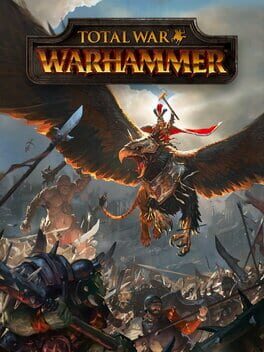
For more than a decade, Creative Assembly has been the architect of the Total War franchise, a series that has consistently pushed the boundaries of grand‑scale strategy by marrying turn‑based empire management with real‑time tactical battles. The studio’s partnership with Games Workshop, first realized in Total War: Warhammer and later expanded through the Warhammer II saga, demonstrated that the gritty, lore‑rich universes of tabletop wargames could be translated into digital experiences without sacrificing depth. Now, as the company turns its sights toward the grimdark expanse of Warhammer 40,000, the stakes are higher than ever: not only must they capture the ferocious scale of the 41st‑millennium setting, they must also confront a long‑standing criticism that Total War’s steep learning curve has alienated newcomers.
Industry analysts have observed a growing demand for “gateway” titles that lower entry barriers while preserving the core experience that veteran players cherish. This trend is evident in the success of games like Civilization VI’s revamped tutorial system and the rise of “beginner‑friendly” modes in traditionally hardcore franchises such as Dark Souls and Elden Ring. In this context, Creative Assembly’s public commitment to an “approachable and accessible” Warhammer 40,000 entry reflects a strategic pivot that aligns with broader market dynamics: the need to expand the player base without eroding the franchise’s reputation for depth and unforgiving realism.
What Happened?
During a recent developer livestream, Creative Assembly unveiled a suite of onboarding tools designed to shepherd strategy‑newcomers into the brutal universe of the Imperium, Orks, and Tyranids. The studio highlighted a revamped tutorial that interleaves narrative-driven missions with hands‑on guidance, allowing players to learn the fundamentals of army composition, supply lines, and planetary conquest at a measured pace. Additionally, a “campaign starter” mode will present a curated series of skirmishes that gradually introduce advanced mechanics such as attrition, morale, and the infamous “grimdark” random events that can swing battles in an instant.
Beyond tutorials, the announcement detailed a “big tent” philosophy: a flexible difficulty system that adapts to player performance, a robust in‑game encyclopedia populated with lore snippets, and an optional “assist” overlay that highlights strategic hotspots during battles. Creative Assembly’s lead designer emphasized that these features are not meant to water down the experience but to provide scaffolding that respects the player’s learning curve, echoing the studio’s historical willingness to iterate on UI and AI improvements across the Total War lineage.
Analysis
The introduction of comprehensive onboarding tools could serve as a catalyst for a resurgence in Total War’s market share, particularly on consoles where the series has traditionally lagged behind PC sales due to control scheme complexities. By lowering the entry barrier, Creative Assembly positions the Warhammer 40,000 title to capture a segment of the console audience that has been gravitating toward other strategy‑heavy experiences like XCOM and the emerging “real‑time tactics” niche on PlayStation and Xbox. Moreover, the timing aligns with Sega’s broader push to diversify its portfolio beyond legacy franchises, potentially unlocking cross‑promotional opportunities with other Games Workshop properties and expanding the ecosystem of Warhammer‑centric digital content.
However, the move is not without risk. Veteran fans of the Total War series often view any dilution of difficulty or complexity as a betrayal of the brand’s core identity. If the assist systems are perceived as intrusive or if the “big tent” approach leads to a homogenized difficulty curve, the studio could alienate its most passionate community, sparking backlash similar to the controversy that surrounded the “Easy Mode” in Total War: Three Kingdoms. Balancing accessibility with the franchise’s hallmark depth will require meticulous telemetry, iterative patching, and transparent communication to maintain trust across the divergent player base.
XPLog Opinion
At XPLog UK, we view Creative Assembly’s outreach as a calculated evolution rather than a capitulation; the studio recognises that the future of grand strategy lies in expanding its demographic reach while preserving the unforgiving elegance that defines Total War. By embedding tutorialised narratives and adaptive difficulty directly into the Warhammer 40,000 framework, they are not merely adding a “hand‑hold” but redefining how epic, grimdark warfare can be taught to a generation raised on instant‑gratification titles. If executed with the finesse that has characterised their past patches, this could set a new benchmark for accessibility in the strategy genre, proving that depth and approachability are not mutually exclusive.
Final Thoughts
Creative Assembly’s promise to open the gates of the grimdark universe to newcomers marks a pivotal moment for both the Total War franchise and the broader strategy market. The success of this endeavour will hinge on the studio’s ability to fine‑tune its assistive systems, listen to community feedback, and deliver a polished experience at launch, slated for early 2027. As the industry watches, the rollout of these features will likely become a case study in how legacy franchises can evolve without losing the very soul that earned them a place in gaming history.