.png)
Overview
Since its 2017 debut, the original Nintendo Switch has become a cultural touchstone, selling over 125 million units and proving that a hybrid console can dominate both living‑room and on‑the‑go markets. Its longevity was underpinned by a relentless stream of first‑party releases, a thriving indie ecosystem, and a price point that kept it competitive against the PlayStation 5 and Xbox Series X despite the hardware gap. By the time Nintendo unveiled the Switch 2 in early 2025, the company had already cemented a dual‑generation strategy that mirrors Sony’s approach with the PS4‑to‑PS5 transition, but with a uniquely Nintendo twist: the older hardware would remain fully supported, not merely as a budget alternative but as a viable platform for flagship titles.
2026 marks the first full calendar year where Nintendo is deliberately courting both legacy Switch owners and early adopters of the Switch 2. The market environment is increasingly fragmented, with cloud gaming services gaining traction and competitors such as Meta’s Quest 3 pushing the boundaries of portable play. Within this context, Nintendo’s September Direct revealed a slate of games that straddle both devices, signalling an ambition to keep the Switch ecosystem fluid rather than forcing a hard cut‑over. This approach not only safeguards the massive install base built over the last decade but also creates a pipeline of cross‑generation titles that can leverage the Switch 2’s upgraded CPU/GPU while still delivering a comparable experience on the original hardware.
What Happened?
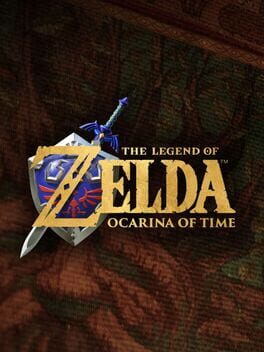
During the September Nintendo Direct, the company announced three marquee projects that will headline the 2026 launch window: Fire Emblem: Fortune’s Weave, a tactical RPG that promises a sprawling narrative canvas and next‑gen visual fidelity; Nintendo Switch Sports Resort, an evolution of the wildly successful Switch Sports franchise that adds a tropical, multiplayer‑focused experience optimized for the Switch 2’s improved motion sensors; and a full‑scale reimagining of The Legend of Zelda: Ocarina of Time, the seminal 1998 classic now being rebuilt from the ground up with ray‑traced lighting and an open‑world reinterpretation. Each title was presented with side‑by‑side footage showcasing the graphical leap on the Switch 2 while confirming that a scaled‑down version will ship on the original Switch, preserving the “One‑Switch” promise that has become a cornerstone of Nintendo’s brand equity.
Accompanying the reveal, senior Nintendo producer Takashi Saito emphasized that development pipelines have been deliberately structured to support dual‑generation releases without sacrificing quality. He cited the use of a unified engine architecture, shared asset libraries, and adaptive resolution scaling as key technical pillars. The announcements also hinted at a staggered rollout: Fire Emblem: Fortune’s Weave is slated for a spring 2026 launch on both consoles, Switch Sports Resort will arrive in summer as a timed exclusive for Switch 2 before expanding to the original hardware in Q4, and the Zelda remake is earmarked for a holiday 2026 release, positioning it as a system‑selling flagship for the final quarter of the year.
Analysis
From a market perspective, Nintendo’s decision to double‑dip on flagship titles could generate a significant uplift in hardware sell‑through for both generations. The original Switch has entered a price‑point sweet spot that appeals to cost‑conscious consumers, while the Switch 2, with its upgraded NVIDIA‑based chipset and OLED‑enhanced display, targets the premium segment seeking higher fidelity without abandoning the hybrid form factor. By delivering the same narrative experiences across both platforms, Nintendo mitigates the risk of alienating its long‑tail user base—a mistake that plagued early PlayStation 4 to PlayStation 5 transitions where legacy titles were left behind. Moreover, the cross‑generation strategy creates a virtuous cycle for developers: they can amortize production costs over a larger install base, thereby justifying larger budgets for ambitious IPs like Zelda and Fire Emblem.
However, the approach is not without technical and strategic challenges. Supporting two hardware tiers forces developers to contend with divergent performance ceilings, which can lead to compromises in design or visual fidelity on the older console. Nintendo’s commitment to “no compromise” experiences may necessitate extensive optimization passes, increasing development timelines and potentially inflating costs. Additionally, there is a latent danger of market cannibalisation; if Switch 2’s premium features are not sufficiently differentiated, consumers may delay upgrading, slowing hardware revenue. Yet, Nintendo’s historical adeptness at leveraging nostalgia—evident in the success of the NES Classic and Switch Lite—suggests that the company can turn this duality into a strength, using the legacy platform as a gateway for new players while positioning the Switch 2 as the definitive canvas for future‑first experiences.
XPLog Opinion
At XPLog UK we view Nintendo’s 2026 dual‑release strategy as a masterclass in ecosystem stewardship. Rather than forcing a hard migration, Big N is cultivating a layered market where each console occupies a distinct yet complementary niche. This not only preserves the massive goodwill earned from the original Switch’s eight‑year run but also sets the stage for a smoother transition to the next hardware generation, potentially extending the Switch brand’s relevance well into the early 2030s. The risk of diluting the Switch 2’s premium appeal is real, but the company’s track record of turning perceived limitations into selling points—think the Switch’s modest specs turned into a “anywhere gaming” narrative—makes us confident that the upcoming titles will deliver enough wow factor to keep both hardware lines thriving.
Final Thoughts
In sum, the September Direct has laid out a roadmap that could keep Nintendo at the forefront of portable gaming for another half‑decade. With Fire Emblem: Fortune’s Weave poised for spring, Switch Sports Resort heating up the summer, and a Zelda masterpiece closing out the year, the 2026 calendar is packed with system‑selling moments for both Switch 1 and Switch 2. Players and investors alike should mark March 2026, July 2026, and November 2026 as key dates, while keeping an eye on Nintendo’s quarterly financial reports for early indicators of how the dual‑generation model is translating into sales velocity and developer confidence.