.png)
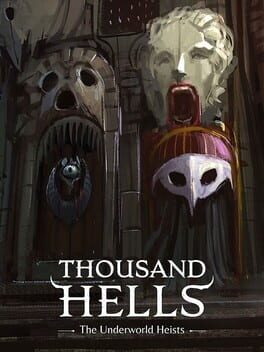
Overview
When the indie sphere announces a new title that blends the narrative depth of classic grand strategy with the kinetic fun of a heist romp, the industry takes notice. Thousand Hells: The Underworld Heists arrives at a moment when tabletop‑inspired digital experiences are enjoying a renaissance, propelled by the success of games like Baldur’s Gate 3 and the enduring popularity of narrative‑heavy titles such as Disco Elysium. The developers behind King of Dragon Pass—a game celebrated for its intricate decision‑making and mythic world‑building—have turned their attention to a lighter, more mischievous tone, positioning the new anthology as a counter‑weight to the grimdark trend that has dominated RPG releases over the past few years.
Beyond its whimsical premise—negotiating with demons, bartering with dead sailors, and recruiting a motley crew of four eccentric characters—the game taps into a broader market shift toward modular, replayable content. Players increasingly crave experiences that can be sliced into bite‑sized sessions, a demand that streaming platforms and subscription services have amplified. By offering ten distinct heists that can be tackled in two‑hour bursts, Thousand Hells not only satisfies the modern gamer’s time constraints but also encourages a “pick‑up‑and‑play” mentality that could reshape how indie RPGs are packaged and monetised.
What Happened?
The announcement, delivered via a succinct livestream and a series of developer diaries, revealed that Thousand Hells is structured as a choose‑your‑own‑adventure anthology. Each heist presents a self‑contained narrative arc, yet the outcomes of one mission can echo into the next, creating a subtle web of cause and effect that rewards careful planning. Players assemble a party of four, each with a distinct personality and skill set, and then navigate scenarios ranging from riddling holy monks to sentient arboreal beings. The developers emphasized that the game’s tone is deliberately “light‑hearted despite the infernal backdrop,” a design choice meant to juxtapose the macabre with a buoyant sense of exploration.
Technical details disclosed during the press event highlighted a custom narrative engine built on Unity, optimized for rapid branching and dynamic dialogue generation. The team also promised a robust mod‑friendly framework, inviting the community to craft their own heists and expand the anthology indefinitely. Early playtests, according to the studio, have shown that players spend an average of thirty minutes per heist, with many opting to replay scenarios to discover alternate outcomes, thereby extending the game’s longevity without the need for traditional DLC pipelines.
Analysis
From a market perspective, Thousand Hells occupies a sweet spot between the high‑budget, story‑driven RPGs that dominate console storefronts and the bite‑size, narrative experiments that thrive on PC and Switch indie sections. Its anthology format mitigates the risk associated with a single, monolithic campaign, allowing the publisher to iterate on individual heists based on player feedback—a practice reminiscent of episodic releases like Telltale’s The Walking Dead, but with a more flexible delivery model. Moreover, the decision to lean into humor and absurdity could attract a demographic that has felt alienated by the relentless seriousness of recent AAA releases, potentially expanding the game’s reach beyond the traditional “hardcore” RPG audience.
Competitively, the title pits itself against established heist franchises such as Payday 2, albeit with a vastly different aesthetic and gameplay loop. While Payday focuses on cooperative gunplay and loot extraction, Thousand Hells emphasizes narrative choice, character interaction, and the occasional supernatural mishap. This divergence may carve out a niche that appeals to players seeking cooperative storytelling rather than pure action, a segment that has been underserved since the decline of titles like The Bard’s Tale IV. Technically, the reliance on Unity’s branching dialogue tools could set a new benchmark for indie developers aiming to deliver deep, replayable narratives without the overhead of proprietary engines.
XPLog Opinion
At XPLog UK we view Thousand Hells as a bold statement that indie developers can still innovate within the crowded RPG space by marrying classic narrative depth with modern, modular design. The game’s willingness to flirt with the absurd while retaining meaningful consequences demonstrates that the genre need not be shackled to doom‑laden epics; instead, it can thrive on clever world‑building and player agency. If the studio can sustain community‑driven content and refine its branching mechanics, Thousand Hells could become a reference point for future anthology‑style RPGs, proving that “serious” storytelling can coexist with a grin‑wide‑open sense of adventure.
Final Thoughts
In sum, Thousand Hells: The Underworld Heists promises to inject fresh vitality into the RPG market by delivering a compact, replayable experience that balances dark mythos with levity. With a slated release in early 2027 across PC, Switch, and next‑gen consoles, the title will be a key bellwether for how indie studios leverage modular narratives to capture both the attention and the wallets of a diversifying player base. Keep an eye on the developer’s upcoming dev‑log series and the community‑mod portal, as they will likely shape the game’s post‑launch trajectory and determine whether this heist anthology can truly redefine the genre’s expectations.